The Middle East lurched deeper into economic and military upheaval on Wednesday as the United Arab Emirates formally announced its withdrawal from OPEC after nearly 60 years of membership, Iran appealed to Washington to lift a crippling naval blockade, and Israeli forces intensified strikes across southern Lebanon — killing five people including three civil defence workers.
The UAE’s departure from the oil cartel marks one of the most significant ruptures in OPEC’s history. As the organisation’s third-largest producer and the world’s seventh-largest oil exporter, the Emirates currently pumps approximately 3.6 million barrels per day. Abu Dhabi has signalled its intention to scale that figure to 5 million barrels per day by 2027 — an ambition long constrained by OPEC production quotas. The UAE simultaneously announced its exit from the broader OPEC+ alliance.
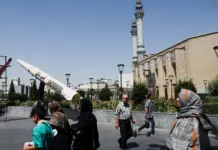
The announcement landed as Gulf heads of state gathered in Jeddah, Saudi Arabia, for an extraordinary GCC summit — the first in-person leadership meeting since the outbreak of the war in Iran. The gathering underscored the profound anxiety gripping the region: since February 28, Iran has launched ballistic missiles and drones against GCC member states, reshaping the security calculus for every government around the table.
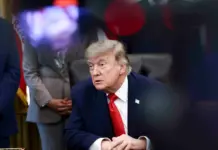
President Donald Trump disclosed that Tehran has reached out to Washington requesting the lifting of its naval blockade on Iranian ports, describing Iran as being in a "state of collapse." Trump also insinuated that deep divisions exist within Iranian leadership, a characterisation that aligns with the economic data his administration has been publicising.
Treasury Secretary Scott Bessent detailed the scale of the financial pressure bearing down on Tehran. The Treasury Department has systematically targeted Iran's international shadow banking infrastructure, its access to cryptocurrency markets, its shadow tanker fleet, and its weapons procurement networks. Those actions, Bessent said, have disrupted tens of billions of dollars in government revenue. Iran's inflation rate has doubled, its currency has depreciated sharply, and Kharg Island — the country's primary oil export terminal — is approaching storage capacity with nowhere to send its crude. The blockade alone is costing Iran an estimated $170 million per day in lost revenue.
Trump's national security team is also weighing an Iranian message that proposed opening the Strait of Hormuz in exchange for a delay in nuclear negotiations — a signal that Tehran is searching for diplomatic off-ramps even as the military and economic vice tightens.
The energy market implications of the crisis are already reverberating globally. The World Bank projects energy prices will surge 24 percent this year, reaching their highest level in four years, with Brent crude forecast to average $86 per barrel — up sharply from $69 in 2025.
Qatar's Foreign Ministry added its voice to calls for a negotiated resolution, stating that a comprehensive deal is necessary to end the US-Israel war on Iran. The statement reflects growing concern among Gulf states that the conflict risks spiralling beyond containment.
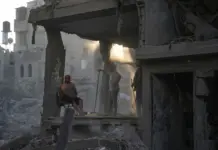
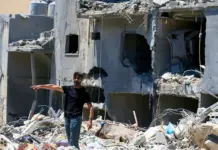
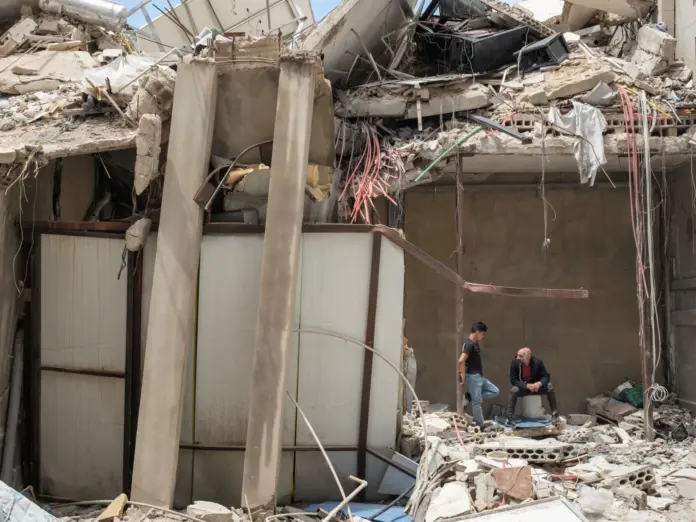
On Lebanon's southern frontier, the situation deteriorated sharply. Israel launched its largest offensive in the country on April 8, an operation that killed more than 350 people and wounded over 1,000. Since then, Israeli forces have carried out dozens of additional air strikes. The latest salvo struck five people, among them three civil defence workers. Lebanese Prime Minister Nawaf Salam condemned the attack as a war crime, echoing the language used by President Joseph Aoun, who called the killing of emergency responders a fundamental violation of international law.
Amnesty International separately documented the systematic destruction of solar panels in southern Lebanon by Israeli forces, raising concerns about deliberate targeting of civilian infrastructure. Hezbollah responded to Israeli operations with explosive drone strikes against Israeli equipment and troops in the south, while rocket launches from the city of Tyre triggered air raid sirens across northern Israel. Iran's UN ambassador, Amir Saeid Iravani, urged the UN Security Council to compel Israel to honour the existing ceasefire agreement in Lebanon.
Yemen's Houthi rebels issued a pointed statement condemning what they described as US "piracy" in the Gulf of Oman, declaring themselves firmly "not neutral" with respect to attacks against Iran, Lebanon, and Palestine — a warning that the conflict's gravitational pull continues to draw in additional actors.
At the United Nations, Tony Blair addressed the Security Council in his capacity with Trump's Board of Peace for Gaza. A National Committee for the Administration of Gaza has been established, and an International Stabilization Force has completed its pre-deployment assessment mission for the territory — tentative steps toward a post-conflict governance framework even as fighting continues across the broader region.
The convergence of Iran's economic distress, the UAE's historic break from OPEC, and the intensifying violence in Lebanon signals a Middle East in the midst of a fundamental realignment — one whose full contours remain deeply uncertain.