Fifteen months of grinding, lower-intensity conflict following a November 2024 ceasefire have given way to a dangerous new escalation in Lebanon, with Hezbollah threatening to resume suicide bombing operations against Israeli targets on Lebanese soil even as diplomats shuttle between Washington, Islamabad, and Riyadh in search of a durable settlement.
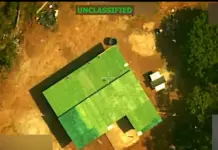
A senior Hezbollah military commander confirmed the group is prepared to return to suicide operations — a tactic it employed extensively in the 1980s but had largely abandoned in subsequent conflicts — targeting Israeli forces operating within Lebanese territory. The threat marks a significant hardening of the group’s posture after months of absorbing Israeli strikes without direct retaliation.
That restraint ended on March 2, the same day US and Israeli forces carried out the assassination of Iranian Supreme Leader Ayatollah Ali Khamenei — a strike of historic magnitude that reverberated across the region. The Lebanese government moved swiftly on the same date to formally ban Hezbollah’s military activity, a largely symbolic measure given the group’s entrenched position within the country’s political and security landscape.
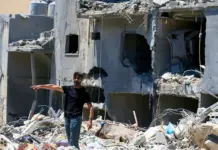
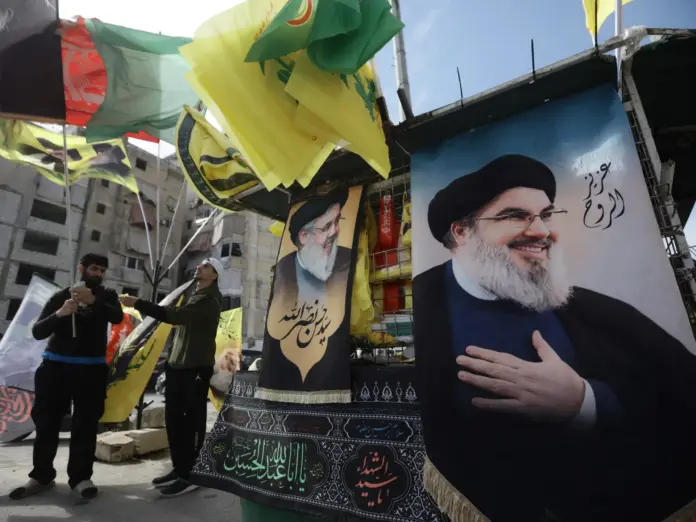
The war’s roots stretch back further. Israel intensified its campaign against Lebanon following the elimination of Hassan Nasrallah, Hezbollah’s Secretary-General of more than three decades, and subsequently launched a ground invasion of southern Lebanon. The November 2024 ceasefire was meant to halt the bloodshed, but Israeli strikes continued at reduced frequency in the months that followed, displacing more than 1.2 million Lebanese residents in total.
On April 8, the same day a ceasefire between the United States and Iran formally took effect, Israeli forces killed more than 350 people in Lebanon, among them at least 150 civilians, according to conflict monitoring organisation ACLED. Iran and Pakistan initially asserted that the US-Iran ceasefire extended to Lebanon; both Israel and the United States rejected that interpretation.
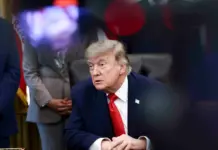
US President Donald Trump announced a cessation of hostilities on April 16, initially for ten days before extending the pause to three weeks. The announcement has done little to halt the violence. Intense fighting continues across southern Lebanon, underscoring the fragility of any arrangement that lacks buy-in from all armed parties on the ground.
Diplomatic efforts have nonetheless accelerated. The first two rounds of Lebanon-Israel negotiations convened in Washington, DC in April, though the talks are shadowed by deep mutual suspicion. Lebanese President Joseph Aoun stated publicly that he would not accept a humiliating agreement with Israel, while Hezbollah leader Naim Qassem went further, categorically rejecting any direct negotiations between Beirut and Jerusalem.
A prominent diplomatic signal emerged on April 23, when Saudi Arabia’s envoy Prince Yazid bin Farhan met with Lebanese Parliament Speaker Nabih Berri — a figure with longstanding ties to Hezbollah’s political orbit. The meeting suggested Riyadh is positioning itself as a potential broker, though the parameters of any Saudi role remain undefined.
Hezbollah’s strategic position has been significantly weakened by converging pressures. The fall of the Assad regime in Syria prompted the new Damascus government to crack down on smuggling corridors into Lebanon, severing a critical logistics lifeline. The group remains heavily dependent on Iran for financial support — a relationship dating to Hezbollah’s founding during the Lebanese civil war of 1975 to 1990 — but that pipeline faces new uncertainty. The United States has reportedly pressed Tehran to cease funding regional proxies, including both Hezbollah and Hamas, as part of broader nuclear negotiations currently underway in Islamabad.
Hezbollah draws its core political support from Lebanon’s Shia Muslim community, which has borne a disproportionate share of the war’s human cost. With infrastructure shattered, more than a million people uprooted, and the group’s Iranian patron under unprecedented pressure, the coming weeks of negotiations will test whether any framework can translate a fragile pause into something more lasting — or whether the threat of suicide operations signals a conflict preparing to enter yet another brutal chapter.