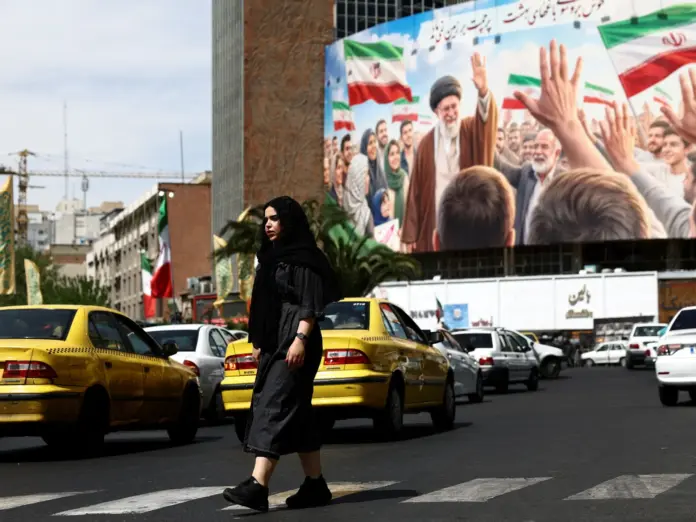
Donald Trump’s national security team is reviewing a formal Iranian peace proposal as the closure of the Strait of Hormuz — the critical waterway carrying one-fifth of the world’s oil — enters its sixtieth day, sending shockwaves through global energy markets and prompting urgent diplomatic intervention from Moscow to the United Nations.
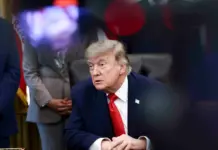
Trump was scheduled to convene talks with his senior security advisers on Monday to assess the Iranian offer, with a team led by Jared Kushner, Steve Witkoff, and Vice President JD Vance at the centre of Washington’s negotiating effort. The proposal represents a potential off-ramp from a conflict that has drawn in regional powers and alarmed international markets, though deep scepticism persists about whether the current diplomatic architecture is equipped to deliver a breakthrough.
In Saint Petersburg, Iranian Foreign Minister Abbas Araghchi met Russian President Vladimir Putin, who pledged that Russia would do everything within its power to halt the war. The meeting underscored Moscow’s continued positioning as a mediator, even as Western governments remain wary of Russian influence over Tehran’s decision-making.
Araghchi, however, placed blame squarely on Washington for the collapse of earlier negotiations, a charge that has sharpened tensions between the two governments. Iran’s Foreign Ministry further condemned the US seizure of two Iran-linked oil tankers — the Majestic X and the Tifani — with spokesman Esmaeil Baghaei describing the action as armed robbery on the high seas. The tanker seizures have added a combustible new dimension to already fraught diplomacy.
The international community has responded with mounting urgency. A joint statement led by Bahrain and endorsed by dozens of nations demanded the urgent and unimpeded reopening of the Strait of Hormuz. UN Secretary-General Antonio Guterres issued a stark warning, saying the current impasse risks producing the worst disruption to global supply chains since the COVID-19 pandemic and the war in Ukraine — a comparison that underlines the scale of economic exposure should the closure persist.
Washington is also weighing a strategic separation of issues: former US official Henry S. Ensher indicated that the administration may pursue efforts to reopen the strait independently of broader nuclear negotiations, a sequencing that could accelerate progress on the immediate economic crisis while leaving the harder diplomatic questions for later.
Yet questions about the competence of Trump’s negotiating team are growing louder. Former US Ambassador Gordon Gray identified the negotiators’ limited familiarity with Iran’s nuclear file as a crucial weakness, warning that technical gaps could undermine any agreement reached. Republican strategist John Feehery added a separate concern, noting that both Kushner and Witkoff maintain extraordinarily close ties to Israel — a dynamic that could complicate perceptions of American neutrality in Tehran.
Those concerns are amplified by simultaneous turbulence in Lebanon. Despite a ceasefire that came into effect in mid-April, the Israeli military has struck Hezbollah positions in Lebanon’s Bekaa region, and one Israeli soldier was killed during combat in southern Lebanon. Israel stands accused of breaching the ceasefire agreement, a charge that risks inflaming the broader regional picture just as diplomats attempt to de-escalate tensions with Iran.
Prime Minister Benjamin Netanyahu claimed Hezbollah retains only around ten percent of its pre-war weapons stockpile — an assertion that analysts dispute, given assessments that the group still possesses tens of thousands of rockets, missiles, and drones. Hezbollah leader Naim Qassem rejected Lebanon’s planned direct talks with Israel outright, calling them a grave sin that would destabilise the country, further narrowing the space for a negotiated settlement on that front.
The convergence of these crises — an unresolved Iran conflict, a fragile Lebanese ceasefire under strain, and a global oil chokepoint in limbo — presents the Trump administration with one of the most complex diplomatic challenges of its term. With dozens of governments demanding action on the Strait of Hormuz and the UN warning of cascading economic consequences, the pressure on Washington to produce results is intensifying by the day.