BEIRUT — Israeli Defence Minister Israel Katz issued a stark warning Monday that Israel would "burn all of Lebanon" if Hezbollah continued its defiance, as the Iran-linked armed group’s leader publicly rejected peace negotiations and Israeli forces struck multiple targets across Lebanese territory.
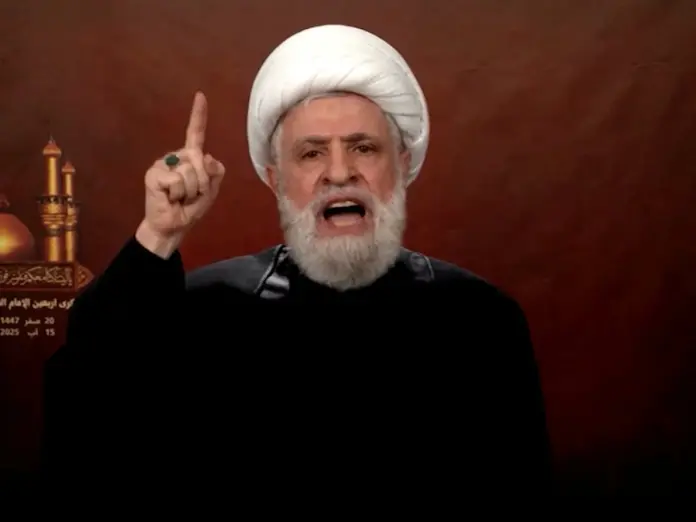
The threats came as Hezbollah leader Naim Qassem released a statement categorically dismissing dialogue with Israel and reaffirming the group’s commitment to ongoing military operations. Qassem outlined a series of preconditions for any future talks, demanding a complete end to what he described as Israeli "aggression on land, sea and air," a full Israeli withdrawal from "occupied territories," the release of prisoners, the return of all displaced persons, and a comprehensive reconstruction programme.
Qassem also demanded that the Lebanese government abandon its direct negotiations with Israel — the first such talks since 1983 — and reverse a recent decision outlawing Hezbollah’s military activities, which he characterised as "criminalising the resistance."
Katz, in a message delivered to United Nations envoy to Lebanon Jeanine Hennis-Plasschaert, warned that "fire will break out and engulf the cedars of Lebanon" if Beirut continues to provide political cover for Hezbollah. He accused Lebanese President Joseph Aoun of "gambling with the future of Lebanon" and insisted the government must take concrete steps to disarm the militant group.
Aoun, for his part, has taken an increasingly assertive stance against Hezbollah, accusing those who drew Lebanon into war of "treason" — a pointed, if implicit, rebuke of the group’s leadership. The Lebanese state’s decision to outlaw Hezbollah’s military activities marked a significant shift in Beirut’s posture, though the group has shown no sign of compliance.
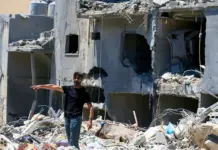
On the ground, the Israeli military carried out strikes Monday against Hezbollah infrastructure in the Bekaa Valley in eastern Lebanon, while also targeting the southern Lebanese towns of Tibnin, Yater, and Bint Jbeil. Hezbollah, in turn, claimed attacks on Israeli forces operating within southern Lebanon. Air raid sirens sounded in the northern Israeli town of Arab al-Aramshe after an aircraft was reported to have crossed into Israeli airspace.
The human toll since hostilities resumed on March 2 has been severe. Lebanon’s Health Ministry reports that Israeli strikes have killed 2,521 people and wounded a further 7,804 since that date. The tempo of Hezbollah operations has increased markedly in recent days, with the group intensifying its campaign despite the formal ceasefire that technically remains in place.
Hezbollah’s resumption of attacks on March 2 was directly linked to strikes that killed Iranian Supreme Leader Ayatollah Ali Khamenei, a development that fundamentally altered the calculus of the conflict. The broader hostilities are rooted in a United States-Israeli military campaign against Tehran, which has drawn Hezbollah — long Iran’s most powerful regional proxy — into direct confrontation with Israeli forces.
The situation presents an acute dilemma for Lebanon’s fragile government. Beirut finds itself caught between international pressure to rein in Hezbollah, the group’s own demands that the state reverse course, and an Israeli government that has made disarmament a non-negotiable condition for de-escalation. The resumption of direct Israeli-Lebanese negotiations, the first in over four decades, had raised cautious hopes for a diplomatic off-ramp — hopes that Hezbollah’s Monday statement has significantly complicated.
With both sides showing no willingness to stand down, and with Israeli threats growing more explicit by the day, the prospect of a broader conflagration engulfing Lebanon looms larger than at any point since the ceasefire was announced. The coming days will test whether Beirut’s nascent diplomatic engagement with Israel can survive Hezbollah’s fierce opposition, or whether the region slides further toward open war.