Washington / Beirut / Tehran — President Donald Trump extended the Lebanon ceasefire by three weeks on Wednesday, buying fragile diplomatic breathing room even as the United States and Iran edged closer to direct confrontation across multiple fronts in the Middle East.
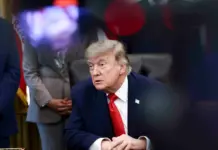
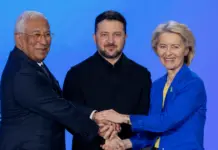
The ceasefire, which had been set to expire Sunday, was granted new life after Trump announced the extension on social media, where he also expressed hope of hosting Israeli Prime Minister Benjamin Netanyahu and Lebanese President Joseph Aoun at the White House within the coming weeks. ‘I hope to host them in the near future,’ Trump wrote, projecting an air of diplomatic optimism that stood in sharp contrast to the volatile conditions on the ground.
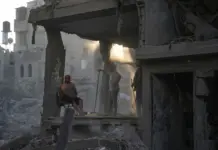
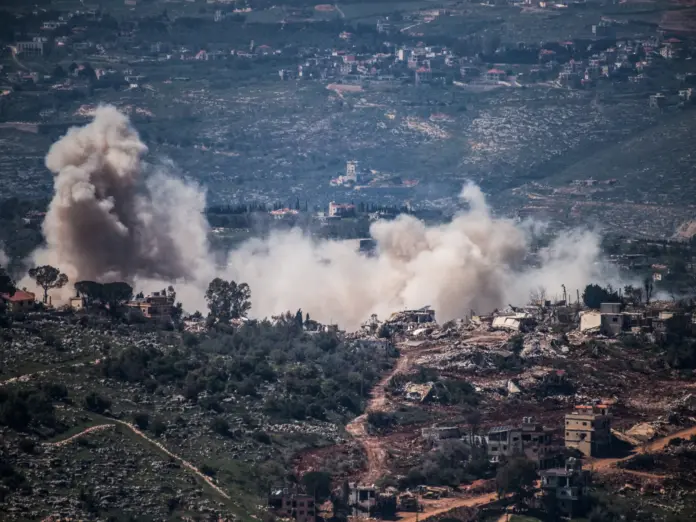
Those conditions remain deeply unstable. Hezbollah fired an antitank weapon at Israeli forces alongside a salvo of rockets within the past 24 hours, and Israel acknowledged one reservist was wounded in a separate drone attack. Israeli forces killed three Hezbollah members who were attempting to shoot down an Israeli drone. The Lebanese military reported Israeli shelling of areas inside southern Lebanon within hours of the extended ceasefire taking effect — a pattern that has defined the conflict since Israeli forces invaded the south in early March and refused to withdraw despite an initial 10-day truce. Israeli officials have stated openly that Israel intends to occupy Lebanese territory up to the Litani River.
Israel’s UN ambassador Danny Danon acknowledged the situation was ‘not 100 percent,’ a notable understatement given the ongoing exchanges of fire. Israeli media reported that Hezbollah’s growing use of drones guided by fibre-optic cables — which are far harder to jam electronically — is complicating Israeli military operations in the south.
The Lebanon file, however, is increasingly overshadowed by the escalating standoff with Iran. Trump’s tone toward Tehran has grown sharply confrontational. ‘Iran does not have all the time in the world,’ he wrote. ‘The clock is ticking.’ He also issued orders for US forces to ‘shoot and kill’ any Iranian vessels caught placing sea mines in the Strait of Hormuz, a critical global shipping lane through which a significant share of the world’s oil supply passes.
The US military has now deployed three aircraft carriers to the region simultaneously. The USS George HW Bush arrived in the Middle East this week, joining the USS Gerald R Ford and the USS Abraham Lincoln — an extraordinary concentration of naval firepower that signals Washington’s readiness to project force at scale.
US forces have also moved to enforce sanctions against Iranian oil exports with new aggression. US Attorney Jeanine Pirro confirmed that federal warrants were issued for two oil tankers seized by American forces: the M/T Majestic and the M/T Tifani, which together carried approximately 1.9 million barrels of Iranian crude. The Defense Department confirmed that US personnel boarded the M/T Majestic in the Indian Ocean after determining it was transporting sanctioned Iranian oil.
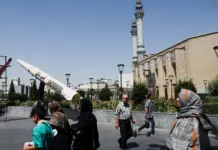
Tehran is not backing down. Iranian President Masoud Pezeshkian pushed back against Western characterisations of internal divisions within the Islamic Republic, declaring there are ‘no hardliners or moderates in Iran, only Iranians.’ Foreign Minister Abbas Araghchi insisted that Iran’s state institutions continue to operate with ‘unity, purpose and discipline’ despite ongoing Israeli strikes. Iranian officials have set a firm precondition for any resumption of nuclear talks: the United States must lift its naval blockade of Iranian ports before negotiations can proceed.
Analyst Rami Khouri noted that neither Hezbollah nor Iran is currently participating in the Lebanon ceasefire talks — a structural gap that raises serious questions about the durability of any agreement reached without their involvement.
Israeli Defence Minister Israel Katz made no effort to conceal Israel’s appetite for a broader confrontation, stating that Israel is ‘prepared to resume the war against Iran’ and would bomb the country back to the ‘Stone Age’ if given authorisation by Washington. The statement drew no public rebuke from the Trump administration.
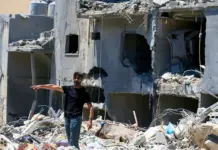
The humanitarian toll of the broader regional conflict continues to mount. Gaza’s Health Ministry reported the death toll from Israel’s military campaign has reached 72,568, with a further 172,338 people injured. Separately, UN development chief Alexander De Croo warned that the war’s economic ripple effects — including fertiliser shortages caused by the blockade of the Strait of Hormuz — could push as many as 30 million people into poverty globally.
The killing of Lebanese journalist Amal Khalil by Israeli forces drew international condemnation, adding to pressure on both Washington and Tel Aviv over civilian casualties and press freedom violations in the conflict zone.
With three aircraft carriers in the region, seized tankers in US custody, and a ceasefire that both sides are already testing, the Middle East is navigating one of its most precarious moments in years — and the diplomatic window Trump has opened may be narrower than his optimistic social media posts suggest.