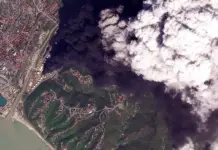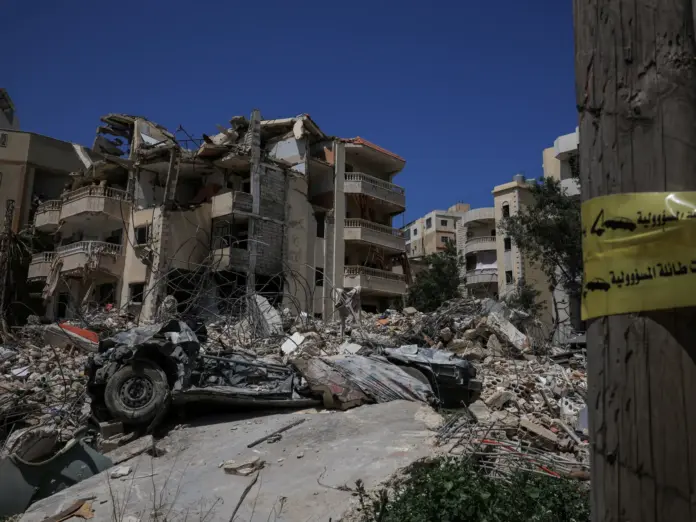
A ceasefire brought an end to 46 days of Israeli bombardment and ground invasion of Lebanon on April 16, concluding a campaign that killed nearly 2,300 people, wounded thousands more, and displaced more than one-fifth of the country’s population. Israel continued striking targets in southern Lebanon until the final minutes before the truce took hold.
The latest escalation began on March 2, when Israel intensified its war on Lebanon for the second time in less than two years. The trigger came days after Iranian Supreme Leader Ayatollah Ali Khamenei was killed on February 28, prompting Hezbollah to fire rockets across the border. Israel responded with sweeping evacuation orders covering approximately 14 percent of Lebanese territory — the entirety of southern Lebanon, villages in the eastern Bekaa Valley, and Beirut’s southern suburbs — uprooting an estimated 1.2 million people.
Human Rights Watch characterised the mass displacement of civilians as a possible war crime, a charge that added to mounting international scrutiny of the campaign’s conduct.
For families in the south, the evacuation orders brought chaos. Em Saeid, who was at her home near the el-Buss roundabout in Tyre when the March 4 threat was issued, fled with her husband Yasser, her daughter Samiha, and Samiha’s four-year-old child. A car journey that would normally take a few minutes stretched to three hours as evacuation traffic choked the roads. The family made their way to Beirut, sheltering with a friend before returning to Tyre after roughly a day — only to find themselves caught in the conflict’s most devastating single episode.
On April 8, Iran and Pakistan announced a ceasefire that they said included Lebanon. Israel and the United States disputed that characterisation, insisting the agreement did not cover Lebanese territory. The ambiguity proved catastrophic. Yasser and Em Saeid arrived back in Tyre at around noon that day. Within three hours, Israel unleashed more than 100 attacks in less than 10 minutes on central Beirut. The strikes killed more than 350 people and wounded more than 1,000, making April 8 the bloodiest single day in Lebanon since the previous intensification in September 2024 — a period Lebanese civilians refer to as the ’66-day intensification’.
Not everyone fled. Aya, a recent graduate of the Islamic University in Tyre, chose to remain in the municipality of al-Abbassieh, roughly eight kilometres from the city. Having already been displaced during the 2024 escalation, she opted to stay despite the danger. Her decision reflected a broader pattern among residents who, exhausted by repeated displacement, weighed the risks of staying against the hardships of flight.
Israel bombed bridges connecting the south to the rest of the country during the campaign, compounding the difficulties faced by those attempting to move or return. The destruction of infrastructure echoed tactics from earlier conflicts and drew comparisons to Israel’s two-decade occupation of southern Lebanon, which ended in 2000.
On April 16, the ceasefire finally took effect after what Israeli officials described as a campaign conducted with ‘full force’ against threats in Lebanon — language the government used even as the truce was announced, signalling continued readiness to act. By the following day, the six-week assault had left a death toll of nearly 2,300, a figure that placed the latest escalation among the most lethal chapters in Lebanon’s modern history.
The ceasefire’s durability remains uncertain. The disputed scope of the Iran-US agreement, Hezbollah’s continued presence in the south, and Israel’s stated posture of ongoing vigilance all point to a fragile peace. For families like Em Saeid’s — who have now evacuated, returned, and survived the deadliest day of the war within the span of a single afternoon — the end of active bombardment offers relief without resolution.