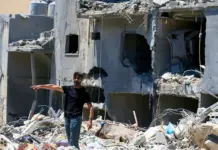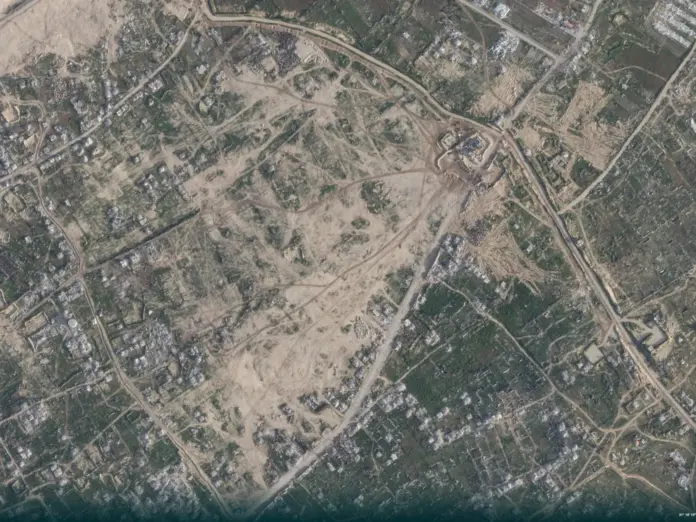
Satellite imagery spanning late February to mid-March 2025 reveals a stark transformation underway across Gaza: rubble removal has effectively stopped in Beit Hanoon and Rafah, while Israeli military construction accelerates at multiple sites, fuelling warnings that a temporary military campaign is hardening into permanent occupation.
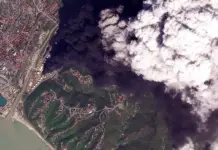
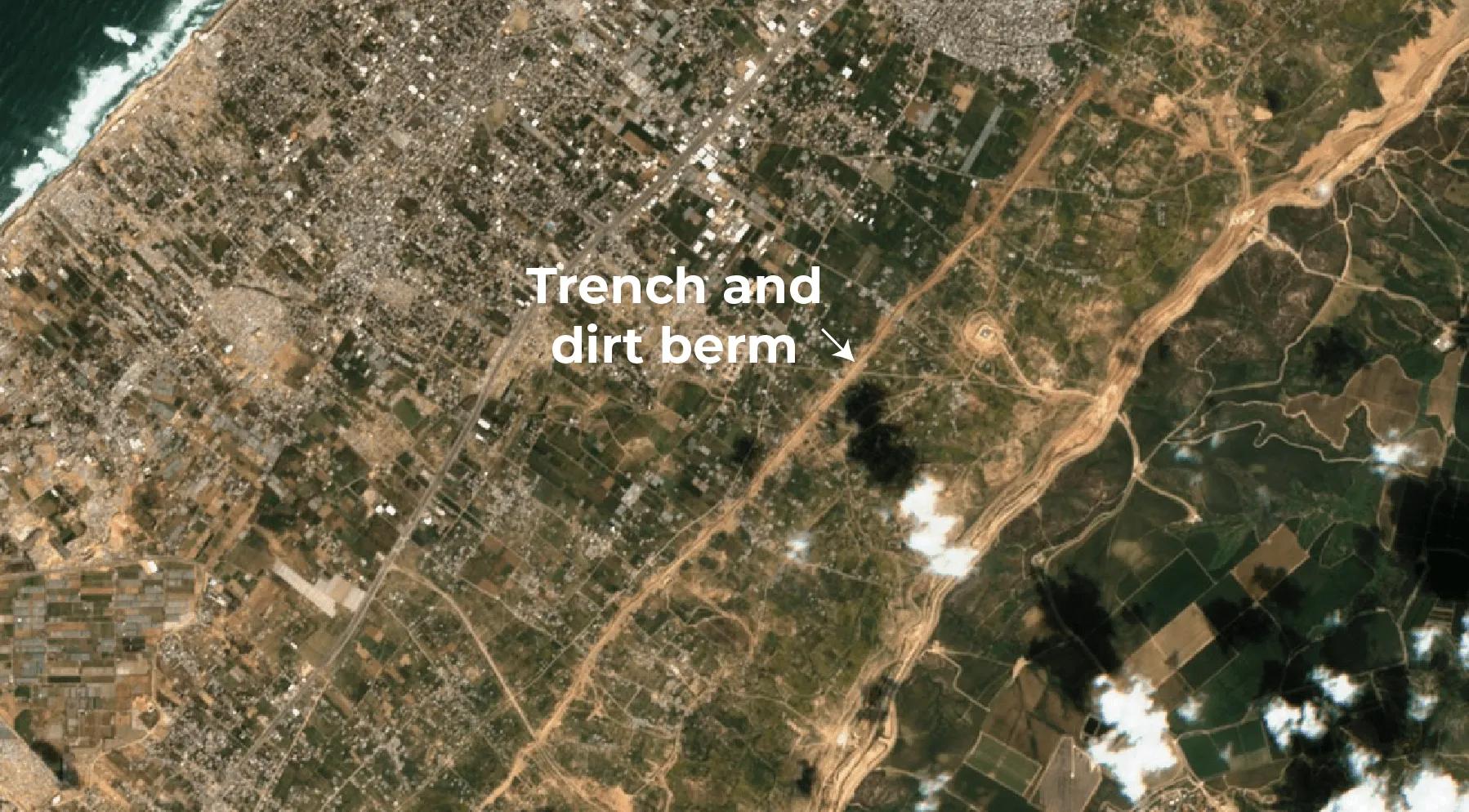
Analysis of imagery captured by Planet Labs and Sentinel Hub between February 25 and March 15 shows that clearing operations — once presented as a precursor to reconstruction — have ceased in two of Gaza’s most devastated areas. In their place, fortification work is expanding. Imagery from March 10 documents extensive clearing and the construction of defensive positions atop al-Muntar hilltop in Shujayea, Gaza City, a strategically commanding elevation. By March 15, Sentinel imagery confirmed ongoing excavation of a trench and dirt berm stretching toward Maghazi camp near Deir el-Balah in central Gaza.
A separate investigation by Forensic Architecture, completed in late 2025, identified 48 Israeli military installations within Gaza. Thirteen of those sites were established after an October ceasefire took effect. The installations have evolved well beyond temporary field positions: they now feature paved roads, watchtowers, and communication infrastructure directly linked to Israel’s domestic military network — hallmarks of enduring, rather than expeditionary, presence.
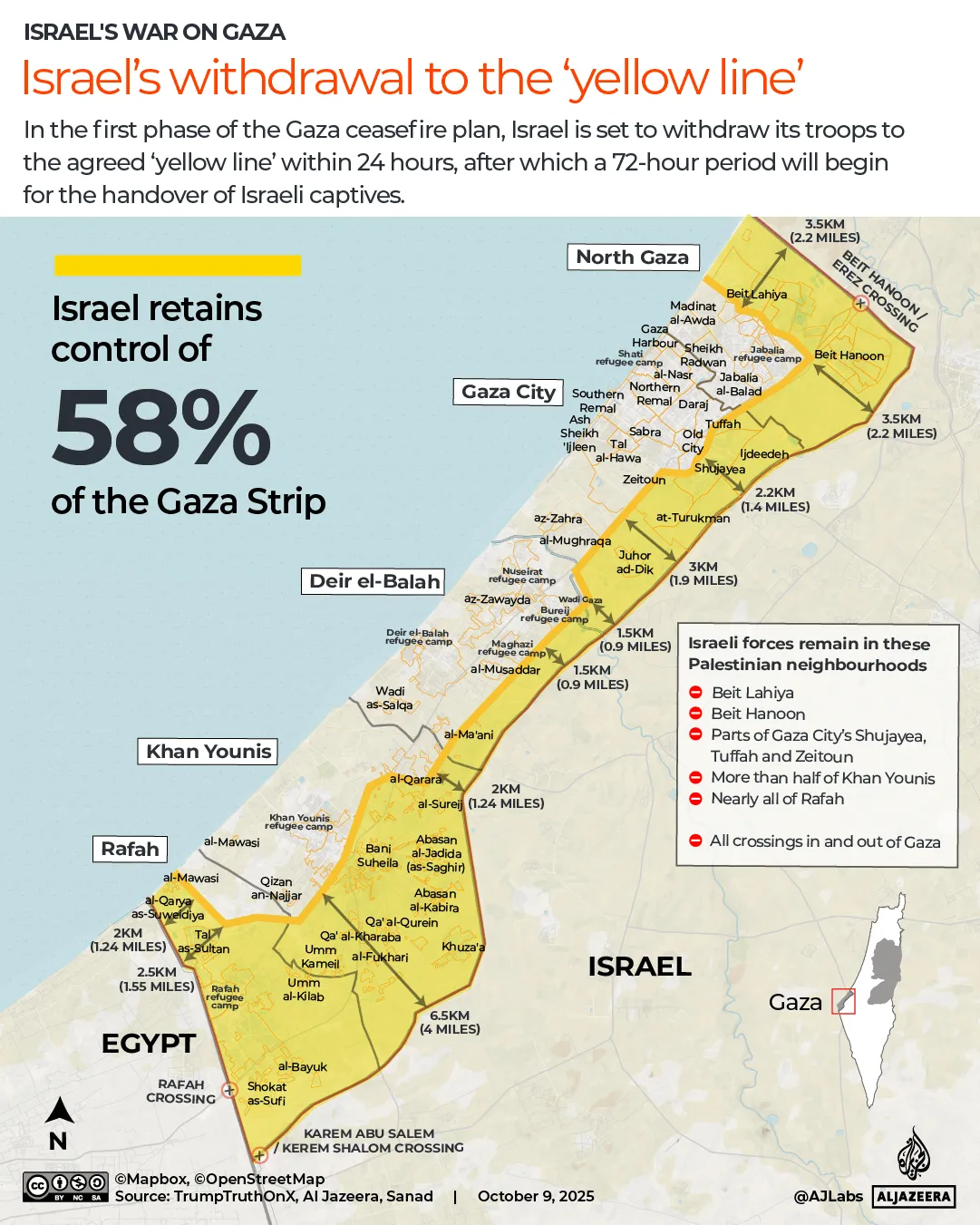
The physical footprint of Israeli forces is also expanding into territory designated for Palestinian civilians under the ceasefire framework. Satellite images from March 4 show a dirt berm running parallel to what Israeli Chief of Staff Eyal Zamir publicly described as a "new border" in December — a demarcation line known as the ‘yellow line’ in Beit Lahiya in northern Gaza. That berm extends more than 580 metres into land Palestinians were promised access to under the ceasefire terms. Concrete boundary markers have also been covertly repositioned hundreds of metres deeper into Palestinian-designated areas.
Defence Minister Israel Katz has made Israel’s intentions explicit, declaring the country would "never leave Gaza" and pledging to establish what he described as military-agricultural settlements inside the territory.
The military entrenchment is unfolding alongside a parallel political project. In January, Jared Kushner unveiled AI-generated renderings of a reimagined ‘New Rafah’ at the World Economic Forum in Davos, presenting a gleaming urban vision underwritten by a 20-point plan promising $10 billion in funding through a proposed Board of Peace. The plan envisions dividing Gaza into population blocks and closed military zones, with proposed residential areas designed to house roughly 25,000 people per square kilometre.
The Geneva-based Euro-Med Human Rights Monitor warned that the scheme amounts to demographic re-engineering and institutionalised forced displacement. Oxfam and Save the Children gave the plan an outright failing grade, stating it offered no credible pathway to improving conditions for people inside Gaza.
The humanitarian toll of the conflict continues to mount. Gaza’s Ministry of Health recorded 750 deaths and more than 2,090 injuries since the October ceasefire began — a period during which attacks were launched on 160 of 182 days. The cumulative death toll since October 2023 has surpassed 72,300. A study published in The Lancet estimated that deaths attributable to direct violence exceeded 75,000 by early 2025.
Efforts to document the situation through commercial satellite imagery face growing constraints. Planet Labs announced an indefinite ban on releasing images from conflict zones following a request from the United States government. Other providers, including Vantor, have imposed similar restrictions, narrowing the independent visual record available to researchers and journalists at a critical moment.
The convergence of military consolidation, a contested reconstruction blueprint, and restrictions on open-source monitoring has deepened concern among rights groups that Gaza’s future is being shaped not by its population, but by external actors with competing strategic interests. With permanent infrastructure taking root and political plans advancing that critics say prioritise displacement over dignity, the gap between stated humanitarian intent and observable reality on the ground continues to widen.