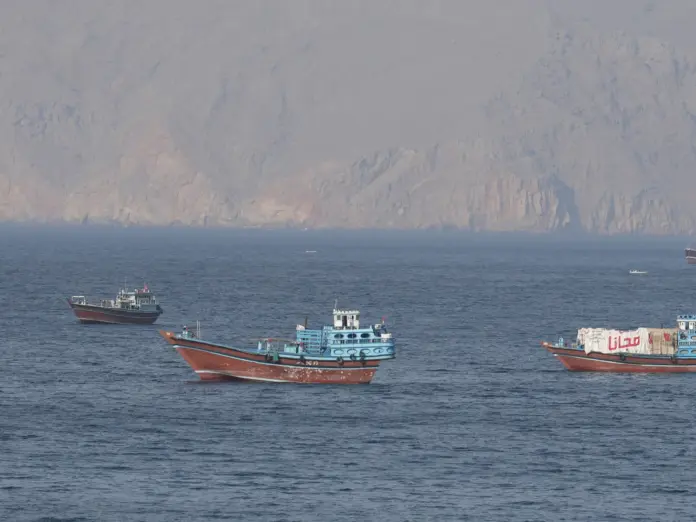
The Strait of Hormuz, the narrow waterway through which roughly a fifth of the world’s oil passes, has effectively closed after Iran reversed its pledge to keep the passage open and ordered its forces to fire on vessels attempting transit — a dramatic escalation that has pushed an already fragile ceasefire between Tehran and Washington to the brink of collapse.
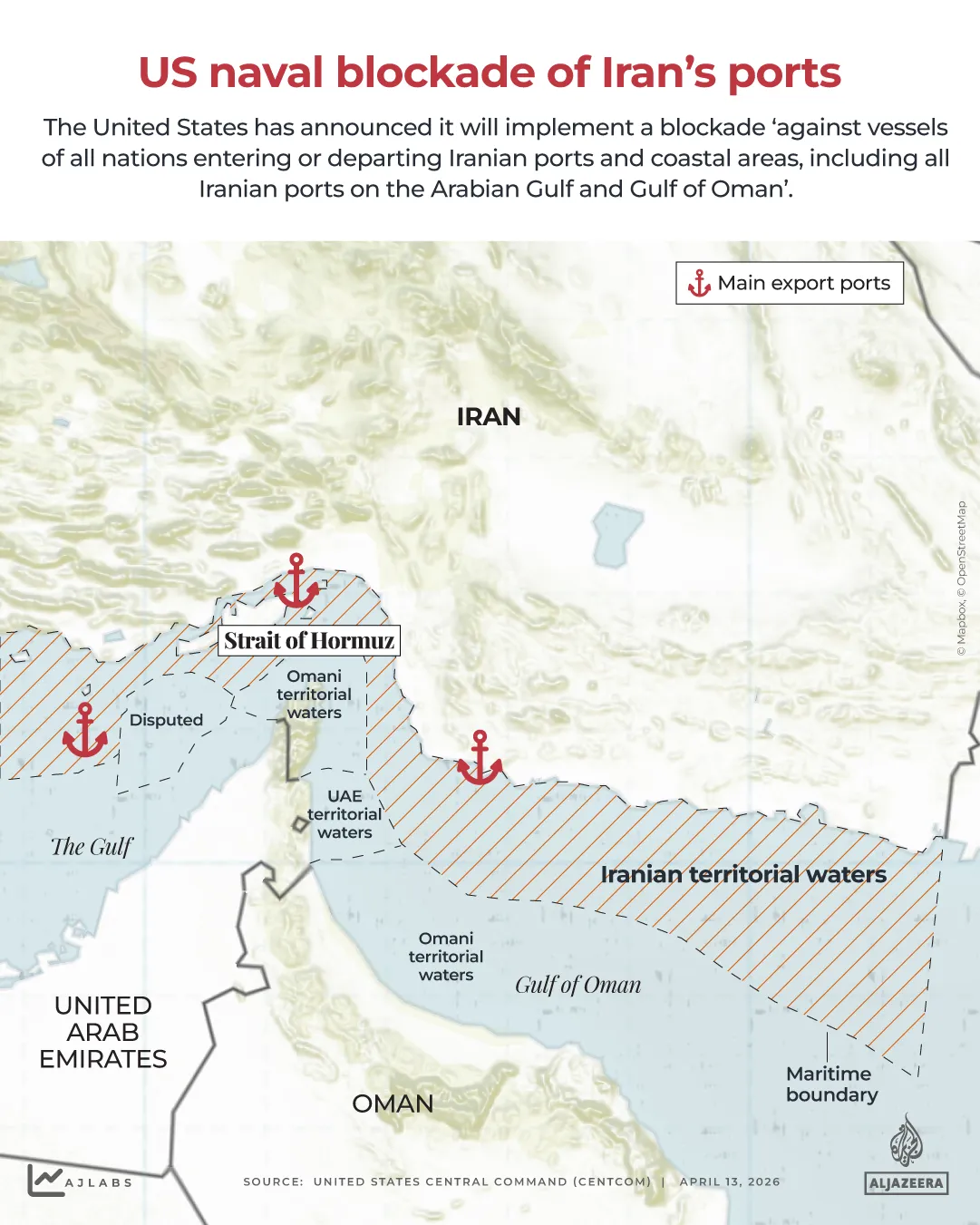
Iranian Islamic Revolutionary Guard Corps (IRGC) gunboats opened fire on multiple commercial ships on Saturday after President Donald Trump announced the United States would continue its naval blockade of Iranian ports, which began on April 14. Traffic in the strait came to a halt following the attacks. The United Kingdom Maritime Trade Operations agency confirmed that at least one tanker was targeted by two IRGC-linked gunboats, and India summoned the Iranian ambassador in New Delhi after two Indian-flagged vessels came under fire.
Iran’s armed forces turned back two additional tankers after issuing warnings, and the IRGC declared that no vessel would be permitted to pass through the strategic waterway without Tehran’s explicit consent. Supreme Leader Mojtaba Khamenei — who assumed the position following the death of his father, Ayatollah Ali Khamenei, in US and Israeli strikes on February 28 — said on Saturday that Iran’s navy stood ready to inflict defeats on its enemies. The IRGC added that the strait would not return to its previous state as long as the blockade on Iranian ports remained in force.
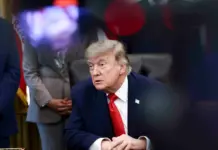
![US President Donald Trump speaks after signing an executive order in the Oval Office of the White House in Washington, DC on April 18, 2026 [AFP]](https://world-tension.s3.us-east-2.amazonaws.com/articles/483/3adb2159f6e845c08892ef62934581f3.webp)
The reversal came just one day after Iranian Foreign Minister Abbas Araghchi had stated publicly that the strait would remain open for commercial vessels during the truce, in keeping with the terms of the ceasefire. That agreement, which also encompasses a parallel 10-day truce between Israel and Hezbollah, is set to expire on April 22. Trump accused Iran of violating the ceasefire in a post on his Truth Social platform on Sunday, warning Tehran not to get "a little cute" and threatening to destroy every power plant and bridge in Iran if a deal is not reached.
The US Central Command confirmed its forces continue to enforce the blockade, and said American naval assets had forced 23 ships to turn around near the strait since the blockade was imposed. Washington has also stated it intends to obtain Iran’s enriched uranium stockpile — approximately 440 kilograms believed to be buried at sites struck by US forces last year. Iranian President Masoud Pezeshkian rejected that demand on Sunday, stating that Trump had no justification to deprive Iran of its nuclear rights. Deputy Foreign Minister Saeed Khatibzadeh dismissed Trump’s claims regarding the uranium outright.
Notably, Tulsi Gabbard, the US Director of National Intelligence, testified to Congress in March 2025 that Washington’s own assessment is that Iran is not currently building a nuclear weapon — a finding that complicates the administration’s public framing of the standoff.
Diplomatic efforts have so far failed to bridge the divide. High-level talks held in Pakistan did not produce an accord, though Mohammad Bagher Ghalibaf, speaker of the Iranian parliament and Tehran’s chief negotiator, acknowledged on Saturday night that some progress had been made while cautioning that many gaps remain and that a final agreement was still far away. Trump announced on Sunday that US negotiators would travel to Islamabad on Monday for a fresh round of discussions. Pakistan’s Prime Minister Shehbaz Sharif returned home on Saturday following diplomatic visits to Saudi Arabia, Qatar, and Turkey, as regional powers scramble to facilitate a breakthrough. Egypt’s Foreign Minister Badr Abdelatty expressed hope that a final agreement could be secured within days, while Turkey’s Foreign Minister Hakan Fidan said both sides retained the will to continue negotiations.
The broader regional picture remains deeply unstable. In Lebanon, the ceasefire between Israel and Hezbollah is holding only nominally — Israeli forces have continued to carry out strikes despite the truce, and the Israeli military reported the death of a second soldier in southern Lebanon in less than 12 hours. Hezbollah, which entered the conflict after the Israeli strikes that killed the elder Khamenei, condemned the ceasefire agreement as an insult to Lebanon. A French soldier serving with the United Nations Interim Force in Lebanon (UNIFIL) was killed in an attack on Saturday, drawing a condemnation from UN Secretary-General Antonio Guterres. Israeli forces have established a so-called "yellow line" in southern Lebanon, and the mayor of Tel Aviv disclosed that more than 1,000 homes in the city have been rendered uninhabitable by the recent conflict with Iran.
Inside Iran, the toll of the war continues to mount. The Iranian Ministry of Science reported that 180 members of the academic community were killed during the fighting, including 18 female students and one female university professor. Despite the turmoil, Iran announced it would resume international flights from Mashhad airport in the country’s northeast beginning Monday. Meanwhile, Majid Mousavi, commander of the IRGC’s Aerospace Force, said Iran is replenishing its missile and drone launchers at a faster rate than before the war began — a signal that Tehran is not preparing to negotiate from a position of weakness.
With the ceasefire deadline approaching and the world’s most critical oil corridor effectively shut, the window for a diplomatic resolution is narrowing rapidly.