When Hushruzjon Salohidinov arrived in Saint Petersburg to pick up a parcel, he had no reason to expect that within months he would be lying in a trench in eastern Ukraine, his left eardrum ruptured by a grenade blast. The 26-year-old Tajik courier was arrested by police who claimed the package contained money stolen from elderly women — a charge so poorly substantiated that a judge refused to open a trial at all.
What followed was nine months inside Kresty-2, a pre-trial detention centre roughly 32 kilometres from Saint Petersburg, and a recruitment pitch that left him little choice. Prison wardens threatened to transfer Salohidinov into a cell housing HIV-infected inmates unless he volunteered to join Russia’s war in Ukraine. In exchange for signing up, he was promised a bonus of 2 million rubles — approximately $26,200 — a monthly salary of 200,000 rubles, and a full amnesty from all outstanding charges.
He signed the contract in autumn 2024. By early January 2025, he was in Luhansk. On the fourth day of active service, he surrendered voluntarily to Ukrainian forces.
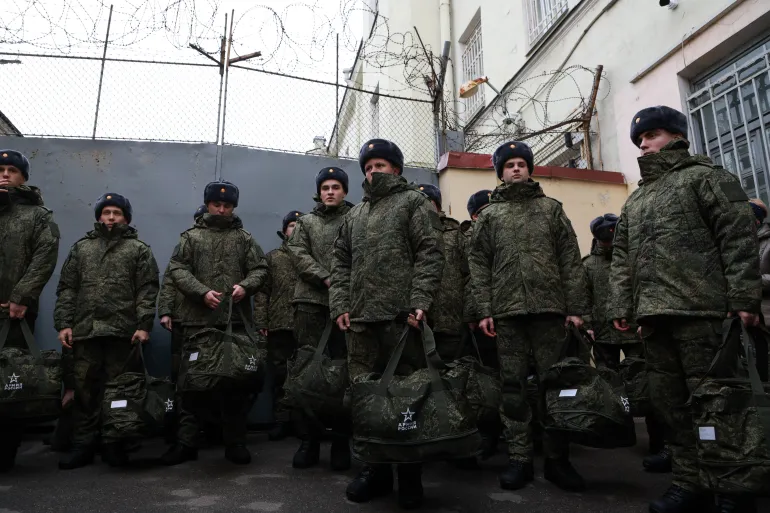
Salohidinov’s trajectory is not an isolated case. It reflects a deliberate and expanding Russian state policy of coercing Central Asian migrants — many of them in legally precarious situations — into military service. The campaign began in earnest in 2023, when police across Russia started detaining individuals who did not appear ethnically Slavic, charging them with real or fabricated offences. The arrests created a captive pool of recruits who could be pressured into enlisting under threat of prolonged detention or worse.
The scale of the operation is now confirmed by Russia’s own senior officials. Chief Prosecutor Alexander Bastrykin stated in May 2025 that 10,000 Central Asians had been dispatched to Ukraine in 2024, followed by a further 20,000 in 2025 — all holding Russian passports. Bastrykin also acknowledged that 80,000 Russian citizens had been apprehended for attempting to evade frontline service, a figure that underscores the deepening unpopularity of the war at home. The number of Russians volunteering to fight fell by at least one-fifth in 2025.
To tighten the net around naturalised citizens, Russia introduced a law in 2024 stipulating that newly granted citizenship can be revoked if the holder fails to register at a conscription office. The measure effectively transforms the path to Russian nationality into a military obligation for migrants from Tajikistan, Uzbekistan, Kyrgyzstan, and other Central Asian nations who have long been drawn to Russia by its oil wealth and chronic labour shortages stemming from a low domestic birthrate.
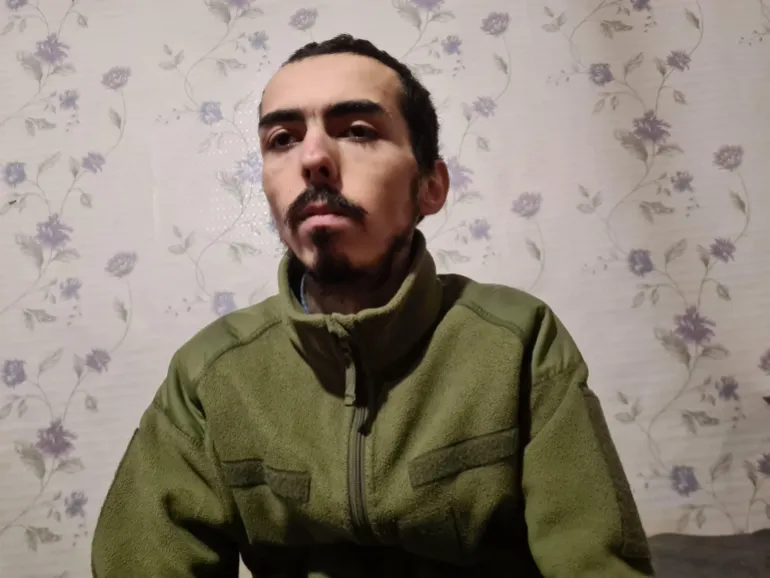
Salohidinov received just three weeks of military training in the western city of Voronezh before being bused toward the front. Of the 28 men in his unit, 21 were Muslim — a demographic snapshot consistent with the broader pattern of Central Asian over-representation in Russia’s expendable infantry formations. During his brief service, he was ordered to work in a kitchen, subjected to verbal abuse, and beaten by fellow soldiers. A grenade explosion damaged his left eardrum before he made the decision to surrender.
The Ukrainian volunteer organisation Hochu Jit, which facilitates the surrender of Russian soldiers, has published verified lists containing thousands of Central Asian fighters captured or killed in Ukraine. Analysts tracking the conflict estimate the average life expectancy for Central Asian migrants forced onto the front line at approximately four months.
The international dimension of the crisis is beginning to generate a diplomatic response. In August 2025, Tajikistan’s Prosecutor General Habibullo Vohidzoda announced that no Tajik national would face criminal prosecution for having fought in Ukraine — a declaration that implicitly acknowledges the coercive circumstances under which many were recruited and signals Dushanbe’s reluctance to punish its own citizens for Russia’s recruitment practices.
For Salohidinov, the war ended almost as soon as it began. Now in Ukrainian custody, his case has become emblematic of a recruitment system that exploits legal vulnerability, ethnic profiling, and the threat of violence to fill Russia’s depleted battalions with men who never chose to fight.