President Donald Trump declared on Friday that the United States could "easily open the Hormuz Strait, take the oil, and make a fortune" given more time, as the conflict with Iran approaches the end of its sixth week with no clear resolution in sight.
The social media post crystallised a strategy Trump has been telegraphing throughout the campaign — one that mirrors his earlier calls to seize oil resources in Iraq and Venezuela. Earlier this week, he stated explicitly that replicating the Venezuelan model in Iran was achievable, but would require prolonging the war beyond its original timeline.
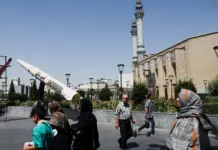
The Trump administration had initially projected the conflict would last four to six weeks. That window closes on Saturday, yet Tehran continues to block the Strait of Hormuz, fire missiles and drones at Israel and other regional targets, and maintain its governing structure despite the assassinations of senior officials and sustained aerial bombardment by both US and Israeli forces.
The Hormuz blockade has sent energy prices sharply higher, squeezing global markets and amplifying pressure on Washington to deliver a decisive outcome. A month ago, Trump pledged that US Navy vessels would escort oil tankers through the strait. The military has since acknowledged it is not prepared to shepherd slow-moving commercial ships through the narrow and contested waterway.
The Venezuelan precedent looms large over Trump’s calculations. In January, US forces abducted President Nicolás Maduro, after which his successor Delcy Rodríguez began cooperating with the Trump administration to sell substantial volumes of Venezuelan oil. Trump has framed a similar outcome in Iran as both strategically viable and economically lucrative.
The United States currently has no publicly acknowledged military presence on the ground inside Iran, a significant constraint on any effort to replicate the kind of rapid leadership transition that occurred in Caracas.
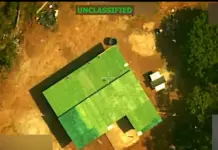
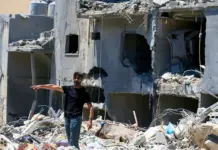
The conflict has also drawn intense scrutiny over the targeting of civilian infrastructure. On Wednesday, Trump shared footage celebrating the destruction of a major civilian bridge inside Iran. He has repeatedly threatened to strike power stations and water desalination plants across the country.
Iran’s Foreign Ministry spokesperson Esmaeil Baghaei responded sharply on Friday, comparing the bridge strike to tactics employed by ISIS/ISIL — a charge that underscored the deepening international unease over the conduct of the campaign.
That unease extends into the legal community. More than 100 US legal experts have formally condemned the strikes on Iranian civilian sites as potential war crimes. International law, including frameworks rooted in the UN General Assembly’s 1962 doctrine of Permanent Sovereignty over Natural Resources, prohibits the seizure of another nation’s natural wealth by force. Legal scholars have further noted that deliberately targeting civilian infrastructure constitutes collective punishment — a practice explicitly banned under international humanitarian law.
The strikes have already spread beyond Iranian territory. Kuwait sustained missile and drone strikes on its desalination plant and oil refinery, signalling that the conflict’s economic and humanitarian consequences are radiating across the wider Gulf region.
Despite Trump’s claims that US forces have effectively dismantled Iran’s military capabilities, the operational picture tells a more complicated story. Tehran retains the capacity to sustain its Hormuz blockade and continue offensive strikes, suggesting that whatever damage has been inflicted on Iranian forces, the country’s core military and governmental functions remain functional.
The gap between Trump’s public declarations of victory and the realities on the ground is becoming increasingly difficult to reconcile as the conflict stretches past its originally stated endpoint — and as the economic, legal, and humanitarian costs continue to mount.