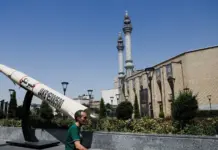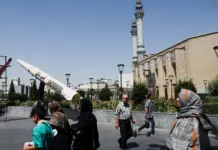
Iranian military forces launched a search and rescue operation Friday for the crew of a US fighter jet shot down by an air defence system over southwestern Iran, as the conflict between Iran and a US-Israeli coalition intensified with strikes on economic and industrial targets across the region.
Two US officials confirmed the aircraft was downed over Iranian territory. The Pentagon and US Central Command declined to comment on the incident. Iranian state television broadcast footage described as wreckage from the downed jet, while Iranian officials urged civilians to assist in locating any surviving crew members.
The governor of Kohgiluyeh and Boyer-Ahmad province, the area where the jet came down, announced that anyone who captured crew members would receive special commendation — a signal that Iranian authorities were treating the search as a priority military objective as much as a rescue effort.
The downing of the aircraft marks a significant escalation in a conflict that began on February 28, when the United States and Israel launched coordinated military operations against Iran. Since then, strikes by all sides have shifted increasingly toward economic and industrial targets, with the apparent aim of degrading Iran’s long-term capacity to sustain the war effort.
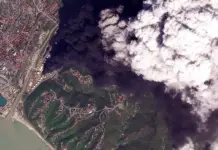
Israeli Prime Minister Benjamin Netanyahu stated that approximately 70 percent of Iran’s steel production capacity had been destroyed over recent days. Iran’s two largest steel plants were knocked out of operation following several waves of US and Israeli air attacks, dealing a severe blow to one of the country’s most strategically important industrial sectors.
The United States also struck Iran’s tallest bridge, a symbolic and logistical blow to the country’s infrastructure. President Donald Trump, posting on his Truth Social platform, warned that the US military had "not even started destroying what’s left in Iran," and explicitly threatened to target bridges and electric power plants in the coming days — a statement that signals a deliberate campaign to cripple the country’s civilian and military infrastructure simultaneously.
Large explosions were heard across northern Tehran on Friday afternoon, and Israel’s military reported a new missile salvo launched from Iran, indicating that despite the damage inflicted, Iranian forces retain the capacity and willingness to strike back.
The conflict has spread well beyond Iranian borders. A desalination plant and oil refinery in Kuwait were struck by missile and drone attacks, raising alarm among Gulf states about their vulnerability to spillover violence. In southern Lebanon, Israeli forces targeted healthcare infrastructure, drawing condemnation from humanitarian organisations monitoring the deteriorating situation across the region.
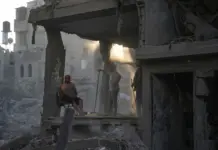
The breadth of the strikes — spanning industrial facilities, bridges, energy infrastructure, and now medical sites — reflects a war that has rapidly moved beyond military-to-military engagements into a broader campaign of strategic destruction. Analysts warn that attacks on power generation and water treatment capacity carry severe humanitarian consequences for civilian populations.
The fate of the downed jet’s crew remains unknown. Whether any personnel survived the shootdown, and whether they will be taken prisoner or recovered, could become a defining political flashpoint in the days ahead — particularly given Trump’s escalatory rhetoric and the Iranian government’s public call for civilian participation in the manhunt.
With no ceasefire negotiations publicly underway and all parties signalling continued military action, the conflict shows no immediate signs of de-escalation.