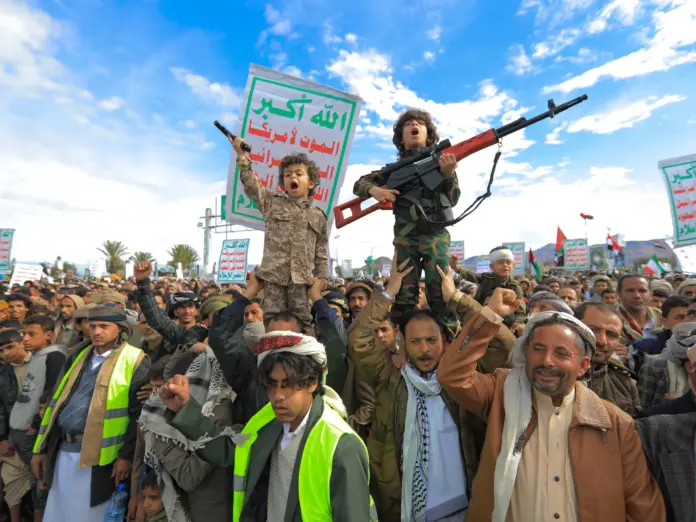
Yemen’s Houthi movement fired a barrage of ballistic missiles at southern Israel on March 28, formally declaring itself a combatant in the widening regional war that has engulfed the Middle East since the killing of Iranian Supreme Leader Ali Khamenei on February 28. Military spokesman Brigadier-General Yahya Saree announced the assault had targeted what the group described as ‘sensitive Israeli military sites.’ The Israeli military confirmed it intercepted the missile threat originating from Yemen.
The Houthis announced their entry into the conflict through a broadcast on their own satellite network, declaring themselves part of the battle against both the United States and Israel. The move came after the group spent approximately one month on the sidelines following Khamenei’s death in a joint American-Israeli strike — a period of calculated restraint that analysts say reflects the movement’s deliberate, measured approach to escalation.
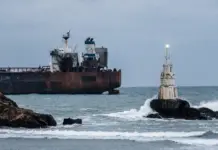
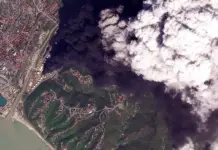
Iran’s counterattacks since February 28 have struck U.S. bases across the Gulf and targeted strategic Gulf infrastructure, drastically slowing commercial traffic through the Strait of Hormuz. The Houthis’ entry into the conflict opens a second maritime chokepoint: the Bab al-Mandeb Strait, the southern gateway to the Red Sea, where the group has previously demonstrated a formidable capacity to threaten international shipping.
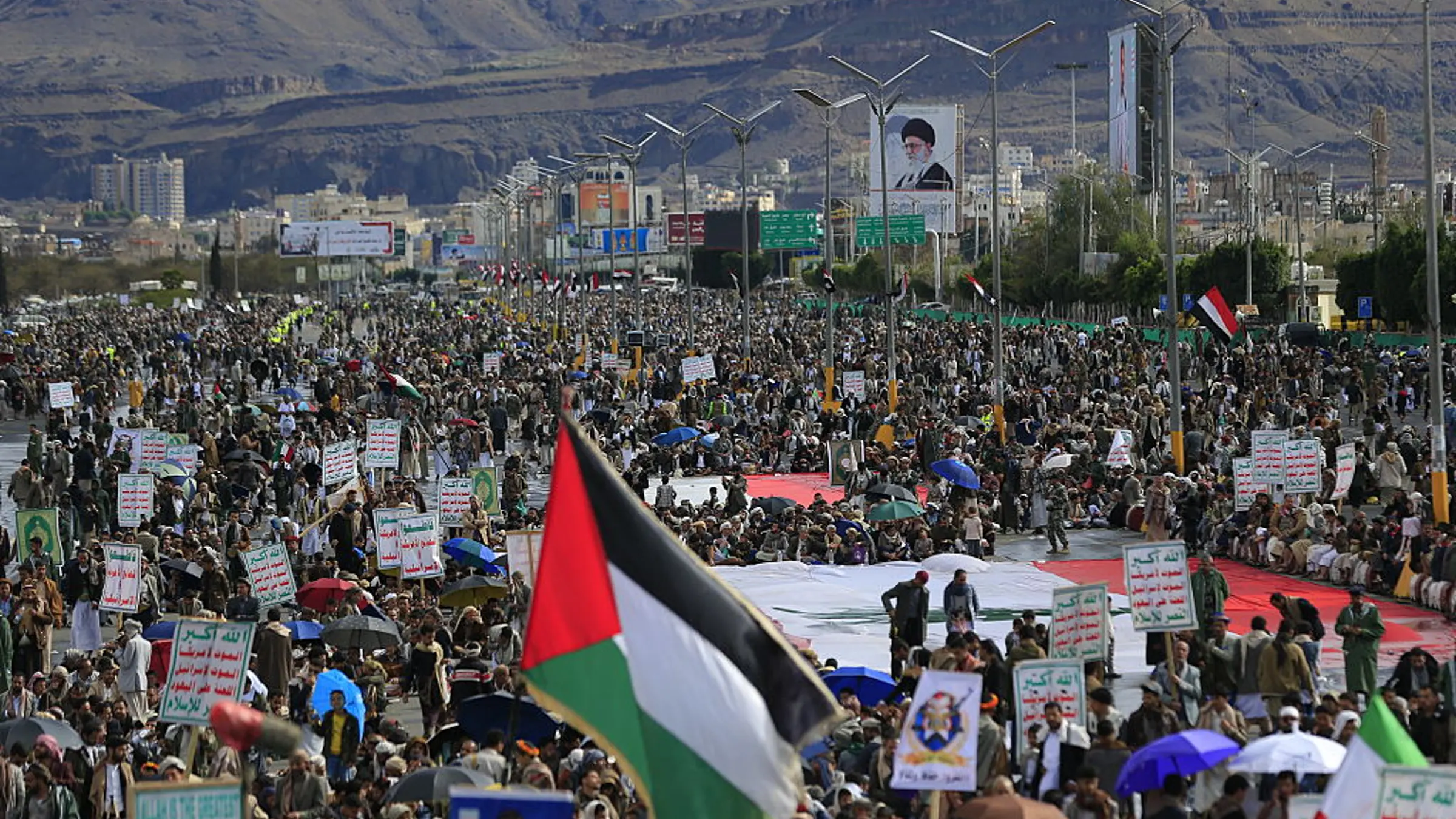
Between November 2023 and January 2025, the Houthis attacked more than 100 merchant vessels in the Red Sea in solidarity with Palestinians during Israel’s war on Gaza — a campaign that drew retaliatory Israeli airstrikes against targets in Sanaa and across Houthi-held territory. A ceasefire between Israel and Hamas in January 2025 temporarily halted those attacks, but the Houthis resumed operations in March 2025 after Israel imposed a blockade on food and humanitarian aid entering Gaza.
The group’s current posture is defined by calculated movements rather than all-out war. The Houthis are acutely aware of the costs of overextension, seeking to avoid a broad confrontation that could drain them materially and in human terms inside Yemen, where the underlying conflict remains unresolved and capable of reigniting at any moment.
Critically, the Houthis have not yet deployed all the pressure tools available to them in the Red Sea — a deliberate signal that further escalation remains an option. Saudi Arabia has already responded to the threat environment by sharply increasing crude exports through its Red Sea port of Yanbu. Exports through that terminal surged to approximately 4 million barrels per day in mid-March, compared with an average of roughly 770,000 barrels per day in January and February, as Riyadh sought to reduce exposure to Hormuz disruptions.

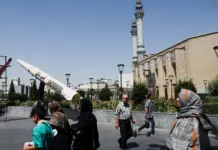
The Houthis’ military capabilities are the product of a decade-long transformation. After capturing Sanaa in 2014 and expanding control across much of northern Yemen, the group — named after its founder Hussein al-Houthi and drawing from the Zaydi branch of Shiite Islam — evolved from a regional insurgency into a heavily armed force. A 2024 United Nations experts report concluded that Iran’s Islamic Revolutionary Guards Corps, Hezbollah, and Iraqi armed groups played a decisive role in that transformation, providing tactical and technical training to Houthi members outside Yemen. Iran has supplied sophisticated ballistic missile technology, and the Houthis have since developed the capacity to assemble and manufacture their own weaponry domestically.
The relationship between the Houthis and Tehran is nonetheless an unequal partnership. Iran provides support, expertise, technology, and political cover within the broader Axis of Resistance, but the Houthis view their Yemeni agenda as an integral part of their own project — not merely a function of Iranian strategic calculations. That distinction matters: the group’s decisions are driven by its own ideological and territorial imperatives, even as it operates within Iran’s regional framework.
The broader Yemeni political landscape adds further complexity. The internationally recognised Yemeni government is currently considered the strongest it has been in years, bolstered in part by Saudi Arabia’s backing in a parallel confrontation with the UAE-supported Southern Transitional Council. Yet Yemen’s war has never formally concluded, and the conditions for renewed large-scale internal conflict persist.

The Houthis’ history with external military pressure is instructive. A Saudi Arabian-led bombing campaign killed an estimated 9,000 civilians without dislodging the group. In January 2024, the Biden administration launched airstrikes against Yemen in response to Houthi attacks on maritime vessels. In April 2025, the Trump administration initiated its own bombing campaign, ultimately striking a deal with the Houthis in May 2025 to halt airstrikes in exchange for the group ceasing attacks on shipping — an agreement now rendered moot by the group’s formal re-entry into the regional conflict.
With the Strait of Hormuz already severely disrupted and the Bab al-Mandeb once again in play, global energy markets and international shipping face simultaneous pressure on two of the world’s most critical maritime corridors.