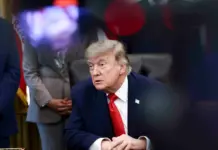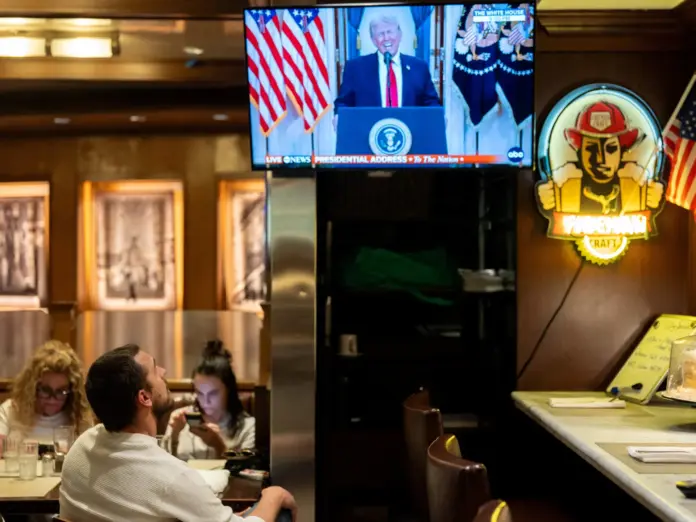
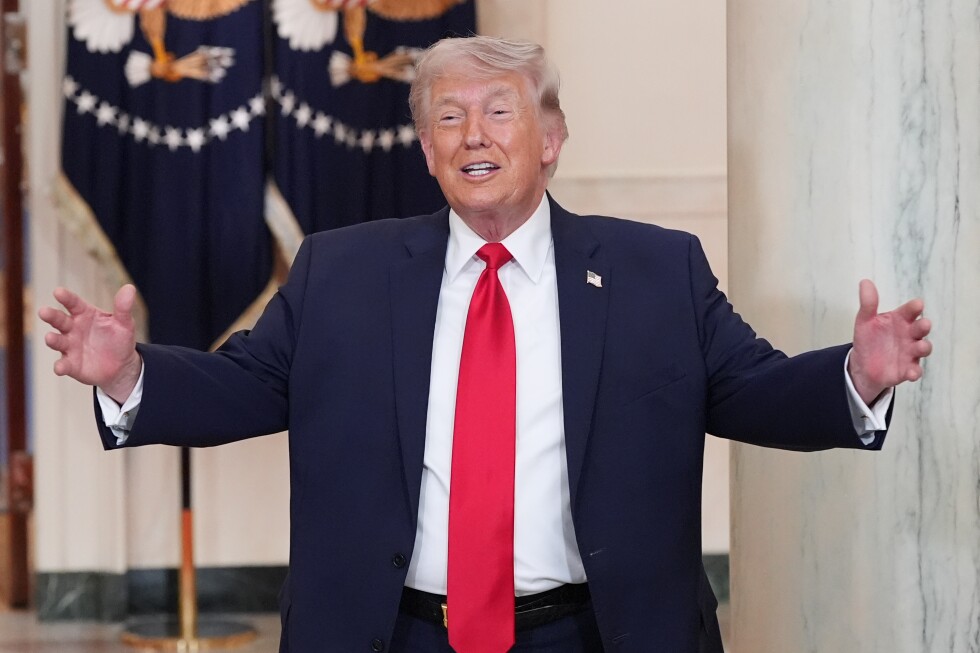
WASHINGTON, DC — President Donald Trump told the American public Wednesday night that the United States had effectively destroyed Iran’s military and was on the verge of completing its war objectives, delivering a primetime address that lasted under 20 minutes even as the conflict showed no sign of imminent resolution.
"We are gonna finish the job. We are getting very close," Trump declared, echoing a statement he made on March 11 that the war would end "soon." He claimed that US strikes in June 2025 had obliterated Iran’s nuclear programme and that Supreme Leader Ali Khamenei, along with several senior political and military figures, had been killed in joint US-Israeli operations. Khamenei’s son, Mojtaba, has since assumed his father’s role.
Trump also asserted that Tehran had requested a ceasefire — a claim Iran flatly denied. Iranian Foreign Minister Abbas Araghchi said trust with Washington stands at "zero," and Tehran characterised US demands as "maximalist and irrational," insisting no ceasefire negotiations were under way.
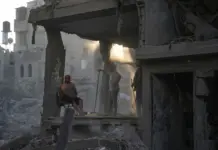
![Smoke rises following a reported strike, as burning debris litters the surrounding areas amid the US-Israel war on Iran, in Baharestan, Isfahan province, Iran [Reuters]](https://world-tension.s3.us-east-2.amazonaws.com/articles/330/54e1614efd314558afc6152fd27c7a4e.webp)
The speech drew swift scepticism from analysts. Sina Azodi, assistant professor of Middle East Politics at George Washington University, described the address as a repetition of positions Trump had already staked out publicly. Trita Parsi, executive vice president at the Quincy Institute for Responsible Statecraft, was equally blunt, characterising the speech as little more than a summary of tweets issued over the preceding 30 days.
Iran’s response came swiftly and forcefully. Shortly after Trump concluded his remarks, Iran launched another missile barrage against Israel. Israeli emergency services reported 14 people wounded near Tel Aviv, including an 11-year-old girl, as the military said its air defences were actively intercepting incoming projectiles. Israel separately killed a senior Hezbollah commander in a strike on Beirut that left at least seven people dead, according to Lebanon’s Ministry of Public Health.
The conflict’s reach extended further across the region. Bahrain issued an emergency warning urging residents to seek shelter amid an incoming Iranian attack. Qatar confirmed that a cruise missile fired from Iran struck a QatarEnergy liquefied natural gas vessel off its coast, while its military intercepted two additional Iranian cruise missiles. A British maritime security agency separately reported a tanker hit by a projectile near Doha, with damage but no casualties. The United Arab Emirates said it had been intercepting Iranian missiles and drones. Trump, during his address, thanked Gulf states for their cooperation and pledged the US would not allow them to "get hurt or fail in any way, shape or form."
An aerial strike on a military base in Iraq’s western Anbar province killed seven fighters and wounded 13 others, hitting a medical clinic at the Habbaniyah base, according to Iraq’s Ministry of Defence.
![Fuel prices are displayed at a Shell station at the Marathon Petroleum refinery in California [File: Jae C Hong/AP]](https://world-tension.s3.us-east-2.amazonaws.com/articles/330/ca59fc52211849d1a4831a8da6e9b310.webp)
The war’s economic toll is mounting. Average US gasoline prices surpassed $4 per gallon this week — the highest level since 2022 — as Iran’s blockade of the Strait of Hormuz continues to throttle global energy flows. Brent crude futures climbed $6.33, or 6.3 percent, to $107.49 per barrel early Thursday, reversing a brief rally that followed Trump’s suggestion the conflict could end within weeks. The World Bank said it is "extremely concerned" about the war’s cascading effects on inflation, employment, and food security worldwide.
Trump threatened further escalation, warning that Iran’s electricity-generating infrastructure would be bombed "very hard and probably simultaneously" if no deal is reached. The threat came even as his own intelligence chief, Tulsi Gabbard, told lawmakers that "Iran is not building a nuclear weapon" — a position Iran itself has consistently maintained.
Iran’s President Masoud Pezeshkian, who has led the country since 2024, published an open letter appealing directly to the American public to question Washington’s motives for continuing the war, stating his country held no hostility toward the people of the United States, Europe, or neighbouring nations. The Islamic Revolutionary Guard Corps struck a markedly different tone, vowing to continue fighting and to "punish" both the US and Israel.
Back-channel diplomacy suffered a significant blow when Kamal Kharazi, a former Iranian foreign minister reportedly involved in Pakistan-mediated talks aimed at bringing Tehran and Washington to the table, was seriously wounded in a strike on his Tehran home that killed his wife.
Public support for the war is eroding. A YouGov poll released this week showed only 28 percent of respondents back the conflict — a sharp decline from a survey on March 2 in which 76 percent of Republican respondents expressed support. Even among Republicans, backing has fallen to 61 percent.
Trump’s stated timeline for concluding the campaign aligns closely with assessments from Israeli Prime Minister Benjamin Netanyahu. The war entered its 34th day on April 2, with no ceasefire in sight and the region bracing for further escalation.