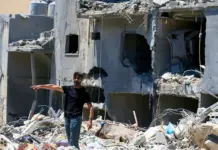
A relentless US-Israeli air campaign against Iran has killed more than 2,000 people, struck civilian and academic infrastructure across multiple cities, and triggered a cascade of regional instability that now threatens Gulf air travel, global shipping, and the cohesion of Western military alliances.
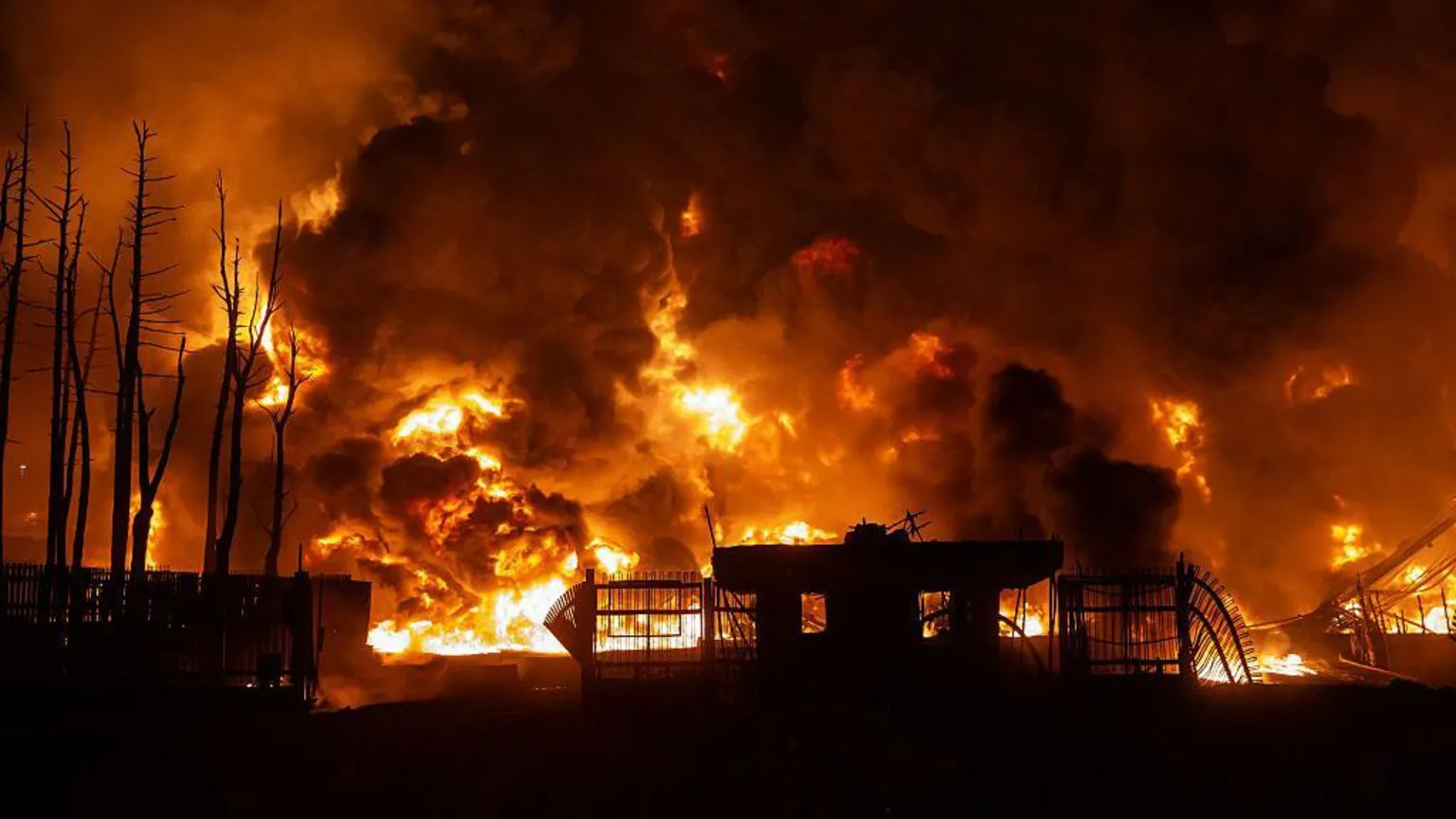
The Israeli military claims to have conducted more than 800 attack flights over Iran, dropping approximately 16,000 munitions since the conflict began. Strikes have hit targets in Ahvaz, Shiraz, Isfahan, Karaj, Kermanshah and the strategic port city of Bandar Abbas, with explosions reported across all six locations in recent days. Targeted facilities include steel plants, pharmaceutical manufacturing units, port infrastructure, meteorological stations and residential complexes.
Among the most significant industrial strikes, US-Israeli forces destroyed the research and development department of the Tofigh Daru pharmaceutical raw material facility in Tehran. In Bandar Abbas, a senior provincial official confirmed that fighter jets struck the Shahid Haqqani passenger pier, though no casualties were reported. A desalination plant on Qeshm Island in the Strait of Hormuz was knocked out of service entirely, raising acute concerns about fresh water access in a strategically vital chokepoint.
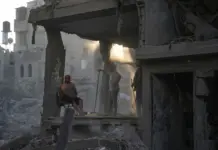
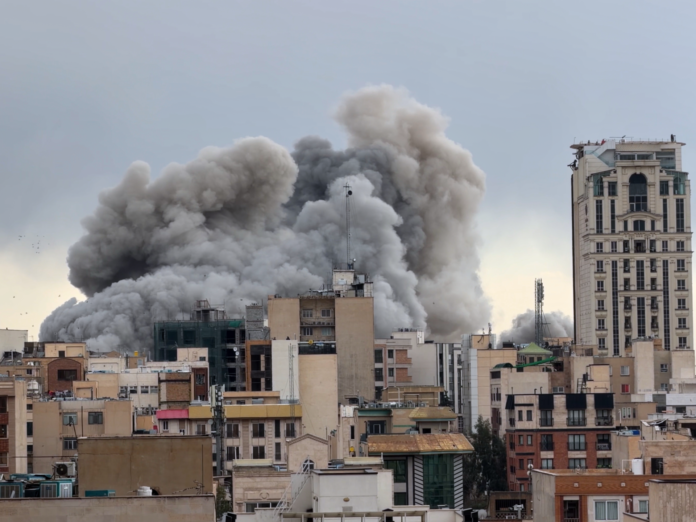
The campaign has also inflicted severe damage on Iran’s academic infrastructure. At least 21 universities have sustained damage since the war began, according to Iran’s Ministry of Science. The Iran University of Science and Technology — founded in 1929 as the country’s first engineering institution — was struck, with footage filmed before sunrise on Saturday showing one of its research centres reduced to rubble. The university confirmed damage but reported no casualties. The Imam Hossein University in Tehran was also targeted, with the Israeli military describing the strike as directed at military infrastructure on the campus. Israeli Prime Minister Benjamin Netanyahu separately confirmed that strikes have killed several Iranian nuclear scientists.
The disruption to higher education has radiated outward across the region. Universities in Lebanon, Qatar, Kuwait and the UAE have shifted to remote learning or temporarily closed buildings. The American University of Beirut and the Lebanese American University both announced online-only operations. Qatar’s Education Ministry ordered all schools and universities to distance learning as of February 28, a directive that extended to US-affiliated institutions linked to Georgetown University, Texas A&M University and Virginia Commonwealth University. Northwestern University in Qatar closed physical access to its building as a precaution. The Iranian Islamic Revolutionary Guard Corps has threatened to target American- and Israeli-affiliated universities across the Middle East, a warning that appears to be driving the precautionary closures.
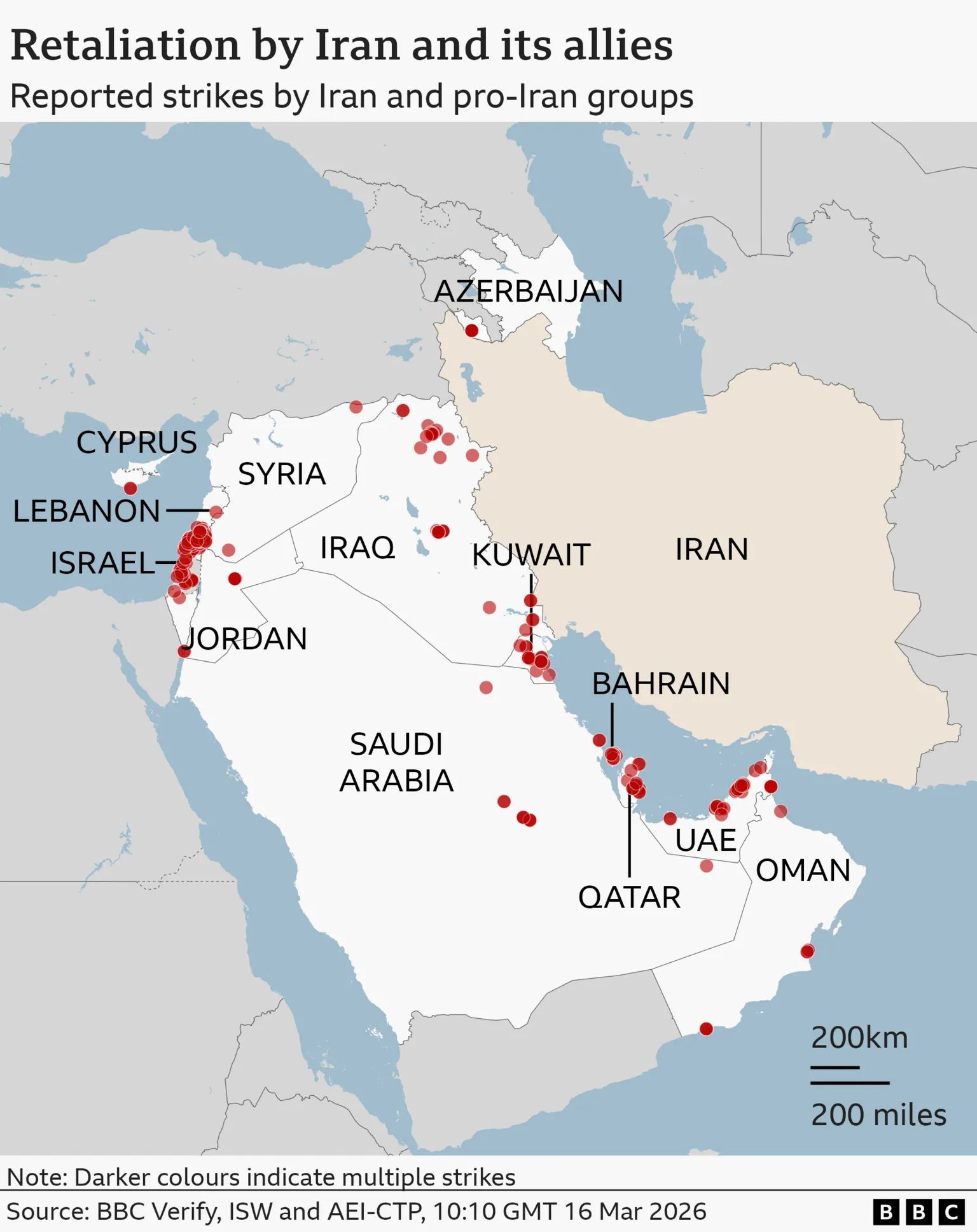
Gulf states are absorbing mounting pressure. Iranian drone attacks have repeatedly struck Kuwait’s airport, forcing airspace closures since February 28, with Saudi Arabia providing buses to airports in Dammam and Qaisumah for displaced Kuwaiti travellers. Air raid sirens have sounded multiple times in Bahrain, with authorities directing residents to shelter. Saudi Arabia’s Ministry of Defense reported destroying two additional drones amid ongoing attacks. A vessel was damaged north of Doha by an unknown projectile, though all crew members survived and no environmental damage was recorded.
The conflict has also strained US relations with European allies. Spain, France and Italy have restricted American military operations by closing airspace, denying base access and limiting logistical support — a significant fracture in transatlantic military cooperation. The Iraqi armed group Kata’ib Sayyid al-Shuhada warned that any use of Kuwaiti territory for a land invasion of Iran would trigger an all-out regional war.
Diplomatic efforts are intensifying but have yet to produce results. China and Pakistan jointly proposed a five-point plan encompassing a ceasefire and the reopening of the Strait of Hormuz. Qatar’s Emir Sheikh Tamim bin Hamad Al Thani and UAE President Sheikh Mohamed bin Zayed Al Nahyan held direct talks on the crisis. Pope Leo XIV called for an immediate halt to the violence. Argentina moved in the opposite direction, formally designating Iran’s Islamic Revolutionary Guard Corps as a terrorist organisation.
Despite the diplomatic activity, both principal belligerents signalled continued military commitment. US Defense Secretary Pete Hegseth described the campaign as ‘negotiating with bombs’ and warned that the coming days would be decisive. President Donald Trump suggested the war could end within two to three weeks without requiring a formal deal. Netanyahu declared that Iran’s regional allies no longer pose an existential threat to Israel, yet stated that the campaign would continue.
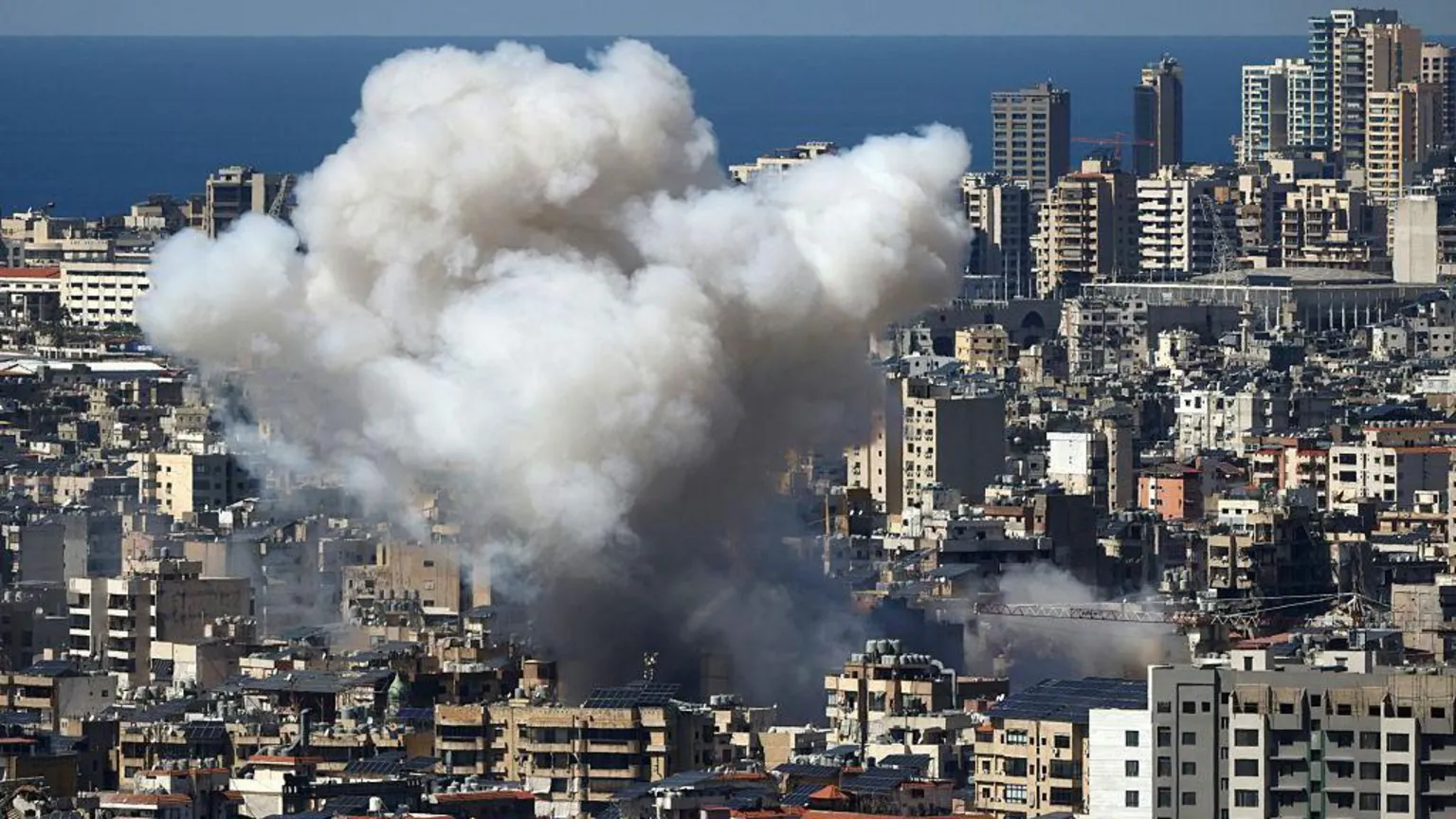
Tehran’s response has been categorical. Foreign Minister Abbas Araghchi told international media that Iran has ‘zero’ trust in Washington and expressed no faith in any negotiations with the United States. The conflict has also opened a second front: Israeli attacks in Lebanon since March 2 have killed more than 1,200 people and displaced 1.2 million. Israeli Defense Minister Israel Katz declared that homes in southern Lebanon would be demolished and that hundreds of thousands of displaced Lebanese would not be permitted to return.
Back in the United States, US Senator Chris Coons warned that the war is already driving up costs for American families, citing rising grocery prices, utility bills and mortgage rates as downstream consequences of the conflict. A new academic term in Iran is scheduled to begin in early April, with all classes to be held virtually until further notice — a measure that underscores how deeply the war has penetrated everyday civilian life.