Washington / Tehran — President Donald Trump has publicly raised the prospect of seizing Kharg Island, Iran’s principal crude oil export terminal in the Gulf, as American military reinforcements pour into the Middle East and the US-Iran war enters its fifth week with no resolution in sight.
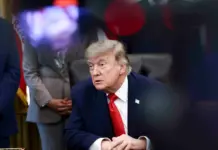
In a wide-ranging interview published Sunday, Trump was characteristically blunt about his ambitions. "Maybe we take Kharg Island, maybe we don't. We have a lot of options," he said, adding that any occupation would require a sustained US presence there "for a while." He dismissed Americans who oppose the oil seizure strategy as "stupid people."
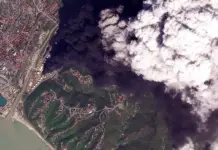
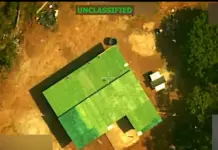
The remarks were not entirely surprising. Over the past month, senior US officials had already been discussing the possible seizure of the island in internal administration deliberations. Kharg Island sits at the heart of Iran's petroleum economy — the Iranian Ministry of Petroleum has described its facilities as the "vital nerve centre" of the country's energy sector. The terminal receives crude from three major offshore oilfields: Aboozar, Forouzan, and Dorood. Cutting off or capturing that chokepoint would be a devastating blow to Tehran's financial lifeline.
Trump drew a distinction between his Iran strategy and Washington's approach to Venezuela, where he said the US intends to control the oil industry "indefinitely." He also claimed that Venezuelan President Nicolas Maduro was abducted in January, though he offered no elaboration.
The military buildup accompanying Trump's rhetoric is substantial. US Central Command (CENTCOM) confirmed that approximately 3,500 additional soldiers arrived in the Middle East aboard the USS Tripoli on Saturday. The Trump administration has also deployed US Marines to the region and is preparing to send thousands of troops from the elite 82nd Airborne Division. Together, these movements signal that Washington is positioning for a potential escalation well beyond the air campaign already underway.
Trump stated the US has struck roughly 13,000 targets since the war began, with an estimated 3,000 targets remaining. He also claimed that Iran's Supreme Leader Mojtaba Khamenei was wounded during the conflict. His predecessor, Ayatollah Ali Khamenei, was killed on February 28 — the opening day of the war.
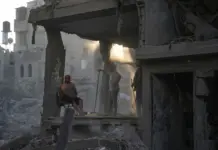
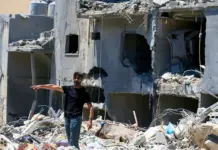
The human cost is climbing sharply. Iran's Ministry of Health reported 2,076 people killed since hostilities began, among them 216 children. At least 25 additional fatalities have been recorded in Gulf Cooperation Council member states.
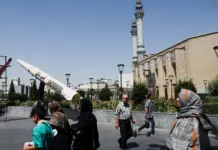
Tehran has shown no sign of capitulation. Iran's parliament speaker, Mohammad Bagher Ghalibaf, issued stark warnings on two consecutive days. On Wednesday he threatened "targeted attacks on vital infrastructure" of a regional country if any attempt were made to seize Kharg Island. On Sunday he went further, warning that US troops would be set "on fire" if they invaded Iranian territory.
Trump presented a 15-point peace proposal that critics have characterised as maximalist in its demands. Tehran rejected it outright, countering with its own conditions: an immediate halt to US and Israeli strikes, reparations for war damage, and binding security guarantees. The two sides remain far apart.
One narrow area of apparent agreement has emerged around maritime commerce. Trump announced that Iran agreed to allow 20 ships carrying oil to transit the Strait of Hormuz beginning Monday morning — the waterway through which roughly a fifth of the world's oil supply normally flows. Markets reacted sharply to the broader uncertainty: Brent crude surged more than 3 percent on Monday morning, topping $116 a barrel.
Diplomatic efforts are gathering pace on the sidelines. The top diplomats of Pakistan, Saudi Arabia, Egypt, and Türkiye convened in Islamabad to lay groundwork for a potential de-escalation framework, though no concrete proposals have emerged from those consultations.
The trajectory of the conflict — expanding troop deployments, an unresolved peace process, and a US president openly musing about seizing sovereign territory for its oil — suggests the coming weeks will be decisive. Whether Washington moves on Kharg Island or uses the threat as leverage in negotiations, the island has become the symbolic and strategic centre of gravity in a war that shows no immediate sign of ending.