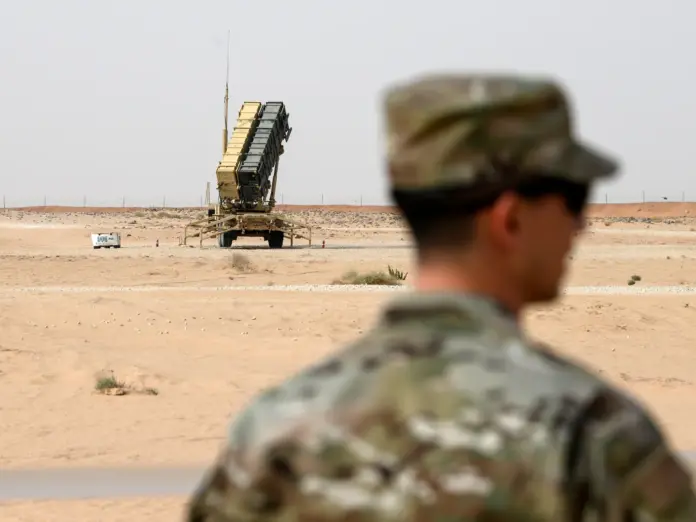
Foreign ministers from four major Muslim-majority nations convened in Islamabad on Sunday in an urgent bid to halt a conflict that has now entered its 30th day, as the US-Israel war on Iran continued to exact a mounting civilian toll and draw in an expanding cast of regional actors.
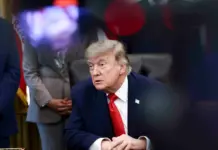
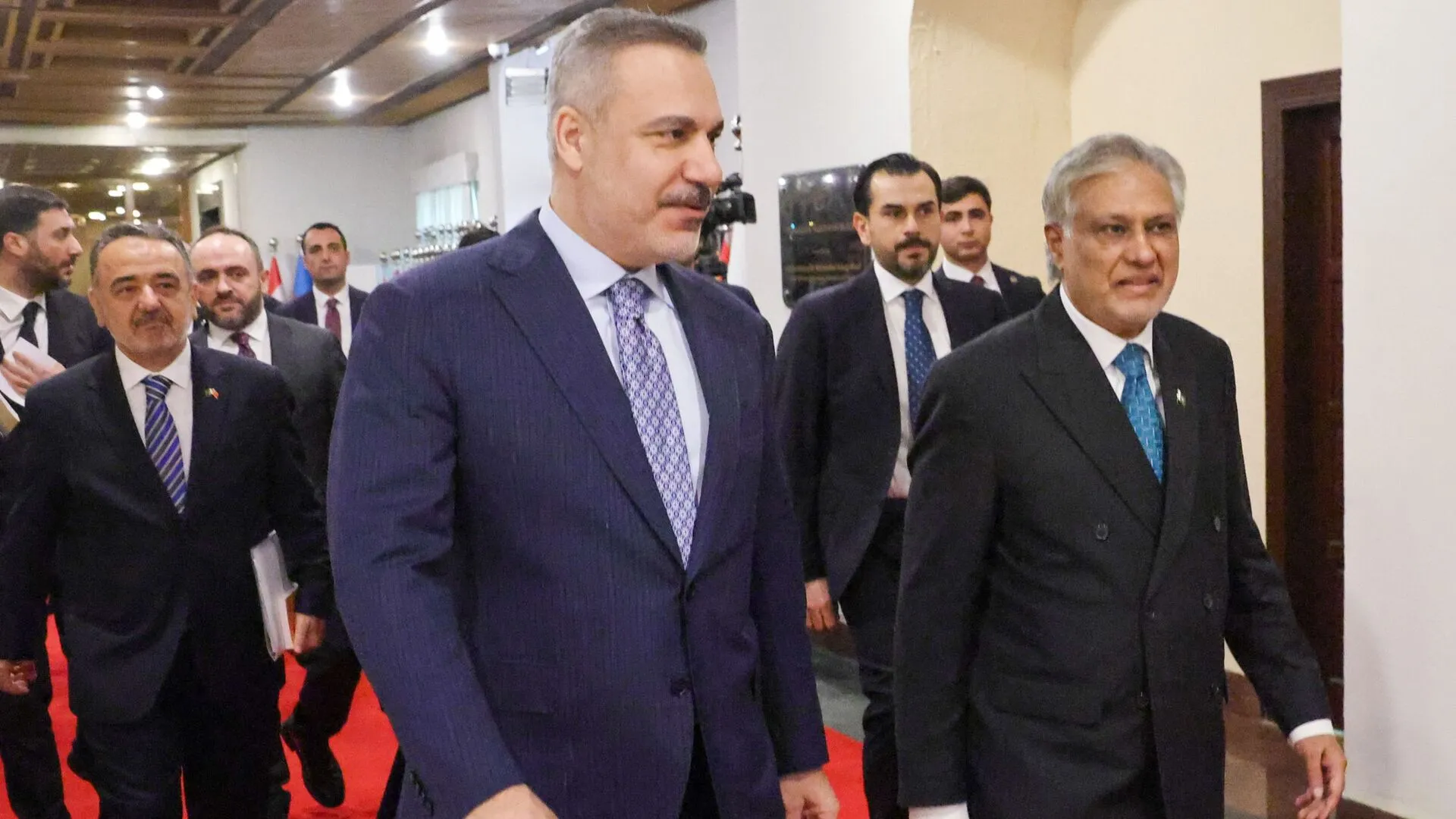
Pakistani Foreign Minister Ishaq Dar led the two-day talks, joined by his counterparts from Turkiye, Egypt and Saudi Arabia. The diplomatic push follows an hour-long telephone call between Pakistani Prime Minister Shehbaz Sharif and Iranian President Masoud Pezeshkian on Saturday, underscoring Islamabad’s growing role as an intermediary. Pakistan has cultivated back-channel influence through the personal rapport that Sharif and army chief Field Marshal Asim Munir have developed with US President Donald Trump. Germany’s Foreign Minister Johann Wadephul said Friday he expected a direct US-Iran meeting on Pakistani soil very soon.
A tangible sign of that mediation emerged when Iran agreed to allow 20 Pakistani-flagged vessels to transit the Strait of Hormuz, at a rate of two ships per day — a concession with significant economic weight given that 20 percent of global oil and gas passes through the waterway. The agreement has already rippled into commodity markets, with diesel prices in Cambodia rising 1.4 percent and liquefied petroleum gas climbing 6.2 percent, illustrating how the conflict’s disruption of energy flows is being felt far beyond the immediate theatre of war.
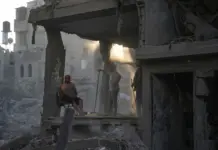
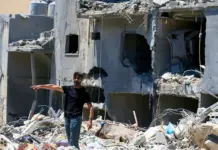
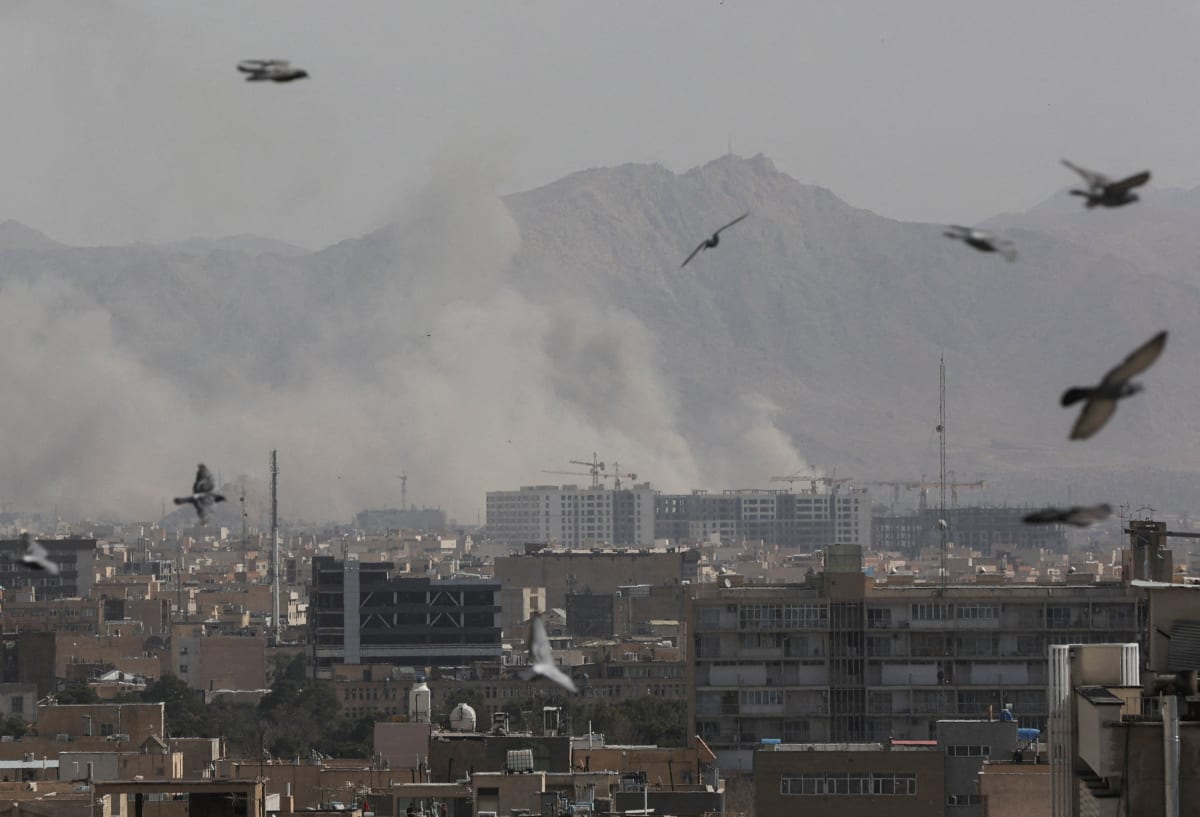
On the ground, Sunday brought fresh strikes on Iranian civilian areas. US-Israeli attacks hit the Saadat Abad neighbourhood of northern Tehran in the early morning hours, wounding three people, while nine more were injured in a separate strike on western Tehran. The previous day, a family of four was killed in Bushehr province, and two people died with five wounded in an attack on a residential area near Shaft city. A water facility in Khuzestan province was also struck on Saturday. Iran additionally accused Washington and Tel Aviv of attacking the residence of the president of the Iraqi Kurdish region.
Iran’s military and its allied forces struck back across a wide arc. The Iranian Revolutionary Guard Corps claimed to have shot down a US MQ-9 drone and struck an F-16 jet on Saturday. The Iranian army said it targeted an electronic warfare and radar centre at the military aerospace complex in Haifa, as well as a fuel storage facility at Ben Gurion airport. At least 15 US troops were wounded in an Iranian strike on a Saudi airbase.
Gulf states found themselves drawn deeper into the conflict. Saudi Arabia intercepted and destroyed 10 drones in the early hours of Sunday, while Kuwait’s National Guard shot down four drones in the same period. The UAE’s air defences responded to missile and drone threats on Sunday. The IRGC claimed responsibility for strikes on industrial sites in Bahrain and Abu Dhabi, asserting the facilities were affiliated with US military and aerospace sectors. Emirates Global Aluminium reported significant damage to one of its Abu Dhabi sites and six wounded employees, while Aluminium Bahrain said two employees were slightly injured when its facility was hit.
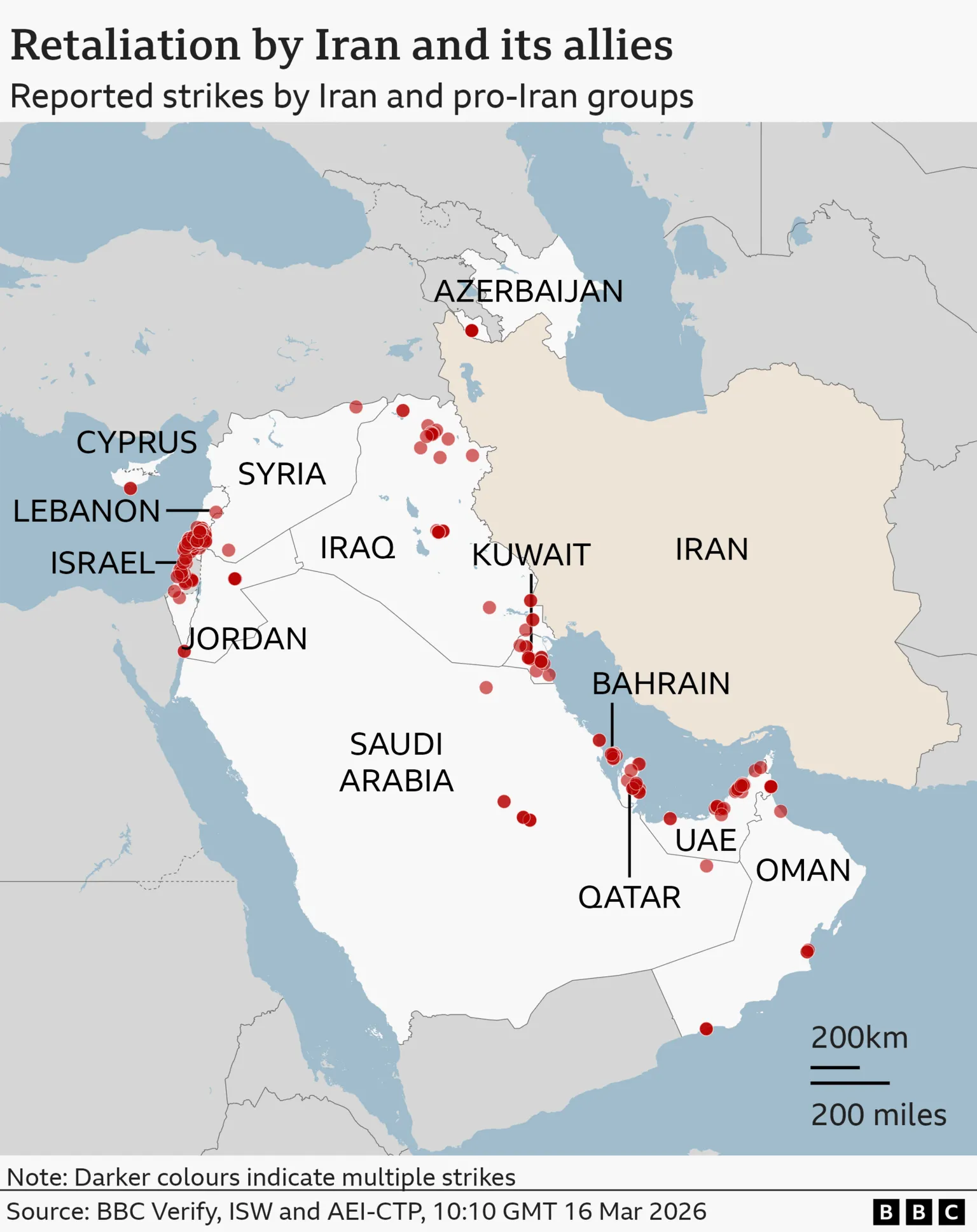
On Israel’s northern front, Hezbollah launched a sustained series of attacks over the weekend. Missiles struck the Ein Shemer airfield and Regavim military camp in northern Israel on Saturday, followed by a missile attack on Israel’s Mahava Alon base and drone strikes on the Berea base near Safad on Sunday. Israeli soldier Moshe Yitzhak HaCohen Katz was killed in southern Lebanon. The Israeli army said it intercepted two missiles fired from Iran.
In a significant escalation, Yemen’s Houthi rebels fired ballistic missiles at Israel on Saturday — their first such strikes since the conflict began. The Iran-aligned movement’s entry into the missile campaign against Israeli territory broadens the coalition of forces now engaged against Israel and the United States.
The war’s toll extended to journalists. Israeli forces killed Fatima Ftouni, Mohammed Ftouni and Ali Shuaib on Saturday. In Gaza, at least six Palestinians including a child were killed in Israeli air strikes on two police checkpoints in Khan Younis. Air strikes also hit Popular Mobilisation Forces sites in the Rashidiya area of Mosul and in Tuz Khurmatu district in Iraq’s Salah ad-Din province.
Washington’s military posture in the region continued to harden. Some 3,500 additional US soldiers arrived in the Middle East aboard the amphibious assault ship USS Tripoli, and the Pentagon is preparing for weeks of ground operations in Iran. At a conservative gathering in Texas on Saturday, Reza Pahlavi, the exiled son of Iran’s last shah, urged President Trump to reject any negotiated settlement and instead pursue regime change in Tehran — a position that stands in direct tension with the diplomatic track being advanced in Islamabad.
In a further sign of the conflict’s global reverberations, Qatar and Ukraine signed a defence agreement focused on countering threats from missiles and drones, reflecting how the technologies and tactics of the Middle East war are reshaping security calculations far beyond the region.