Russia is providing Iran with targeting intelligence drawn from its military satellite network, feeding Tehran real-time data on the positions of American warships and aircraft as the conflict between Iran and Western-aligned forces enters a dangerous new phase.
The arrangement was tacitly confirmed at the highest levels of both governments. US President Donald Trump acknowledged on March 13 that Russia was "helping them a bit" in reference to military assistance flowing to Tehran. The following day, Iranian Foreign Minister Abbas Araghchi described Moscow’s military cooperation with Iran as "good."
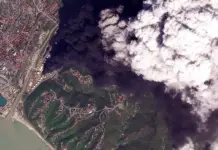
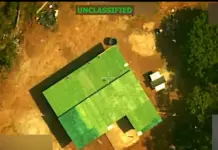
At the centre of the intelligence-sharing operation is Russia’s Liana satellite system, described by analysts as Moscow’s only fully operational spy satellite constellation. The system was originally designed to track US carrier strike groups and naval forces — precisely the targets Iran is now attempting to strike in the Persian Gulf and Indian Ocean.
Iran also operates the Khayyam satellite, launched in 2022 from Russia’s Baikonur cosmodrome. The 650-kilogram spacecraft orbits at 500 kilometres altitude and carries imaging equipment capable of one-metre resolution, providing Tehran with an independent overhead surveillance capability that complements Russian intelligence feeds.
The intelligence cooperation has coincided with a series of dramatic Iranian military claims. On Wednesday, Tehran announced it had struck the USS Abraham Lincoln carrier with multiple cruise and ballistic missiles. The Pentagon flatly rejected the assertion, calling it "pure fiction." Days earlier, Iranian state media reported a "massive blaze" aboard a US destroyer it claimed to have struck while the vessel was refuelling in the Indian Ocean.
The conflict escalated sharply after Washington and Tel Aviv launched coordinated strikes against Iran on February 28. Since then, Iranian drone operations have reached a scale not previously seen outside the Russia-Ukraine theatre. In early March, Iran launched up to 250 drones per day across four consecutive days of intensive strikes. The tempo has since moderated to approximately 50 drones daily.
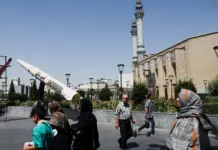
The drones themselves carry a troubling technological signature. A Shahed kamikaze drone equipped with a Russian Kometa-B satellite navigation module — a system that functions as an anti-jamming shield — struck a British airbase on Cyprus on March 1, launched by Iran-backed Hezbollah. The Kometa-B integration makes the weapons significantly harder to defeat with electronic countermeasures. British Defence Secretary John Healey addressed the House of Commons on March 12 following a separate Iranian drone strike on a base used by Western forces in Erbil, northern Iraq.
Russia’s involvement in the conflict is not limited to intelligence. Moscow has supplied Iran with advanced air defence systems, trainer and fighter aircraft, helicopters, armoured vehicles and sniper rifles in transactions valued at billions of dollars. The relationship is reciprocal: since Russia’s 2022 invasion of Ukraine, Tehran has provided Moscow with ammunition, artillery shells, firearms and short-range ballistic missiles. Shahed drones, originally an Iranian design, have been manufactured and upgraded by Russia throughout the Ukraine war, emerging faster and more lethal than their predecessors. Swarms of dozens and then hundreds have been launched against Ukrainian cities.
Despite the depth of military cooperation, the relationship carries clear limits. Russia holds no mutual defence clause with Iran and has not intervened directly in the Iran-Israel conflict. Moscow’s calculus appears to be one of strategic enablement rather than direct participation — supplying the tools and intelligence that amplify Iranian capabilities without formally entering the war.
The economic consequences of the conflict are already reverberating globally. Brent crude oil prices have surged past $100 a barrel over the past three weeks as shipping lanes face disruption and market anxiety mounts. The price spike prompted Trump to temporarily suspend sanctions on Russian oil shipments in an attempt to cushion the economic impact on American consumers — a move that carries its own geopolitical irony, given Moscow’s role in sustaining Iranian military operations.
The convergence of Russian satellite intelligence, Iranian drone capacity and a widening theatre of operations has transformed what began as a bilateral confrontation between Iran and Israel into a conflict with global dimensions. With Western forces now directly engaged and Russian technology embedded in Iranian strike packages, the risk of further escalation remains acute.