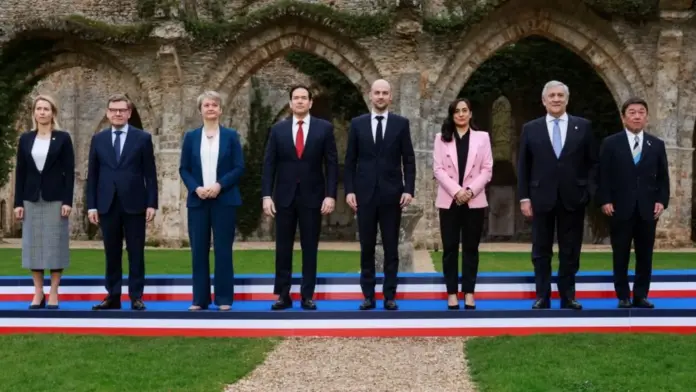
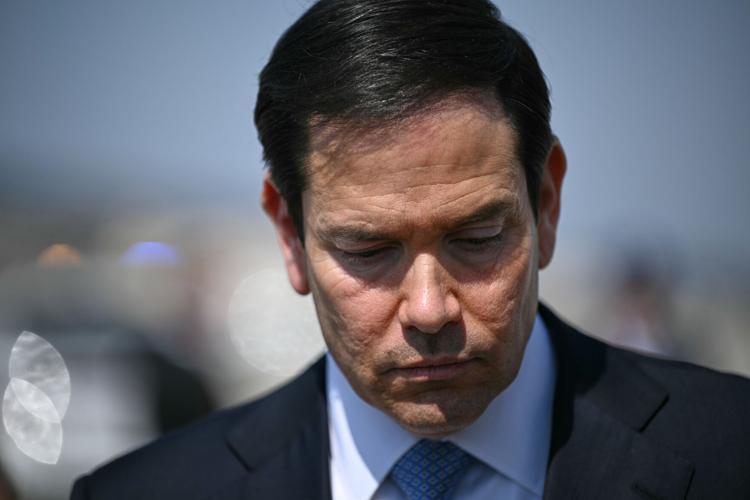
US Secretary of State Marco Rubio arrived at a 12th-century abbey in Vaux-de-Cernay, outside Paris, on Friday to confront a wall of allied skepticism over the US-Israeli war against Iran — a conflict now entering its fourth week with no clear end in sight and global energy markets in turmoil.
The gathering of Group of Seven foreign ministers, held at the historic Cistercian monastery southwest of the French capital, placed the Iran conflict squarely at the top of the agenda. Britain, Canada, France, Germany, Italy, and Japan — the non-US members of the G7 — have each expressed deep reservations about a war they were not consulted on before it began, and none has shown willingness to commit military forces to the effort.
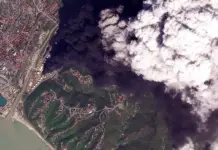
The stakes are considerable. Iran has effectively blockaded the Strait of Hormuz, the narrow waterway through which approximately 20% of the world’s oil and liquefied natural gas ordinarily flows. The closure has disrupted global energy supply chains, driven fuel prices sharply higher, and raised fears of prolonged shortages across Europe and Asia.
British Foreign Secretary Yvette Cooper, attending the summit, called for a swift resolution that restores regional stability — one that must explicitly address the reopening of the Strait of Hormuz. G7 ministers have previously signalled readiness to take necessary measures to support global energy supply, though none has defined what those measures would entail militarily.
German Foreign Minister Johann Wadephul struck a cautious but constructive tone, saying the group should work toward a common position alongside Washington. He described the talks with Rubio as critically important and noted that France and Britain share the same stance on the conflict. Wadephul also stressed that allied unity on Ukraine must not be allowed to fracture amid the new crisis — a concern echoed by European partners anxious about the future of US support for Kyiv in its war with Russia.
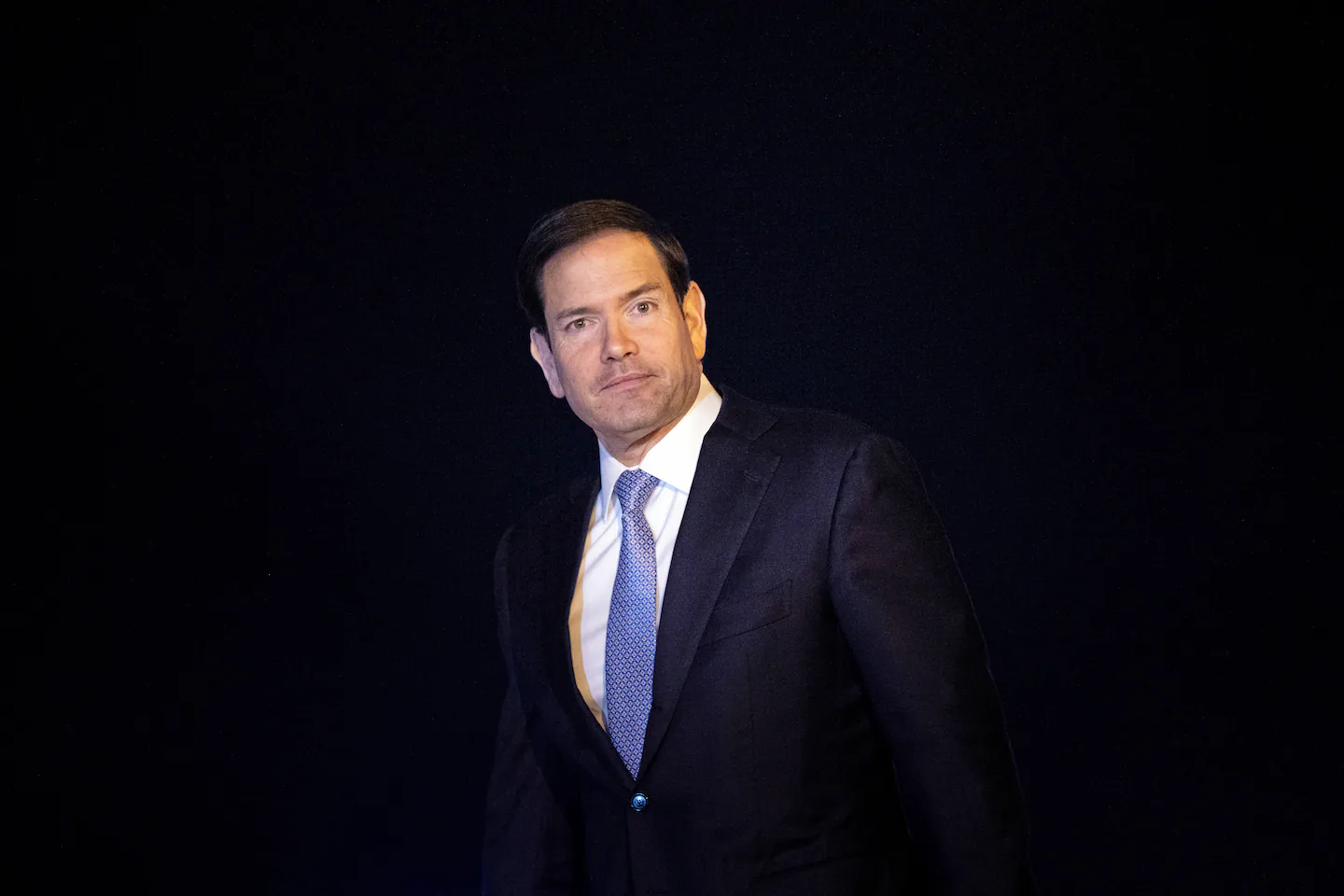
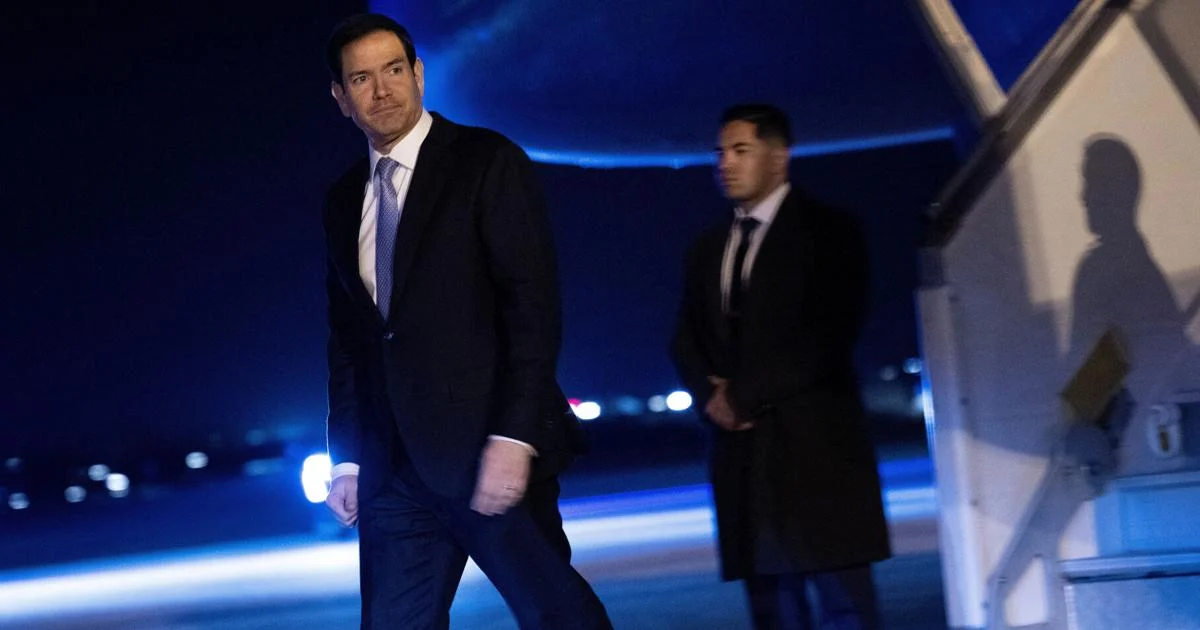
Rubio, for his part, arrived with little appetite for conciliation. Speaking before boarding his flight to France, he was blunt: "I'm not there to make them happy. The people I'm interested in making happy are the people of the United States." He argued that nations claiming to uphold international law should step up and confront Iran's threat to global shipping, framing allied inaction as a failure of principle rather than a legitimate policy choice.
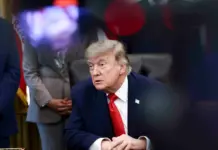
The secretary's posture reflected a broader frustration emanating from Washington. President Donald Trump, speaking at a Cabinet meeting on Thursday, delivered a pointed rebuke to NATO allies, declaring: "We are very disappointed with NATO because NATO has done absolutely nothing." Trump complained that alliance members had not stepped up to support the US and Israel in the Iran war, adding: "We're there to protect NATO, to protect them from Russia. But they're not there to protect us." In a remark that raised eyebrows across European capitals, Trump suggested his commitment to the alliance had always been conditional, saying: "I never thought we needed them. I was more doing a test."
Of the G7 nations, all except Japan are NATO members — meaning Britain, Canada, France, Germany, and Italy bore the brunt of Trump's criticism. The president also renewed his demand that allies facilitate a US takeover of Greenland from NATO member Denmark, compounding the sense of alliance strain.
NATO Secretary-General Mark Rutte acknowledged that Europe and Canada had grown "overreliant on US military might," while reaffirming the alliance's position that Iran cannot be permitted to acquire a nuclear weapon. His remarks underscored the delicate balancing act facing European leaders: supporting the strategic objective of preventing Iranian nuclearisation while refusing to be drawn into a war they view as a unilateral American undertaking.
That grievance was articulated most sharply by France's chief of defence staff, General Fabien Mandon, who hosted military talks attended by representatives of 35 countries focused on how to reopen the Strait of Hormuz. Mandon did not mince words about the manner in which hostilities began: "They have just decided to intervene in the Near and Middle East without notifying us." The complaint captured a sentiment widespread among Washington's European partners — that they are being asked to bear the economic consequences of a war they had no role in starting.
France has been among the most openly skeptical of the G7 nations regarding the Iran conflict, and the choice of French soil for the summit added a layer of diplomatic symbolism to an already fraught encounter. With energy prices climbing, Ukraine aid hanging in the balance, and transatlantic trust under strain, the meeting at Vaux-de-Cernay represented one of the most consequential gatherings of Western foreign ministers in years — and one of the most divided.