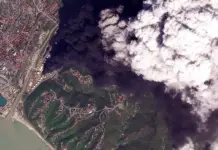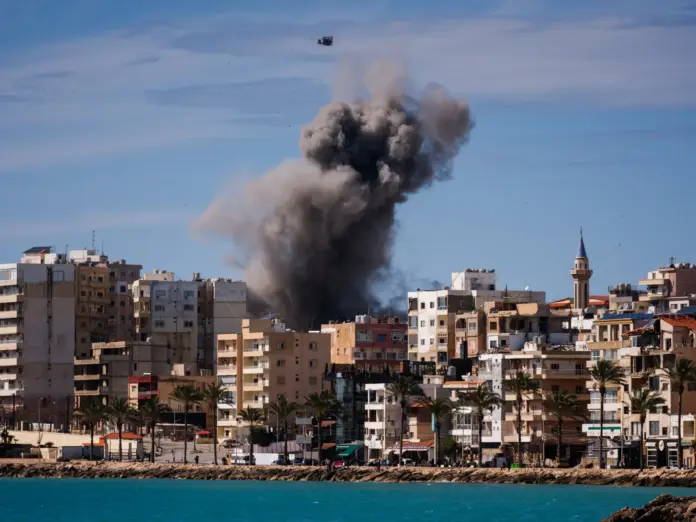
Ottawa and Paris have issued sharp rebukes to Israel over its plans to seize and occupy a swath of southern Lebanon, as Israeli forces bomb bridges and border villages in what Lebanese officials describe as preparation for a major ground invasion.
Canada’s Ministry of Global Affairs said it ‘strongly condemns’ Israel’s occupation plans, warning that Lebanon’s sovereignty and territorial integrity ‘must not be violated.’ The statement, posted on the social media platform X on Tuesday, reaffirmed Canadian solidarity with the Lebanese government and its people, while simultaneously calling on Hezbollah to cease its rocket attacks on Israel and disarm. Ottawa urged all parties to protect civilians, refrain from strikes on infrastructure, health workers, and peacekeepers, and act in accordance with international law.
France’s Foreign Minister Jean-Noel Barrot echoed those concerns on Tuesday, calling on Israel to refrain from its planned occupation of southern Lebanon. The coordinated diplomatic pressure from two NATO allies underscores growing international alarm over the trajectory of the conflict.
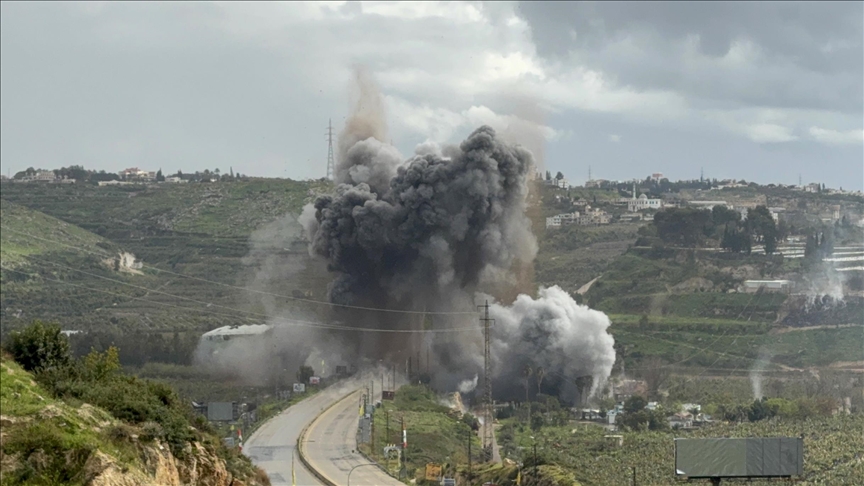
Israel has announced its military intends to take control of Lebanese territory stretching up to the Litani River, approximately 30 kilometres from the Israeli border. Defence Minister Israel Katz stated that displaced Lebanese residents would not be permitted to return south of the Litani until security for residents of northern Israel is guaranteed. Katz said the military is ‘following the model of Rafah and Beit Hanoon’ — a reference to Israeli operations in Gaza — in its approach to southern Lebanon.
The rhetoric from within Israel’s government has grown more expansive still. Finance Minister Bezalel Smotrich called for the formal annexation of southern Lebanon, declaring: ‘The new Israeli border must be the Litani.’ The statement marks a significant escalation in the political framing of the military campaign, moving beyond security justifications toward explicit territorial ambition.
On the ground, the human toll is severe. Since the start of the month, Israeli attacks have killed at least 1,072 people in Lebanon and wounded nearly 3,000 others. More than a million people have been displaced from southern and eastern Lebanon and from Beirut. Israeli forces have bombed bridges spanning the Litani River and struck homes close to the Lebanese-Israeli border — actions that Lebanese President Joseph Aoun described as a ‘prelude to ground invasion’ following the destruction of the strategically important Qasmiyeh Bridge on Sunday.
Wednesday’s strikes added to the toll. Nine people were killed in the latest wave of attacks, according to Lebanese state media. Four died in an Israeli raid on the southern town of Adloun. Two were killed and four wounded when an Israeli strike hit an apartment in the Mieh Mieh refugee camp. In the town of Habboush, at least three people were killed and 18 wounded in a separate raid. A woman in northern Israel was also killed on Tuesday following rocket fire from Lebanon.
Israel’s stated military objective is to occupy the first line of villages in southern Lebanon as a buffer against rocket fire. Hezbollah has launched barrages of rockets into Israel since early March, describing the attacks as a response to continued Israeli strikes on Lebanese territory. The group has also cited the killing of Iranian Supreme Leader Ayatollah Ali Khamenei — who died in a joint US-Israeli airstrike on February 28 — as part of the context for its campaign.
The current escalation follows a ceasefire between Israel and Lebanon that took effect in November 2024, an agreement that has since collapsed entirely. The prospect of a prolonged Israeli military presence — or outright annexation — in southern Lebanon raises the spectre of a protracted occupation reminiscent of Israel’s 18-year military presence in the region that ended in 2000, and carries profound implications for regional stability, Lebanese statehood, and the future of international peacekeeping forces currently deployed in the south.
Canada’s call for all parties to act within international law, paired with its condemnation of both Israeli occupation plans and Hezbollah’s rocket fire, reflects the difficult diplomatic balancing act facing Western governments as the conflict deepens with no ceasefire in sight.