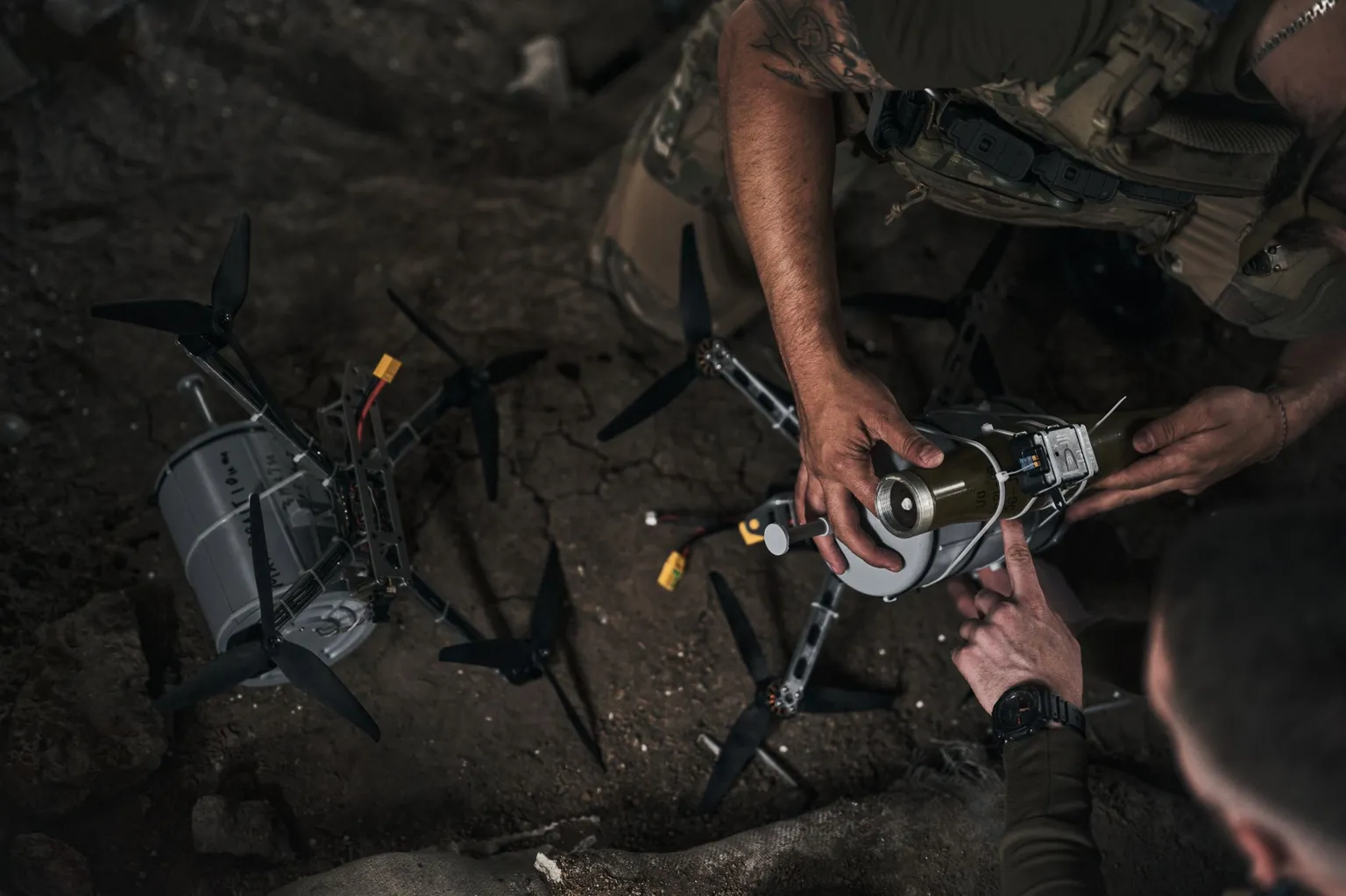
In a small Kyiv apartment, Pavlo, a 30-year-old drone operator, recently back from active duty at Ukraine’s front, attempted to test a drone from a black case, roughly the size of a pizza box. The drone failed to activate as he manipulated the controls, “Not today,” he remarked with a grin, acknowledging the malfunction. On the battlefield, Pavlo, who prefers not to reveal his last name, operated first-person view (FPV) drones. These nimble devices, equipped with forward-facing cameras, have become common in Ukraine’s conflict, taking over from more traditional heavy weaponry.
Armed with explosive payloads, FPVs pursue armored vehicles, track infantry, and target individual soldiers. “There’s no escape from an FPV,” Pavlo noted. “You stay calm and hope for the best.” Even when not visible, the high-pitched drone noise is unmistakable. “Bzzzzzzzzzz,” Pavlo imitated. “It’s the sound of being hunted.” After over a year at the front, Pavlo reunited with his wife in Kyiv, yet the drone noises continued to haunt him. Everyday sounds like motorcycles and air conditioners triggered memories of the FPVs that stalked him. Natural sounds, such as bees and flies, also brought unease. “I avoid nature because it echoes the drones too vividly,” he confessed. Sound-triggered trauma is not new, with veterans from various conflicts affected by sudden noises.
However, Ukraine’s drone-centric warfare has redefined this trauma. Dr. Serhii Andriichenko, Kyiv’s military hospital’s chief psychiatrist, highlighted that many returning soldiers suffer from mental stress linked to drone exposure, a condition they term “droneophobia.” Thousands of veterans, like Pavlo, return with acute distress tied to drone-like urban noises. “Even mundane sounds like scooters or lawnmowers can set off fears,” said Savur, a soldier who lost an arm to a drone attack. At the front, drones were a constant auditory presence, more enduring than the fleeting noise of shells. “The drone hum was ever-present,” Savur recalled.
For many, the dread of silence was also common. “Silence marks the beginning,” Dr. Andriichenko observed. “On combat duty, soldiers stay vigilant, listening for drones in a state of perpetual tension.” Even back home, this lingering anxiety persists, causing veterans to react suddenly to unexpected noises, often without realizing the source of their reaction. Previously, soldiers feared woodlands from past battles, but drone warfare flipped that fear. Now, dense forests offer a sense of security for veterans, who otherwise avoid them during leisure.
Advances in drone usage have extended combat danger zones far from the front line, with drones capable of targeting enemies up to 40 kilometers away. Nazar Bokhii, a drone unit commander, experienced this when a Russian drone attacked him despite being five kilometers from combat. The blast cost him both hands and an eye. His unit had used drones to disorient and panic enemy soldiers. “The drone’s sound itself is a potent psychological weapon,” he acknowledged.

Prolonged drone hovers provoke fear, causing soldiers to abandon safe positions. Drone-induced psychological warfare is spilling beyond battle zones. Russia employs FPVs in attacks on Ukrainian cities like Kherson, targeting civilians—a potential war crime. Over 84 civilians in Kherson have died from drone strikes this year. “There’s no safe haven,” lamented Dmytro Olifirenko, a Kherson resident injured by a drone.
Everyday urban sounds now create a constant psychological challenge for civilians, who live with the persistent reality and fear of drone attacks. For veterans like Pavlo, the drones induce a relentless anxiety, making even routine life feel like a battlefield. “Sudden sounds seize my attention,” Pavlo stated. “Even if it briefly eases your nerves at the frontline, it saves lives. But civil life remains gripped with tension from unfamiliar noises.”