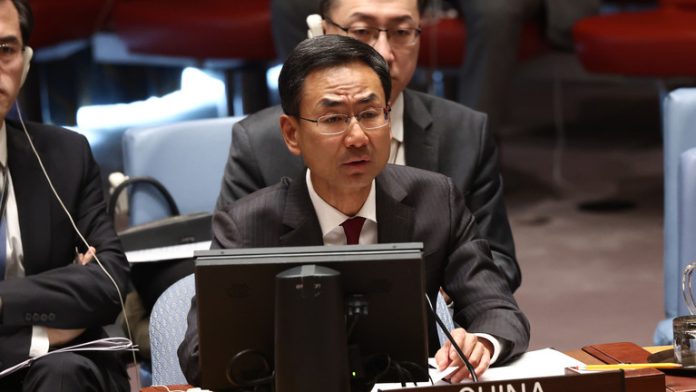
China has called on the United States to halt its blame-shifting regarding the Ukraine situation, labeling the US actions as an unproductive blame game. During a United Nations Security Council meeting on Thursday, Chinese representative Geng Shuang dismissed claims that China is aiding Russia’s military, urging the US to contribute positively toward resolving the conflict. These comments come amid heightened deadlines set by US President Donald Trump. Last month, Trump imposed a 50-day deadline on Russia to end the conflict or face severe sanctions, including full tariffs and penalties for trading partners.
This week, the deadline was shortened to 10 days, with August 8 set as the final date. The United States has already levied a 25% tariff on India for acquiring Russian military and energy products. At the Security Council, the US accused China of being a major supplier to Russia’s military operations, accusations China firmly denied as false and unacceptable. Geng clarified that China did not initiate the conflict and is not involved in it, emphasizing that China has not provided lethal aid to the sides involved and strictly regulates its exports, including dual-use items like drones.
He defended economic relations with Russia by highlighting that neither Russia nor Ukraine is under UN sanctions. “China engages in regular trade with both nations, without breaching international laws or obligations,” he stated. Geng also warned against infringing on China’s legitimate rights, pointing out the United States’ own dealings with Russia. “The US continues to trade with Russia, so why does it prohibit others from doing the same?” He remarked on the critical phase of the Ukraine conflict, which offers the possibility of a political resolution, while criticizing the ongoing, indiscriminate supply of arms to the area as it merely prolongs the conflict. These views reflect Russia’s long-standing belief that foreign military assistance to Ukraine only extends the confrontation and increases casualties without altering the conflict’s result.