Iran Hormuz Peace Deal — A fragile but potentially historic agreement between the United States and Iran edged closer to reality over the weekend, with both sides confirming the broad outlines of a deal even as they clashed publicly over its precise terms and timing.
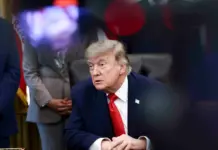
Donald Trump declared on Saturday that the memorandum of understanding — already being called the ‘Islamabad memorandum’ in recognition of Pakistan’s mediating role — represented ‘a wall to no nuclear weapon,’ asserting that Tehran would formally commit to never acquiring a nuclear weapon through purchase, development, or any other means. He suggested the document could be signed as early as Sunday.
Iranian officials moved quickly to temper expectations. Foreign Minister Abbas Araghchi acknowledged on Friday that a deal had ‘never been closer,’ but Foreign Ministry spokesperson Esmaeil Baghaei flatly stated it would not be signed on Sunday, describing finalisation as a matter of ‘coming days.’ The public divergence over timing underscored the delicate state of negotiations even as both governments expressed optimism.
Recommended Reading
Trump added a further complication, complaining that terms Iran had leaked to the media bore no resemblance to the written text both sides had agreed upon — a sign of the deep mistrust that has characterised more than 100 days of conflict between the two nations.
Pakistani Prime Minister Shehbaz Sharif struck the most concrete note, saying on Saturday that finalisation of the agreement was expected within 24 hours, with an electronic signing to follow and technical talks scheduled for the following week. Earlier preparations for a physical signing ceremony in Switzerland appear to have been quietly shelved.
The proposed MoU is structured as a first stage in a broader diplomatic process. Its 14 points, as described by Araghchi, open with the lifting of the US naval blockade on Iranian ports — a measure Washington imposed during the conflict and which Tehran has demanded as a precondition for any agreement. The deal also calls for an end to hostilities across all active fronts, a provision that Iranian state media confirmed explicitly includes Lebanon.
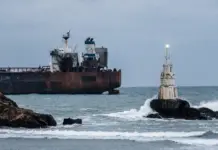
The reopening of the Strait of Hormuz features prominently. Trump stated the waterway would be ‘open to all’ once the first stage is signed. Iran closed the strait during the conflict, a move of enormous economic consequence: before the war, roughly 20 percent of the world’s oil and liquefied natural gas supplies transited the passage. Tehran has long viewed the strait as its most powerful point of leverage, maintaining that the waterway runs through its own territorial waters and those of Oman rather than international waters. Iran has also been exploring the possibility of charging vessels for transit through insurance or shipping services — a position that could complicate full normalisation.
The fate of Kharg Island, which processes 90 percent of Iran’s crude oil exports, loomed over the negotiations. Trump had threatened to seize control of the facility before ultimately calling off strikes — a moment that illustrated both the scale of US military pressure and the limits of how far Washington was prepared to go.
Frozen Iranian assets will be released upon signing, according to Araghchi. The far more contentious issues — the nuclear programme itself and the removal of the sweeping US sanctions regime that has crippled Iran’s economy, banking system, and oil exports — are deferred to a second phase of negotiations. Iran’s position entering those talks is that its enriched uranium should be diluted inside the country rather than exported, a stance that will test American flexibility.
Iran Hormuz Peace Deal: Regional Implications
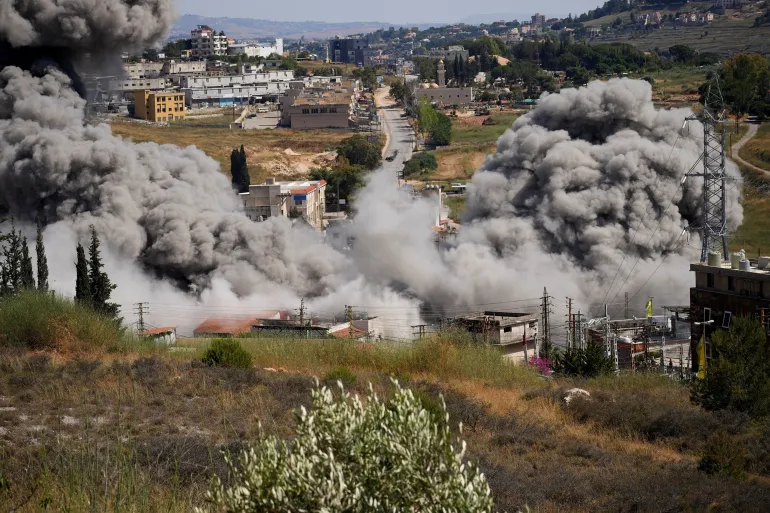
The deal’s scope in Lebanon adds another layer of complexity. Israel has been conducting an intensive air and ground campaign in southern Lebanon, striking 70 targets in a single night and 400 targets over the course of one week. An Israeli security cabinet meeting was expected Sunday night to assess the MoU and its implications for Israeli operations. Israeli commentators were divided: columnist Ben Caspit argued that Prime Minister Netanyahu had won key military engagements but ultimately lost the broader strategic contest with Iran, while analyst Zvi Bar’el contended that Iran arrived at the negotiating table from a position of strength.
Reaction in Washington reflected the partisan fault lines that have defined the Trump era. Republican Senator Ron Johnson warned that a nuclear-armed Iran would pose an ‘existential threat’ to the United States, framing the deal’s nuclear provisions as essential. Democratic Senator Adam Schiff expressed cautious hope that the war was ending while referencing a history of broken promises. Democratic Congressman Seth Moulton was more blunt, describing the emerging agreement as ‘basically a surrender document.’
Internationally, UK Prime Minister Keir Starmer welcomed Trump’s efforts to bring the conflict to a close, lending a note of allied endorsement to a process that has been driven almost entirely by Washington and Islamabad.
Iran remains the most heavily sanctioned country in the world. Whether the phased, conditional sanctions relief the US has signalled willingness to offer will satisfy a government that has long demanded a complete end to economic pressure is the central question that will define the second stage of talks — assuming the first stage is ever formally signed.