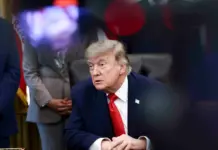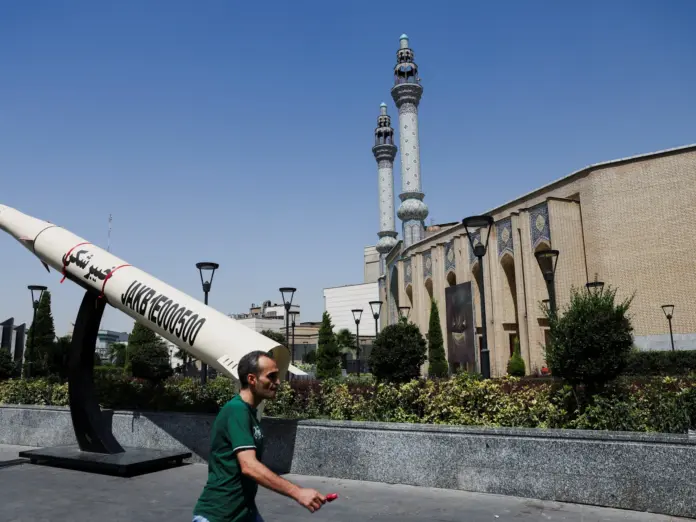
Washington / Tehran / Beirut — A potential diplomatic breakthrough between the United States and Iran edged closer on Saturday, with President Donald Trump declaring a deal to end hostilities could be signed as early as Sunday — even as Israeli forces pressed lethal strikes across southern Lebanon and Gaza, and Iran mourned the death of its Supreme Leader.
Iran Deal Negotiations — Trump told reporters the agreement, once signed, would reopen the Strait of Hormuz to all international shipping and would ultimately result in the US gaining control of Iran’s nuclear material. The White House’s published Sunday schedule, however, contained no reference to a virtual signing ceremony, casting doubt on the immediacy of Trump’s claim.
Iran’s Foreign Ministry rejected the Sunday timeline outright but stopped short of dismissing the broader framework, with officials indicating a signing could occur within days. Foreign Minister Abbas Araghchi described a 14-point memorandum of understanding, the first provision of which calls for the lifting of the US blockade on Iranian ports. Upon signing, frozen Iranian assets would be released. Araghchi also confirmed that the nuclear question — a central flashpoint in the dispute — would be deferred to a second stage of negotiations, which would also address the removal of US sanctions.
Recommended Reading
Iran’s position on its enriched uranium remains firm: Araghchi stated that any dilution of the material must take place inside Iran, a stance that complicates Trump’s assertion that the US will eventually acquire the stockpile. The nuclear issue’s relegation to a later negotiating phase drew scrutiny from Republican Senator Ron Johnson, who warned that a nuclear-armed Iran would pose an existential threat to the United States.
Not all Republican voices were cautious. Congressman John James expressed enthusiasm about the potential deal, while Representative Don Bacon of Nebraska circulated a video of former President Jimmy Carter articulating hopes for a lasting relationship between Washington and Tehran — a striking historical echo given the decades of enmity between the two nations.
Behind the scenes, Pakistan played a significant role in facilitating shuttle diplomacy between the two sides, according to UK House of Lords member Lord Ahmad, underscoring the multilateral architecture underpinning the talks.
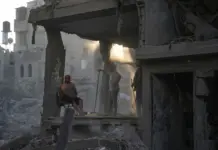
The memorandum, if finalised, would also call for an end to hostilities across all fronts — explicitly including Lebanon. That provision carries urgent weight. At least five people were killed in Israeli strikes across southern Lebanon on Saturday alone. In the town of Deir ez-Zahrani in the Nabatieh district, two people died in an airstrike. The mayor of Rihan, in the Jezzine district, was killed Saturday morning. A further fatality was recorded in a cemetery south of the city of Tyre.
Hezbollah claimed responsibility for a drone strike on the Israeli military position in the town of Hula — situated less than one kilometre from the Israeli border — launched at 12:50am local time. Israel’s Finance Minister Bezalel Smotrich responded with characteristic belligerence, declaring that for every shot fired at Israeli territory, ten buildings would fall in Dahiyeh, the southern Beirut suburb that serves as Hezbollah’s stronghold.
The scale of prior Israeli operations in Lebanon provides grim context. During a previous ceasefire period, Israeli forces struck more than 100 locations within ten minutes, killing more than 350 people — a statistic that underscores the fragility of any diplomatic framework that does not include binding enforcement mechanisms.
Iran Deal Negotiations: Regional Implications
In Gaza, an Israeli strike killed two people and wounded another, according to Palestinian authorities, as the broader conflict showed no sign of abating despite the diplomatic activity centred on Tehran.
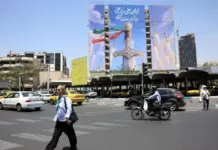
Iran’s domestic situation adds another layer of complexity to the negotiations. Funeral ceremonies for the late Supreme Leader Ali Khamenei are scheduled to begin on July 4 in Tehran, with burial set for Mashhad on July 9. The transition of supreme leadership in Tehran introduces an element of institutional uncertainty at a moment when the country is engaged in its most consequential diplomatic engagement with Washington in decades.
On the margins of the broader regional realignment, Somaliland president Abdirahman Mohamed Abdullahi is expected to visit Israel — a visit that would consolidate ties after Israel became the first country to formally recognise Somaliland as a breakaway region of Somalia. Somaliland’s position on the Gulf of Aden, at the southern gateway to the Red Sea, gives the relationship strategic significance well beyond symbolic recognition.
Whether Sunday produces a signed agreement or merely another round of competing claims, the contours of a potential US-Iran framework are now visible. What remains uncertain is whether the diplomatic architecture can hold against the weight of ongoing military operations, unresolved nuclear demands, and the political transitions reshaping Tehran.