Gaza Medical Crisis — Gaza’s Health Ministry has accused Israel of preventing more than 16,500 Palestinians who require medical treatment abroad from leaving the territory, deepening what international bodies have described as a systematic dismantling of the enclave’s healthcare infrastructure.
Maher Shamia, acting undersecretary of Gaza’s Health Ministry, outlined the scale of the crisis as restrictions on movement through the territory’s crossings continue to limit the flow of both people and aid. Palestinians are permitted to use the Rafah crossing into Egypt only three days per week, while medical evacuations through the Karem Abu Salem crossing are confined to a single day each week.
The Rafah crossing, which remained shut for nearly two years, was partially reopened by Israel at the beginning of February. Since then, Israel has temporarily closed it on multiple occasions, compounding delays for patients with life-threatening conditions who have no other viable route out of Gaza.
Recommended Reading
UN Secretary-General Antonio Guterres on Tuesday called on Israel to immediately reopen all crossings into Gaza, adding his voice to a growing chorus of international concern over the humanitarian situation. Under the terms of the ceasefire agreement brokered by the United States and regional leaders, approximately 600 trucks of aid are supposed to enter Gaza daily — a benchmark that has been difficult to sustain given the access constraints.
The ceasefire deal between Israel and Hamas has not translated into a durable political settlement. Peace negotiations have been stalled for months, and a new round of talks that began in Egypt on Sunday has yet to yield a breakthrough. Husam Badran, a member of Hamas’s political bureau, stated that the group would not hand over its weapons at this stage, while Hamas has insisted that Israeli military operations inside Gaza must cease before any meaningful progress can be achieved.
The broader humanitarian toll is staggering. Gaza’s Health Ministry places the death toll since Israel launched its military campaign in October 2023 at nearly 73,000 people. Almost 90 percent of Gaza’s population remains displaced, and most residents are experiencing high levels of food insecurity. United Nations experts and aid organisations have accused Israel of systematically destroying Gaza’s healthcare system, a charge Israel disputes.
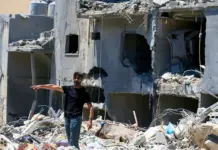
A joint assessment by the United Nations and the European Union, released in April, found that human development in Gaza had been set back by 77 years. Rebuilding the territory is projected to cost more than $71 billion in total, with over $26 billion needed within the first 18 months alone to restore essential services and rebuild critical infrastructure — a figure that underscores the magnitude of destruction wrought on one of the world’s most densely populated territories.
Gaza Medical Crisis: Regional Implications
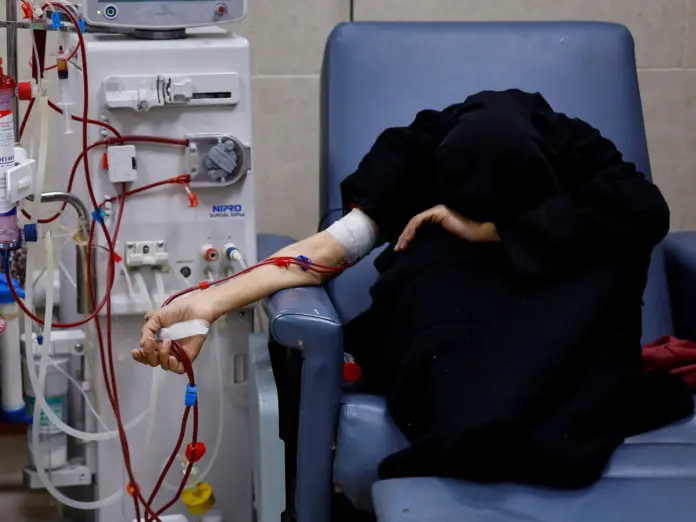
The medical evacuation crisis sits at the intersection of military policy, diplomatic paralysis, and humanitarian emergency. For the thousands of patients awaiting transfer — many suffering from conditions including cancer, kidney failure, and war injuries requiring specialist care unavailable inside Gaza — the bureaucratic and logistical barriers carry life-or-death consequences. With crossing access tightly controlled and talks showing little sign of progress, international pressure on all parties to restore freedom of movement and honour existing commitments is intensifying.
The situation at Gaza’s borders reflects the broader impasse that has defined the conflict’s second year. While a formal ceasefire remains nominally in place, the conditions on the ground — restricted aid flows, constrained medical access, and unresolved negotiations — suggest that a comprehensive resolution remains distant. For Gaza’s civilian population, the consequences of that delay are measured not in diplomatic communiqués, but in lives.