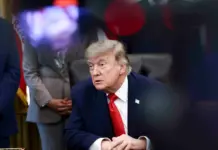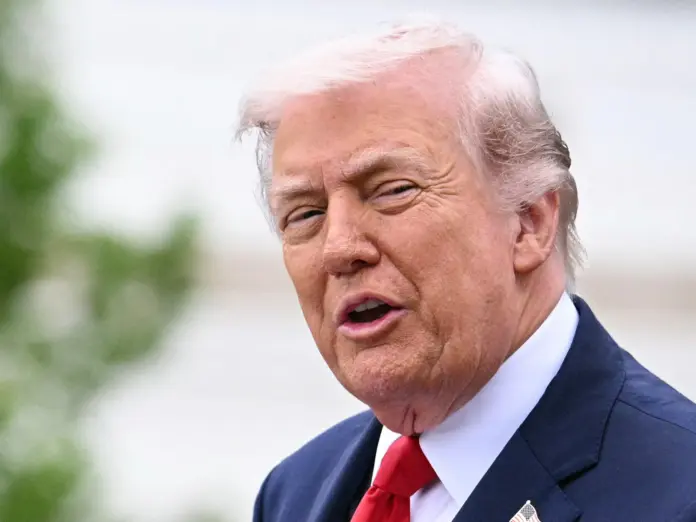
Washington / Tehran — Donald Trump issued a blunt ultimatum to Iran on Wednesday, warning the country must ‘get smart soon’ as diplomatic efforts over its nuclear programme unravelled and the United States cancelled the latest scheduled round of talks with Tehran.
The warning, posted on Trump’s Truth Social platform, was accompanied by an AI-generated image of the president carrying an assault rifle against a backdrop of explosions, beneath a banner reading ‘NO MORE MR. NICE GUY!’ Trump declared that Iran ‘can’t get their act together’ and ‘don’t know how to sign a nonnuclear deal,’ signalling a sharp deterioration in the tone of negotiations that had been underway for weeks.
Iran had proposed postponing a deal on its nuclear programme, a move that appears to have triggered the American walkout. The White House moved quickly to frame the cancellation as a principled stand, stating that Trump would ‘not be rushed into making a bad deal’ and reiterating the administration’s core position: that Iran can never possess a nuclear weapon.
Rob Geist Pinfold, a lecturer in international security at King’s College London, characterised the current dynamic as one of ‘intense competition’ rather than outright physical conflict — a war of pressure, signalling, and economic attrition being waged on multiple fronts simultaneously.
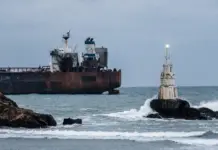
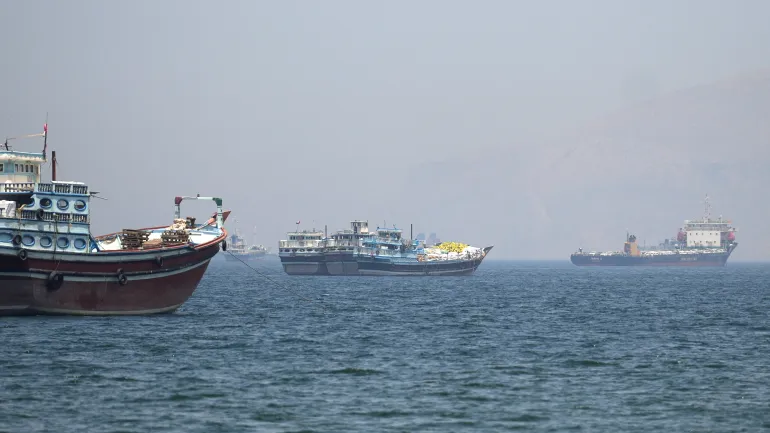
That economic dimension intensified sharply on Wednesday. US Treasury Secretary Scott Bessent announced a sweeping new round of measures targeting Iran’s international financial architecture, including its shadow banking infrastructure, cryptocurrency access, shadow fleet operations, and weapons procurement networks. The Treasury sanctioned an independent Chinese oil refinery for purchasing hundreds of millions of dollars worth of Iranian crude, and blacklisted 40 shipping companies and vessels alleged to be operating as part of Iran’s clandestine oil export fleet. Bessent stated the cumulative effect of Treasury actions has disrupted tens of billions of dollars in Iranian revenue.
The impact on Iran’s economy was immediate and visible. The Iranian rial fell to a new record low against the US dollar on Wednesday, trading at approximately 1.8 million rials to the dollar on the black market, according to currency tracking platforms Bonbast and AlanChand. When the current conflict began at the end of February, the exchange rate stood at roughly 1.7 million rials — meaning the currency has shed approximately 6 percent of its value in a matter of weeks.
Iran’s proposal to prioritise ending the war and reopening the Strait of Hormuz — the critical waterway through which a significant share of global oil supplies passes — underscores the scale of pressure Tehran is facing. Control over the strait has long been one of Iran’s most potent geopolitical leverage points, and any signal of willingness to negotiate its status reflects the severity of the country’s economic predicament.
Beyond the economic toll, the United Nations raised urgent concerns about a parallel crackdown inside Iran. UN human rights chief Volker Turk reported that at least 21 people have been executed since the start of the war, with more than 4,000 individuals arrested. Nine of those executed were connected to Iran’s mass protests in January, ten were put to death for alleged membership in opposition groups, and two were executed on espionage charges.
Turk warned that many of those among the 4,000 arrested have disappeared, been subjected to torture, or faced illegal punishment. The crackdown has been facilitated in part by Iran’s newly enhanced espionage law, which grants authorities the power to execute individuals and seize their property if they are accused of activities linked to what the government designates as ‘hostile states and groups.’
The convergence of collapsed diplomacy, escalating sanctions, currency collapse, and domestic repression paints a picture of a government under acute pressure from multiple directions simultaneously. Whether Tehran ultimately moves toward a deal or doubles down on defiance will likely define the trajectory of one of the most consequential geopolitical standoffs of the decade.
For Washington, the message from Wednesday’s events was unambiguous: the Trump administration is prepared to apply maximum economic and rhetorical pressure while keeping the door to negotiations nominally open — on its own terms, and on its own timeline.