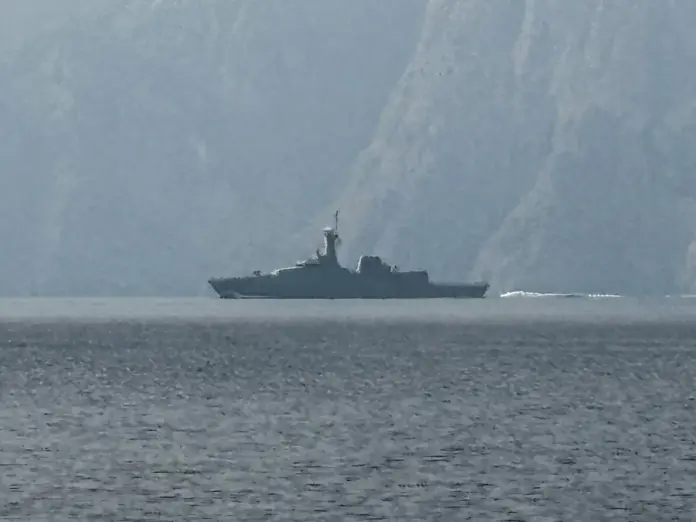
The Strait of Hormuz — the narrow chokepoint through which a fifth of the world’s oil and liquefied natural gas once flowed freely — has become the epicentre of an escalating confrontation between the United States and Iran, with consequences reverberating across global energy markets and diplomatic corridors from Beijing to Brussels.
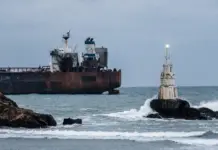
The US naval blockade of Iranian ports, which took effect at 14:00 GMT on April 13, has already produced its first kinetic incidents. American forces fired on and seized an Iranian-flagged tanker near the strait, and at least three additional Iranian-flagged tankers were intercepted in Asian waters in the days that followed. Tehran’s response was swift and sweeping: Iran closed the Strait of Hormuz to all foreign shipping, a move that sent shockwaves through commodity markets and alarmed oil-dependent economies worldwide.
President Donald Trump took to Truth Social on Tuesday night to claim that Iran is haemorrhaging $500 million per day as a direct result of the blockade. The figure, while dramatic, sits in tension with available trade data. Shipping analytics firm Kpler recorded Iranian crude oil exports of 1.84 million barrels per day in March, declining modestly to 1.71 million barrels per day in April. Between March 15 and April 14, Iran shipped 55.22 million barrels of crude. With the price per barrel holding above $90 throughout that period, Iran earned at least $4.97 billion from oil exports over the past month alone — a figure that complicates the White House’s narrative of swift economic strangulation.
Before the US-Israel war on Iran began on February 28, Iran was generating approximately $115 million per day from crude oil sales. The blockade has clearly disrupted that revenue stream, but Iran entered the confrontation with considerable buffers. Analyst Kenneth Katzman estimates between 160 million and 170 million barrels of Iranian crude are currently afloat on ships around the world; Kpler’s own tracking puts the figure even higher, at roughly 183 million barrels. Iran also holds onshore storage capacity sufficient to absorb approximately 20 days of current production, and its domestic refineries carry a processing capacity of 2.6 million barrels per day, according to energy consultancy FGE Energy. The country has even brought a retired tanker, the NASHA, back into service to store oil at Kharg Island, through which 90 percent of Iran’s crude exports normally flow.
Iran has not been a passive actor in the economic warfare. In March, Tehran imposed a toll system on Strait of Hormuz transit, with Iranian politician Alaeddin Boroujerdi confirming that some vessels were charged as much as $2 million each for passage rights. That revenue stream has now been severed by Iran’s own closure of the strait — a measure that cuts both ways, denying Tehran toll income while simultaneously threatening the energy security of adversaries and neutral parties alike.
Iranian officials are signalling that any diplomatic resolution must address the blockade directly. Parliamentary Speaker Mohammad Bagher Ghalibaf stated unequivocally that a full ceasefire is contingent on the lifting of the US naval blockade. First Vice President Mohammad Reza Aref addressed the security situation in the strait on April 19, underscoring Tehran’s position that the waterway’s status is a non-negotiable element of any settlement.
The crisis is drawing in major powers beyond the immediate belligerents. China, which relies heavily on Gulf energy exports transiting the Strait of Hormuz, has declared the blockade’s interference with Chinese trade unacceptable — a statement that adds a significant geopolitical dimension to what Washington has framed as a bilateral pressure campaign. The disruption to global shipping is already producing downstream effects: United Airlines has raised ticket prices by up to 20 percent as fuel costs surge and has slashed its 2026 financial forecast, even as passenger demand remains resilient.
On the domestic political front, Trump faces a structural constraint that could force a recalibration of strategy. Under the War Powers Resolution, the president has 60 days to conduct a foreign offensive without congressional authorisation. That deadline falls on May 1, leaving the administration a narrow window to either secure legislative backing or alter the operational posture of US forces in the Gulf.
The broader stakes are difficult to overstate. In peacetime, the Strait of Hormuz served as the transit corridor for roughly 20 percent of global oil and liquefied natural gas supplies from Gulf producers. Its closure — even partial or temporary — introduces a structural shock to energy markets that no strategic petroleum reserve was designed to absorb indefinitely. With Iranian floating reserves running into the hundreds of millions of barrels, Tehran retains leverage even as the blockade bites. How long either side can sustain the current posture, and whether diplomatic channels can be reopened before the congressional clock expires, may determine whether this confrontation escalates further or finds an off-ramp before the end of April.