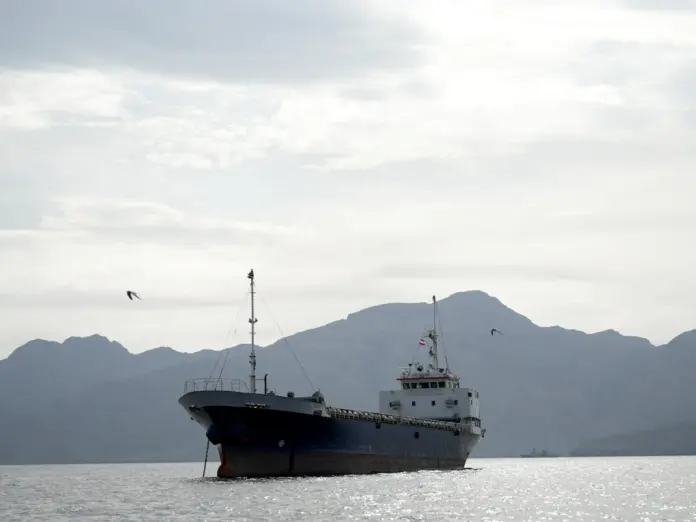
STRAIT OF HORMUZ — The United States military imposed a sweeping naval blockade on all Iranian ports Monday, effective 10am Eastern Time (14:00 GMT), after weekend peace negotiations in Islamabad collapsed without agreement — a dramatic escalation that sent global oil prices surging past $100 a barrel and raised fears of a broader confrontation in one of the world’s most strategically critical waterways.
US Central Command announced the blockade would apply to all maritime traffic entering and exiting Iranian ports, covering the Gulf and the Gulf of Oman. Officials were careful to draw a distinction, stating that vessels transiting the Strait of Hormuz to and from non-Iranian ports would not be impeded — a clarification that did little to calm energy markets rattled by the announcement.
US crude oil jumped 8 percent to $104.24 a barrel, while Brent crude climbed more than 7 percent to top $103 — the first time the benchmark had crossed the $100 threshold since earlier in the week, when prices briefly surpassed $111. The moves reflected deep anxiety over the fate of a chokepoint through which roughly one-fifth of the world’s oil and liquefied natural gas shipments normally flow.
President Donald Trump framed the blockade in stark terms, announcing the US Navy would intercept any ships paying tolls to Iran for Strait of Hormuz passage — a reference to a toll system Iranian officials had floated as a post-conflict revenue mechanism. Iranian Parliament Speaker Mohammad Bagher Ghalibaf responded defiantly, warning that Americans would soon be "nostalgic" for gasoline prices of $4 to $5 per gallon.
The Islamic Revolutionary Guard Corps issued its own warning, declaring that any military vessel approaching the Strait of Hormuz would be considered a violation of the existing ceasefire and would be "dealt with severely." A ceasefire between the United States, Israel, and Iran has nominally been in effect, with approximately ten days remaining before its April 22 expiration.
The breakdown of talks in Pakistan’s capital was swift and acrimonious. Iranian Foreign Minister Abbas Araghchi accused Washington of "maximalism," saying US negotiators had shifted the goalposts at the last moment and obstructed progress when a memorandum of understanding was, in his words, "just inches away." The marathon negotiations had been seen as a last opportunity to stabilise a conflict that erupted on February 28, when the US and Israel launched military operations against Iran.
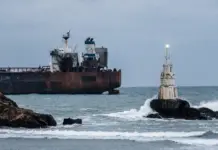
Since that date, traffic through the Strait of Hormuz has slowed to a trickle. Iran has asserted effective control over the waterway, allowing only limited passage for vessels from select countries while moving its own ships freely. The prospect of a formal US naval blockade now threatens to choke off what little commercial traffic remains.
![Oil tankers and cargo ships line up in the Strait of Hormuz, as seen from Khor Fakkan, the United Arab Emirates, on March 11, 2026 [Altaf Qadri/AP]](https://world-tension.s3.us-east-2.amazonaws.com/articles/419/afe024318e70405e89b7a537958fb51e.webp)
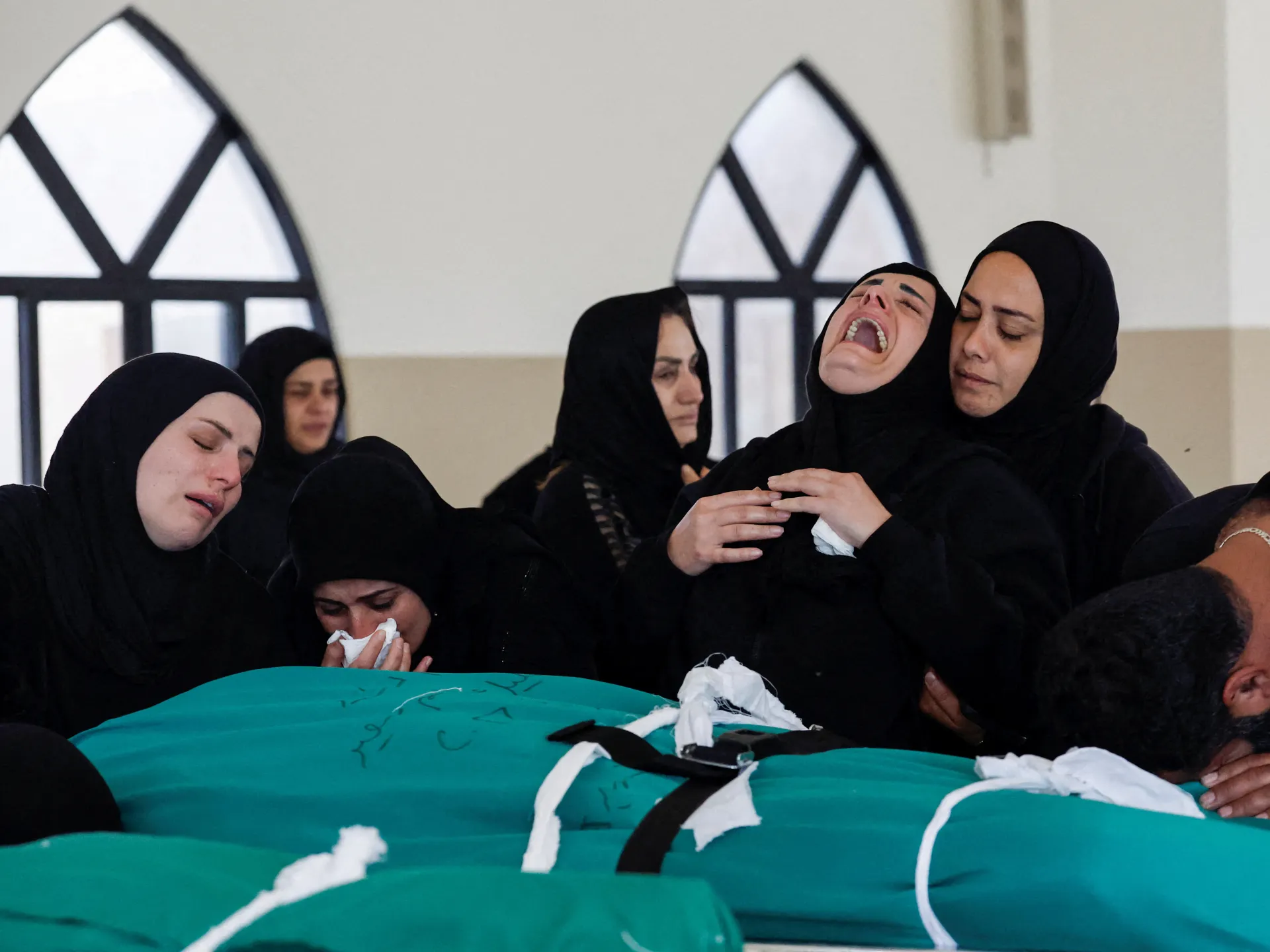
The conflict’s regional dimensions continued to widen. Hezbollah claimed 43 separate attacks on Israeli positions across southern Lebanon on Sunday, targeting towns including Khiam, Bint Jbeil, Taybeh, and Biyyada, as well as Israeli communities such as Kiryat Shmona, Metula, and Avivim, and positions in the occupied Syrian Golan Heights. Israeli forces responded by bombarding south Lebanon, killing at least four people in the town of Maaroub and wounding at least three others. Israeli soldiers also seized control of all entrances to Bint Jbeil, according to Lebanese security sources. Sirens sounded in Israel’s Upper Galilee region following rocket fire from Lebanon.
Iran has also threatened to extend its maritime pressure beyond the Gulf, warning it could close the Bab el-Mandeb Strait — the Red Sea chokepoint off the coast of Yemen — a move that would compound disruption to global shipping lanes already strained by months of conflict.
In Washington, the blockade drew sharp criticism from Democratic lawmakers. Senator Patty Murray posted on social media April 12 arguing that Trump’s foreign war and tariff policies were fuelling domestic inflation. Senator Tim Kaine contended the crisis was a direct consequence of the administration’s earlier withdrawal from the Iranian nuclear deal negotiated under President Obama. Senator Ron Johnson, by contrast, acknowledged the conflict would be a "long-term project."
Analysts noted the historical resonance of the moment. In 1953, British and American intelligence services orchestrated a coup against Iranian Prime Minister Mohammed Mossadegh after he nationalised the country’s oil industry. Three years later, Egypt’s nationalisation of the Suez Canal triggered a military confrontation with Britain and France. The current standoff over the Strait of Hormuz carries echoes of both episodes — a resource-rich chokepoint at the centre of a clash between a regional power and Western military force.
With the ceasefire clock ticking toward April 22 and no diplomatic framework in place, the risk of open naval confrontation in the Gulf has risen sharply. The blockade’s first hours will test whether either side blinks — or whether the world’s most critical oil corridor becomes a theatre of war.