BEIJING/PYONGYANG — Chinese President Xi Jinping has arrived in North Korea this week, making a high-stakes diplomatic push to restore Beijing’s primacy over a relationship that both nations describe as one ‘forged in blood’ — yet which has grown dangerously cold in recent years.
Xi Jinping Pyongyang Visit — The visit marks a dramatic shift in tone after what analysts describe as one of the most frigid stretches in Sino-North Korean relations in decades. Throughout all of 2024, there were no senior-level exchanges between Beijing and Pyongyang. China’s ambassador did not attend North Korea’s founding celebrations in September of that year, and the 75th anniversary of diplomatic relations between the two countries in October 2024 passed with barely any formal acknowledgment from either side.
The diplomatic chill had been building for years. When Xi visited South Korea in 2014 — before he had ever met Kim Jong Un — Pyongyang responded with fury, publicly labelling China a ‘turncoat and our enemy.’ Kim’s execution of his uncle Jang Song Thaek, whom Beijing regarded as a stabilising figure within the North Korean leadership, had already deepened mistrust. Kim himself did not make his first known foreign trip until 2018, when he travelled to Beijing by armoured train.
Recommended Reading
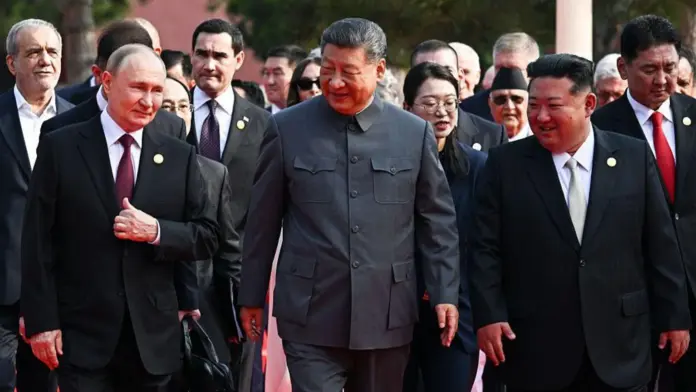
What has jolted Beijing back into action is the rapidly expanding partnership between Pyongyang and Moscow. Vladimir Putin visited North Korea in 2024 and signed a mutual defence pact with Kim Jong Un. North Korea has since been supplying ammunition to support Russia’s war in Ukraine, receiving oil and aid in return. A BBC investigation found that approximately 2,300 North Korean soldiers have died fighting alongside Russian forces — a staggering toll that underscores just how deeply the two countries’ military cooperation has advanced.
Western diplomatic sources have confirmed that China is increasingly alarmed by the trajectory of the Pyongyang-Moscow axis. Beijing’s only formal defence treaty in the world is with North Korea, and the prospect of its sole treaty ally becoming militarily entangled with Russia — outside of Chinese influence — represents a significant strategic concern.
Xi’s visit follows a series of quiet steps to rebuild the relationship. He invited Kim to a military parade in Beijing late last year, their first formal summit in six years. Passenger train services between Beijing and Pyongyang resumed earlier this year after a six-year suspension. Chinese exports to North Korea surged to approximately $2.3 billion last year, the highest level in six years, signalling a deliberate economic re-engagement.
Officials in Seoul believe Xi’s broader objective is to position China as an indispensable mediator between North Korea and the United States, particularly as any future diplomatic process over Pyongyang’s nuclear programme would require Beijing’s involvement to be credible. China and Russia jointly vetoed a US-led United Nations resolution in 2022 that sought to impose new sanctions over North Korea’s ballistic missile tests, demonstrating Beijing’s continued willingness to shield Pyongyang from international pressure when it suits Chinese interests.
Xi Jinping Pyongyang Visit: Peninsula Security in Context
The nuclear dimension remains central to any assessment of the relationship. In his first six years in power, Kim oversaw roughly 90 ballistic missile tests and four nuclear detonations — a pace of weapons development that alarmed not only Western capitals but Beijing as well. China has long preferred a denuclearised Korean Peninsula, viewing North Korean nuclear brinkmanship as a destabilising force that risks drawing US military assets closer to its borders.
Yet Beijing’s leverage over Pyongyang has always been more complicated than it appears. Kim has consistently resisted Chinese pressure, diversifying his diplomatic relationships — most dramatically through the embrace of Moscow — precisely to reduce dependence on Beijing. The execution of Jang Song Thaek removed the figure China considered its most reliable interlocutor within the Kim government.
Xi’s visit is therefore as much about reasserting relevance as it is about repairing ties. With North Korean troops now battle-hardened from combat in Ukraine, and with Russia providing Pyongyang with a strategic alternative to Chinese patronage, Beijing faces a narrowing window to reclaim its traditional role as the indispensable partner of the Kim regime. Whether Xi can translate economic incentives and historical solidarity into genuine strategic realignment remains the defining question of this week’s summit.