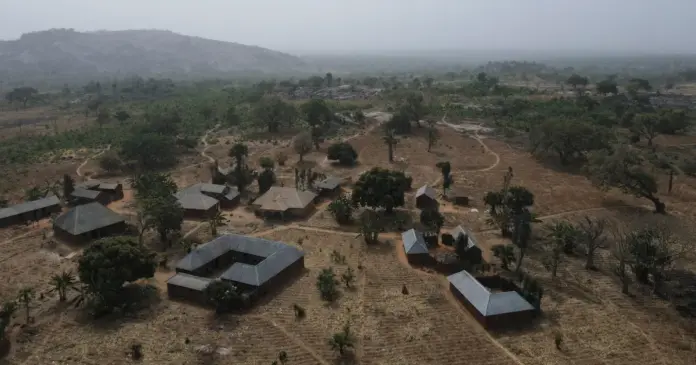
Iswap Leadership Strike — The United States military has killed the second-in-command of the Islamic State’s West African affiliate in a targeted air strike on his compound in the Lake Chad Basin, dealing what analysts describe as a severe blow to one of the region’s most dangerous armed groups.
US Africa Command (AFRICOM) announced Monday that it had conducted the strikes the previous day in coordination with the Nigerian government. The operation targeted Abu-Bilal al-Minuki and several of his lieutenants, with AFRICOM confirming no American or Nigerian forces were harmed during the mission.
Al-Minuki served as the deputy leader of ISWAP — the Islamic State West Africa Province — and was a central figure in directing the group’s operations across the Sahel and broader West African region. Before pledging allegiance to ISIL in 2015, he had established himself as a prominent commander within Boko Haram, the militant network from which ISWAP later emerged.
Recommended Reading
Both the American and Nigerian heads of state moved quickly to claim the announcement. US President Donald Trump publicised al-Minuki’s death via social media on Friday, while Nigerian President Bola Tinubu made his own formal declaration on Saturday — a sequencing that underscored the political weight both governments attached to the outcome.
Dennis Amachree, a former director of the US Department of State Services in Nigeria, said the killing would reverberate through ISWAP’s command structure. "This creates a leadership and financing vacuum," Amachree said, noting that al-Minuki had been instrumental in sustaining the group’s operational and financial networks across the region.
The strike is the latest in a series of intensifying American military engagements in Nigeria. Last Christmas, US forces launched air strikes against ISIL-affiliated fighters in the country’s northwest. In recent months, dozens of US soldiers have been deployed to Nigeria to assist in the fight against armed groups through intelligence sharing and technical support. Nigeria’s Defence Headquarters spokesman Samaila Uba clarified that American personnel operate under Nigerian command authority and will not assume a direct combat role.
The operation comes amid a broader and at times contentious diplomatic backdrop. Trump has previously stated he would consider further military action if killings of Christians in Nigeria continue — a framing the Nigerian government has firmly rejected. Analysts have consistently noted that armed groups in Nigeria target people across all religious communities, and that characterising the violence as exclusively anti-Christian misrepresents the complex nature of the conflict.
Iswap Leadership Strike: What This Means for the Sahel
ISWAP has expanded aggressively since breaking from Boko Haram, capitalising on ungoverned spaces around Lake Chad to recruit fighters, extort local populations, and launch attacks on military and civilian targets across Nigeria, Niger, Chad, and Cameroon. Al-Minuki’s role in overseeing operations across the Sahel made him one of the most consequential figures in the group’s hierarchy.
The Lake Chad Basin has long been a flashpoint for jihadist activity, with porous borders and weak state presence enabling armed groups to operate across multiple national jurisdictions. The US-Nigeria partnership signals a deepening of security cooperation in a region where Western governments have grown increasingly alarmed by the spread of ISIL-affiliated networks.
Whether al-Minuki’s death translates into a lasting degradation of ISWAP’s capabilities remains to be seen. Militant organisations in the region have historically demonstrated resilience in replacing fallen commanders, though the simultaneous elimination of several lieutenants may complicate succession and disrupt operational continuity in the near term.