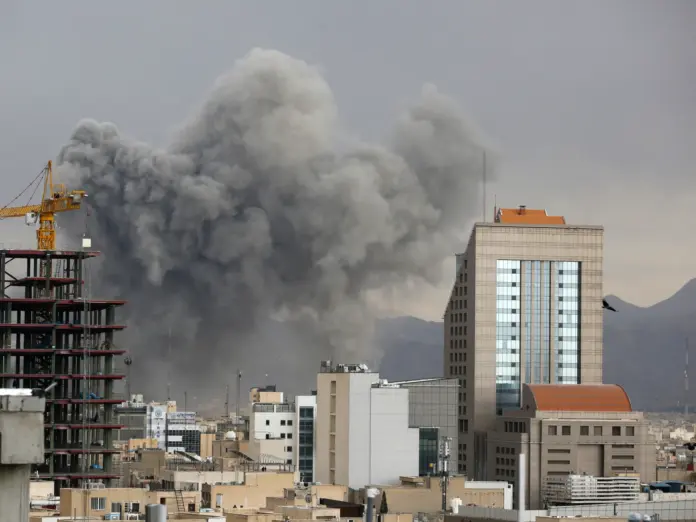
Us-Israel War On Iran — One hundred days after the first shots were fired, the war between the United States, Israel, and Iran continues to redraw the strategic map of the Middle East, with no formal end in sight despite a flurry of diplomatic activity and mounting pressure from nations far beyond the Gulf.
The conflict began on February 28, when Iran launched coordinated missile and drone strikes against US military assets across Gulf countries, a campaign Tehran has framed as a response to what it calls an ‘unprovoked act of aggression’. Washington and its allies have pushed back hard, with the United States Central Command shooting down Iranian drones over the Strait of Hormuz and sustaining damage to critical infrastructure, including a US AN/FPS-132 missile early-warning radar in Qatar and a THAAD missile defence system radar in Jordan.
The opening days of the war brought immediate consequences for neutral parties. On March 1, two drones struck the Duqm commercial port in Oman’s Al Wusta governorate, with a fuel tank at the same facility hit in a follow-up strike two days later. By March 13, two foreign nationals were killed in a drone attack in Sohar province. Iraq’s Ministry of Oil declared force majeure on all oilfields developed by foreign companies in March, sending shockwaves through global energy markets.
Recommended Reading
![A man holds an Iranian flag near an anti-US billboard depicting US President Donald Trump and the Strait of Hormuz, in Tehran, Iran, May 30, 2026 [Majid Asgaripour/WANA (West Asia News Agency) via Reuters]](https://world-tension.s3.us-east-2.amazonaws.com/articles/1332/c410d13eb2fa467fad2527aa408910bd.webp)
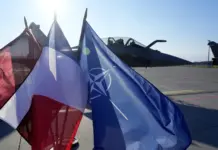
The war’s geographic reach expanded further in May, when a ballistic missile fired from Iran passed over Syria and Iraq before entering Turkish airspace, where it was destroyed by NATO air defence systems — a stark reminder of how quickly the conflict threatened to draw in the Atlantic alliance.
On the ground in Lebanon, the situation remains volatile. A ceasefire between Israel and Lebanon was agreed on April 8, but Israel has killed more than 3,000 people in Lebanon since that agreement took effect. The ceasefire was renewed on April 16, though Israeli strikes have continued, including one that killed two Lebanese army officers and a soldier in an attack on a military vehicle in south Lebanon.
Behind the scenes, several Arab states have taken steps that go well beyond public statements. A May 12 report revealed that Saudi Arabia launched unpublicised strikes against Iran in retaliation for attacks on its territory. The UAE, according to a May 29 report, carried out dozens of air strikes against Iran in operations coordinated with the United States and Israel. Qatar, which hosts the Al Udeid airbase and tens of thousands of US troops, expelled Iranian military and diplomatic personnel after an attack on QatarEnergy’s LNG facility at Ras Laffan. Bahrain, home to the US Navy’s Fifth Fleet, attempted to pass a UN Security Council resolution to keep the Strait of Hormuz open to commercial shipping, but the measure was vetoed by China and Russia in April.
Russia’s position has been unambiguous. President Vladimir Putin pledged in April that Moscow would remain a staunch ally of Tehran, even as Russian diplomats simultaneously proposed taking in Iran’s stockpile of highly enriched uranium as part of a potential peace framework with Washington — a proposal that underscored the complex and often contradictory nature of great-power manoeuvring around the conflict.
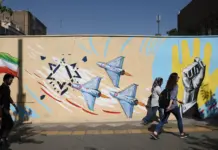
![A woman reacts to the camera as she walks past anti-US graffiti painted on the wall of the British Embassy in Tehran, Iran, Saturday, June 6, 2026 [Vahid Salemi/AP Photo]](https://world-tension.s3.us-east-2.amazonaws.com/articles/1332/22f9df45746543bd91fb4d5fecdf6880.webp)
Diplomatic efforts have accelerated in recent days. Pakistani Interior Minister Mohsin Naqvi arrived in Tehran on Saturday for direct talks with Iranian officials, including Foreign Minister Abbas Araghchi, carrying a special letter from Pakistan’s army chief and prime minister addressed to Supreme Leader Khamenei. Hours later, Iran launched a fresh salvo of missiles at US allies Bahrain and Kuwait, a sequence that illustrated the fragile and combustible nature of current negotiations. Pakistan had previously announced a ceasefire more than a week after a March 29 meeting in Islamabad that brought together foreign ministers from Saudi Arabia, Egypt, Pakistan, and Turkey.
Us-Israel War On Iran: Regional Implications
The economic fallout is being felt across two continents. India, with nearly 10 million expatriates in the Gulf region, has seen Prime Minister Narendra Modi urge citizens to work from home, avoid international travel, and refrain from purchasing gold — an extraordinary set of advisories that signal deep concern about remittance flows and supply chain disruption. Modi had visited Israel just days before the war began.
ASEAN nations, which import more than half their crude oil and 17 percent of their natural gas from the Middle East, agreed in May to develop a regional power grid and shared fuel stockpile. The Philippines had already declared a national emergency over dwindling energy reserves in late March, the first country in the world to do so in response to the conflict.
![People walk past a billboard depicting the late supreme leaders, Ruhollah Khomeini and Ali Khamenei, on a street in Tehran, Iran, on June 6, 2026 [Majid Asgaripour/WANA via Reuters]](https://world-tension.s3.us-east-2.amazonaws.com/articles/1332/4ebed8707c59404e8bf3cd88a540f786.webp)
Africa faces a longer-term structural crisis. The continent holds roughly 12 percent of global oil reserves yet imports more than 70 percent of its refined fuel. The Africa Finance Corporation warned in April that disruptions to Gulf supply chains could produce an 86 million-tonne fuel shortfall by 2040.
Egyptian President Abdel Fattah el-Sisi told US President Donald Trump in March that only Washington possessed the leverage to halt the fighting. The US government has since signalled its intention to redirect frozen Iranian assets toward Gulf states to fund reconstruction of infrastructure damaged in the conflict. Whether that offer, combined with Pakistan’s mediation effort, can produce a durable ceasefire remains the defining question as the war enters its second hundred days.