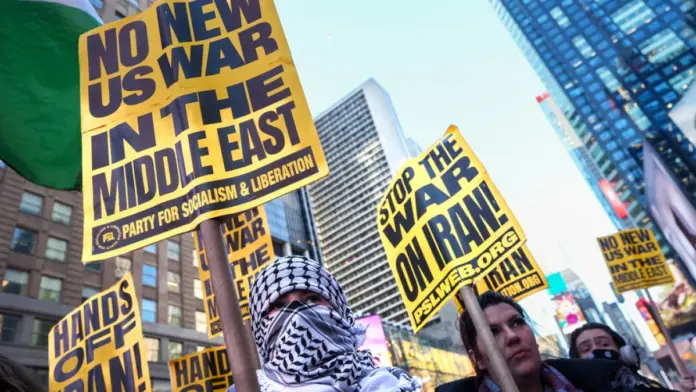
Us-Israel War On Iran — One hundred days have passed since the United States and Israel began bombing Iran, and the conflict that reshaped the Middle East and rattled global energy markets shows no sign of clean resolution. The campaign launched on February 28 killed Supreme Leader Ali Khamenei along with several senior Iranian officials and hundreds of civilians in its opening strikes. What followed was a cascade of consequences that continues to reverberate: Iranian missile and drone retaliation across the region, the closure of the Strait of Hormuz, and a naval siege that has pushed oil and gas prices sharply higher.
A truce brokered on April 6 halted the most intense exchanges, but it has not held cleanly. Skirmishes have continued to break out across the Gulf in the weeks since, and Iran’s blockade of the Hormuz Strait — the critical chokepoint through which a significant share of the world’s energy supply flows — remains in place. The United States has responded with its own naval siege on Iranian ports, creating a dual blockade that has compounded pressure on global shipping and contributed to sustained increases in fuel costs.
The human and economic toll is now feeding into a sharp deterioration in domestic support for the war. A University of Maryland Critical Issues Poll found that just 16 percent of American voters believe the US has won or is winning the conflict. A majority of respondents — including 33 percent of Republicans — said the war has had more negative than positive effects on US interests. Only 12 percent of those surveyed, including 25 percent of Republicans, assessed the war’s impact as more positive than negative.
Recommended Reading
Shibley Telhami, a professor of peace and development at the University of Maryland who conducted the polling, has highlighted the breadth of public disillusionment cutting across traditional partisan lines.
A separate survey by the Institute for Global Affairs reinforced those findings. 58 percent of respondents — including 21 percent of Republicans — said they disapprove of President Donald Trump‘s handling of the war. Only 24 percent of those polled said the conflict is making the United States safer. Most striking, 79 percent of voters — a majority spanning Republicans, Democrats, and independents — said the war has affected the cost of living in the US, a figure that underscores how the Hormuz closure has translated into kitchen-table economic pain.
Jonathan Guyer, programme director at the Institute for Global Affairs, noted that the breadth of economic concern across the political spectrum represents an unusual degree of consensus in a deeply polarised electorate.
Trump has sought to frame the campaign in narrow strategic terms. The president stated publicly that preventing Iran from acquiring a nuclear weapon is his sole motivation for the war, and he told reporters he is unconcerned about the political implications heading into November’s midterm elections. Democrats are banking on public frustration with the conflict to help them recapture control of Congress, where the war’s costs — financial and human — are expected to feature prominently on the campaign trail.
Us-Israel War On Iran: Regional Implications
The financial dimension is considerable. The US military budget is on course to reach $1.5 trillion, a figure that reflects both the direct costs of the campaign and the broader expansion of defence commitments it has triggered.
The path to war was not inevitable. Before the February 28 strikes, the Trump administration had been engaged in indirect negotiations with Tehran over the future of Iran’s nuclear programme. Those talks collapsed, and the bombing began. The decision to abandon diplomacy in favour of military action — and the consequences that have followed — now form the central fault line of American political debate as the conflict enters its fourth month with no clear endgame in sight.
The Hormuz Strait’s continued closure remains the most tangible daily reminder of the war’s unresolved character. Energy markets have adjusted to a new and volatile baseline, and the dual naval sieges — Iranian and American — have created a standoff in the Gulf that diplomats have so far been unable to unwind. With skirmishes persisting and public confidence eroding on both sides of the aisle, the war’s second hundred days are unlikely to be quieter than its first.