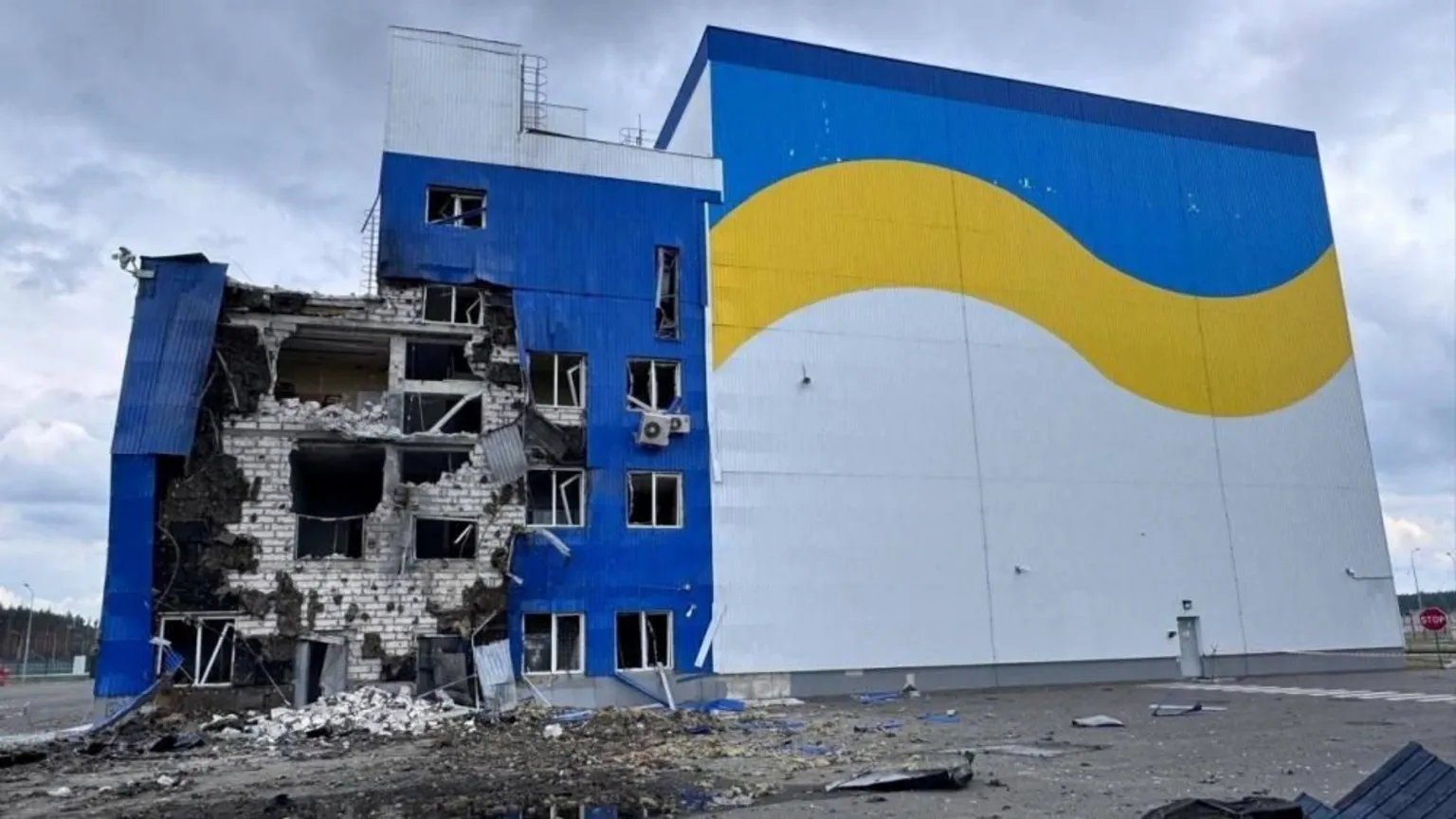
Chornobyl Nuclear Strike — A Russian drone struck a spent nuclear fuel storage facility near the Chornobyl nuclear plant on Sunday, partially destroying a fuel-reception building located approximately 15 kilometres from the site of the 1986 disaster, as Ukrainian President Volodymyr Zelensky arrived in London for high-level talks with European leaders on Ukraine’s long-term security.
Ukraine’s state nuclear operator Enerhoatom confirmed the building was significantly damaged, though it stressed that no spent fuel had been stored there at the time of the attack. A fire ignited by the strike was extinguished, and Ukrainian officials reported that radiation readings remained within normal background levels. No injuries were recorded. The International Atomic Energy Agency was briefed on the incident and announced a team would visit the site to assess the damage.
President Zelensky accused Russia of deploying a Shahed attack drone in the strike — the same type allegedly used in February 2025 to damage the protective containment arch built over the Chornobyl reactor, which was destroyed in the catastrophic April 1986 explosion and meltdown. He described Sunday’s attack as "extremely vile" and deliberate, framing it as part of a broader Russian campaign of nuclear intimidation.
Recommended Reading
![A general view of a structure at the Chornobyl Nuclear Power Plant, in Kyiv region, Ukraine [File: Valentyn Ogirenko/Reuters]](https://world-tension.s3.us-east-2.amazonaws.com/articles/1337/4a1542a5cfca4ebdadbf80aa18ecf8fa.webp)
The Chornobyl strike was far from an isolated incident. Over the past week alone, Russia launched 88 missiles, more than 3,250 drones, and 1,800 guided bombs across 13 Ukrainian regions, according to Zelensky. Overnight strikes on Sunday killed at least two people: a 56-year-old minibus driver in the southern Zaporizhzhia region and a 59-year-old man in the central Dnipropetrovsk region, where Russian drones and aerial bombs also wounded a 35-year-old man and damaged critical infrastructure. Earlier in the weekend, at least five people were killed in separate Russian strikes in and around Zaporizhzhia.
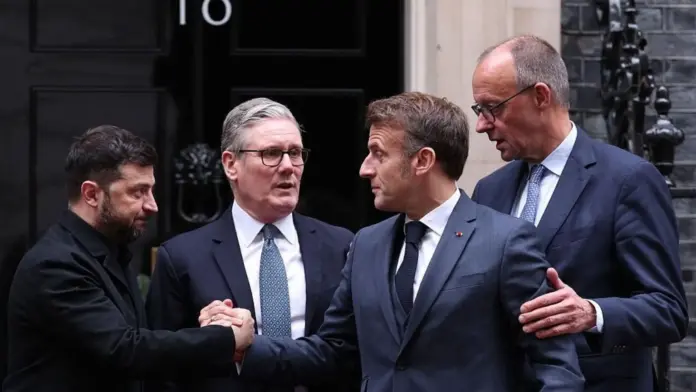
As Russian strikes rained down on Ukrainian territory, Zelensky was in London meeting with UK Prime Minister Sir Keir Starmer, French President Emmanuel Macron, and German Chancellor Friedrich Merz at Downing Street. The gathering of the so-called E3 group — which previously convened in London in December — underscored the continued European commitment to Ukraine more than four years after Moscow launched its full-scale invasion in 2022.
The UK and France co-lead the "coalition of the willing," an initiative designed to provide concrete security guarantees for Ukraine as diplomatic efforts to end the war remain stalled. The United States had been pushing for a peace framework in December, but those efforts foundered. Vladimir Putin rejected a proposal from Zelensky for direct face-to-face negotiations, stating he saw no point in such a meeting. In a subsequent open letter, Zelensky called again for direct talks; Putin dismissed the overture, reiterating that any ceasefire would only give Ukraine time to regroup and that Russia would end the war solely on its own terms, once its stated goals were achieved.
Ukraine, meanwhile, has demonstrated a growing capacity to carry the fight beyond its own borders. On Saturday, Ukrainian drones struck the outskirts of St Petersburg — roughly 1,000 kilometres from Ukrainian territory — during a major economic forum being held in the city. Russian authorities called the attack unprecedented. It was the second such strike on the St Petersburg area in quick succession, a stark illustration of how Ukraine’s rapidly expanding domestic defence sector has enabled it to reach deep into Russian territory.
Chornobyl Nuclear Strike: The Wider European Impact
The juxtaposition of Sunday’s events — a nuclear site attacked while European heads of government gathered to shore up support for Kyiv — highlighted the dual pressures bearing down on the conflict. On one front, Russia continues to escalate its bombardment of Ukrainian civilian and strategic infrastructure. On another, Ukraine’s European allies are working to construct a durable security architecture that could outlast the war itself, even as a negotiated settlement remains elusive.
The Chornobyl facility, already carrying the weight of one of history’s worst nuclear disasters, has now been struck twice in months. While officials insist the immediate radiological risk remains low, the repeated targeting of nuclear infrastructure has drawn sharp international concern and is expected to feature prominently in ongoing diplomatic discussions.