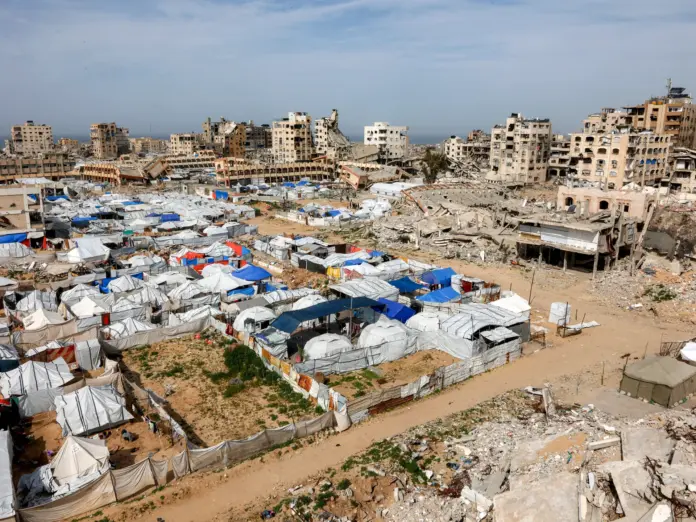
Gaza Ceasefire Collapse — An Israeli air strike on a tent camp in Gaza City killed at least six people and wounded 15 others on Saturday, with women and children believed to be among the dead, as a fragile ceasefire agreement continued to unravel across the besieged enclave.
Medical staff at al-Shifa Hospital confirmed the toll, with many of the injured transferred directly to the facility’s intensive care unit. The strike hit a tent adjacent to one where a wedding celebration was underway, compounding the horror for survivors. In a separate and equally devastating incident in the Khan Younis area, a man scheduled to be married later that same day was killed in another Israeli strike.
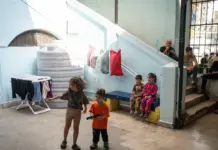
The Saturday assault also triggered a large explosion at a United Nations school compound that had been repurposed to shelter displaced civilians — one of countless such facilities across Gaza now serving as refuge for hundreds of thousands of people driven from their homes. Israeli military tanks and quadcopter drones additionally opened fire near a children’s hospital in Gaza City’s Tuffah neighbourhood, intensifying fears for the safety of medical infrastructure already stretched to breaking point.
Recommended Reading
Hamas spokesperson Hazam Qassem condemned the Gaza City strike in unequivocal terms, calling it a "horrific massacre" and characterising it as part of Israel’s "continued escalation of its war of extermination against civilians." Qassem further accused Israel of "working to undermine and destroy the agreement," referring to the ceasefire that formally took effect on October 10.
That agreement, brokered with international mediation, established a first phase centred on the release of Israeli captives held by Hamas in exchange for Palestinians detained by Israel. A second phase was intended to address the disarmament of Hamas and a gradual Israeli military withdrawal from the territory. That transition has been stalled for months, and more than half of Gaza remains under Israeli military control — a situation that directly contravenes the ceasefire’s stated terms.
The strikes came as Hamas convened high-stakes meetings with mediators and other Palestinian factions in Egypt on Saturday. Qassem said the Cairo discussions would focus on ensuring full implementation of the first phase of the ceasefire, reopening border crossings, and restoring the flow of humanitarian aid into Gaza. The talks were also set to address proposals regarding the deployment of international forces in the territory and the broader question of Palestinian faction disarmament — issues that have become central fault lines in negotiations over Gaza’s political future.
The juxtaposition of diplomatic activity in Cairo and lethal military action in Gaza City underscored the profound disconnect between negotiating tables and ground realities. For the civilians sheltering in tent camps across the strip — many of them displaced multiple times over — the promise of a ceasefire has offered little tangible protection.
Gaza Ceasefire Collapse: Regional Implications
The targeting of a site where a wedding was in progress drew particular international attention, with aid organisations and rights groups warning that civilian gatherings continue to be struck with devastating frequency. The death of a groom-to-be in Khan Younis on the same day amplified the sense of a population for whom ordinary life remains impossible.
With the second phase of the ceasefire indefinitely suspended and Israeli forces maintaining control over large swaths of the territory, the path toward a durable end to hostilities appears increasingly uncertain. Saturday’s strikes are likely to further complicate the Cairo negotiations, providing Hamas with fresh grievances even as mediators press both sides toward a framework that has so far proven elusive.