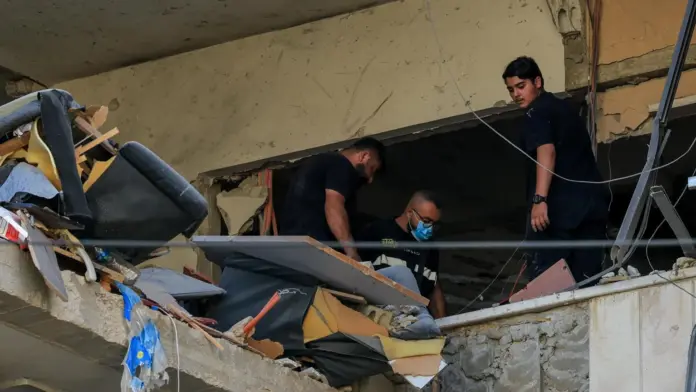
BEIRUT — Israeli warplanes struck two apartment buildings in the Dahieh district of southern Beirut on Sunday, killing two people and wounding at least 17 others in the first attack on the Lebanese capital since a US-brokered truce was announced just days earlier. The strikes shattered a fragile calm and cast serious doubt on Washington’s ability to hold the ceasefire together.
Israel Beirut Strikes — Prime Minister Benjamin Netanyahu said Israel had hit "terrorist headquarters in the Dahieh district of Beirut, in response to Hezbollah’s firing at Israeli territory." The Israeli military separately confirmed it had intercepted two projectiles crossing from Lebanon into Israeli territory before the strikes were carried out.
The assault marked the third time Israeli forces have targeted the capital since a ceasefire entered into force on 17 April — an agreement that has been violated repeatedly by both sides. The previous two strikes on Beirut focused on Hezbollah commanders. Sunday’s attack on residential buildings in a known Hezbollah stronghold represented a significant escalation in the heart of the city.
Recommended Reading
An Israeli army Arabic-language spokesman posted a statement on X following the strikes bearing the phrase "To be continued," a blunt signal that further operations against Dahieh were being planned. A week before the 3 June truce was announced, Israel had already threatened a broad offensive against the district, and Washington had applied pressure to restrain those plans.
The timing is diplomatically combustible. The truce, brokered by the United States and announced on 3 June, came after rare direct talks between the Israeli and Lebanese governments. Yet the deal has already drawn fierce opposition from key Lebanese figures. Parliament Speaker Nabih Berri, who leads the Amal movement and has historically served as an interlocutor for Hezbollah, rejected the agreement outright, calling it "a trap" because it contains no provision requiring Israeli withdrawal from occupied territory in southern Lebanon.
Hezbollah itself has no seat at the negotiating table. The group’s leader, Naim Qassem, made clear in a written statement on Thursday that disarming Hezbollah would amount to fulfilling "the enemy’s objectives" — a categorical rejection of any settlement that would diminish the group’s military capacity.
President Donald Trump weighed in on Sunday, posting on Truth Social that there would be "no troops going to Beirut" following a call with Netanyahu. He also told NBC’s Meet the Press that he was not demanding Lebanon be included in any broader peace deal with Iran. Separately, the US informed Qatar that it had instructed the Israelis to stand down — a message whose effect on the ground appeared limited given the strikes that followed.
Israel Beirut Strikes: Regional Implications
The broader conflict traces its origins to 2 March, when Hezbollah launched rockets into Israel in retaliation for an Israeli strike that killed Iran’s supreme leader. Israel responded with an extensive air campaign across Lebanon and a ground invasion in the south. The 17 April ceasefire halted the most intense phase of fighting, but Sunday’s events underline how tenuous that arrangement remains.
The Dahieh district has long been considered Hezbollah’s urban heartland, a densely populated area of southern Beirut where the group maintains deep political and social roots alongside its military infrastructure. Strikes there carry both military and symbolic weight, and the destruction of apartment buildings risks significant civilian casualties and a further hardening of Lebanese public opinion.
With Hezbollah refusing to disarm, Lebanon’s political establishment divided over the US-brokered framework, and Israel signalling its operations are far from over, the path toward a durable settlement appears narrower than at any point since the ceasefire was declared. The question now is whether Washington can reassert the leverage it briefly appeared to hold — or whether the cycle of strikes and rocket fire will accelerate once more.