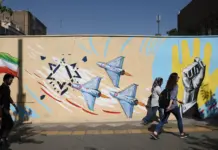
Iran 100 Days Of War — One hundred days into a war that reshaped the Middle East, Iran stands at a precarious crossroads — its military degraded, its economy in freefall, its new supreme leader unseen, and a ceasefire holding by the thinnest of threads.
The conflict began on February 28, when coordinated US-Israeli strikes killed Ayatollah Ali Khamenei, who had ruled Iran for nearly 37 years, along with a number of the country’s top military commanders and officials. The strikes also reportedly wounded his son, Mojtaba Khamenei, who was subsequently selected as supreme leader by a clerical body. Since taking office, Mojtaba has not been seen or heard from in any public setting. Only written messages attributed to him have emerged, deepening uncertainty about who is actually steering the Islamic Republic through its worst crisis in decades.
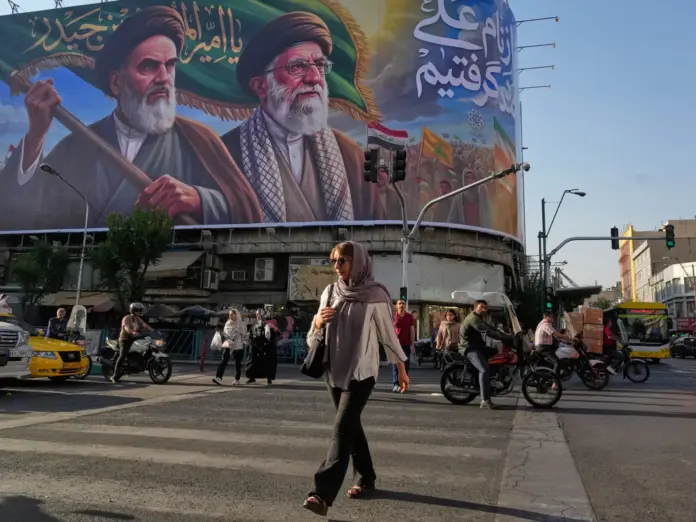
The absence of public mourning rituals has compounded the surreal atmosphere inside Tehran. No funeral processions were held for Ali Khamenei. His family members were buried a week after his death, in ceremonies stripped of the mass public spectacle that would normally accompany the passing of a figure of his stature. For a city of roughly 10 million people, the silence has been conspicuous.
Recommended Reading
The roughly 40 days of intense fighting that opened the war gave way to a tense ceasefire that has now stretched into its second month. Pakistan’s interior minister arrived in Tehran on Sunday in his country’s capacity as a mediating power, signalling that diplomatic channels remain active even as both sides maintain aggressive postures. Donald Trump has threatened renewed strikes against power plants and other civilian infrastructure should hostilities resume — a warning that has injected fresh anxiety into ceasefire negotiations.
Iran’s military has been severely diminished. Most of its aircraft and large naval vessels have been destroyed. Yet the Islamic Revolutionary Guard Corps retains the capacity to fire ballistic and cruise missiles, as well as drones, and continues to deploy fast boats and small vessels in the Strait of Hormuz. The hardline Keyhan newspaper captured the defiant mood of Iran’s remaining establishment in a recent editorial, declaring that "America retreated because of missiles, not negotiations."
The human and economic toll on ordinary Iranians has been staggering. Inflation reached nearly 84 percent year-on-year during the second month of the Persian calendar year ending May 21. Food inflation hit 130 percent over the same period. The price of solid vegetable oil surged 431 percent compared to the same month a year earlier. Eggs rose 342 percent, chicken 287 percent, and imported rice 222 percent. The Iranian rial traded at approximately 1.77 million per US dollar on Tehran’s open market on Sunday.
Amid the devastation, one anomalous data point has emerged: the Tehran Stock Exchange main index was on the verge of retaking its all-time high threshold of 4.5 million points — a phenomenon analysts attribute partly to Iranians parking savings in equities as a hedge against currency collapse rather than any genuine economic recovery.
Iran 100 Days Of War: Regional Implications
Daily life in the capital has been fundamentally disrupted. Universities and schools remain closed. Parliament has convened only in limited or online sessions. Police, their stations destroyed by bombing, operate from makeshift desks set up in the streets. Millions of jobs have been suspended or eliminated entirely. Two nationwide internet shutdowns have been imposed over recent months, in what observers described as the longest such blackouts recorded in any country. Connectivity has since been partially restored.
The political repression has intensified alongside the military and economic crises. The judiciary has announced near-daily executions of dissidents, and tens of thousands of people have been arrested in recent months. The combination of wartime emergency powers and a leadership vacuum has given security forces wide latitude to act with impunity.
The broader regional architecture that Iran once relied upon has also been severely weakened. Key allied networks, including Hezbollah in Lebanon, have been degraded through the same campaign that struck Tehran’s leadership. Iran’s ability to project power through proxy forces — long a cornerstone of its strategic deterrence — has been substantially curtailed.
Whether the ceasefire holds will depend in large part on whether Mojtaba Khamenei, or whoever is exercising authority in his name, can consolidate enough internal control to make credible commitments to outside mediators. For now, Iran’s 100th day of war offers little clarity on that question — only the weight of an extraordinary and ongoing crisis.