Gaza Ceasefire Strikes — A missile tore through a Gaza City rooftop during Eid al-Adha celebrations, killing seven people and plunging a mother and her three-year-old son through the shattered floor — one of dozens of deadly strikes that have claimed nearly a thousand Palestinian lives since a ceasefire nominally took hold in October 2025.
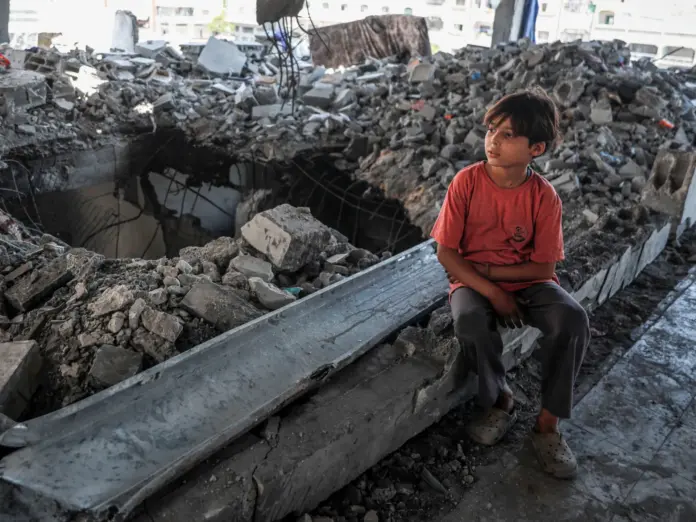
Widad Al-Husari, 31, was gathered with her family on the rooftop when the missile struck. The blast punched a hole through the structure, sending her falling several floors while she clutched her son, Rafiq. She caught herself on exposed metal rods protruding from the damaged building and hung there until her husband and brothers hauled her to safety. Rafiq survived.
Others were not so fortunate. The strike killed seven people in total, among them two children and two women, and left 18 more injured. A four-year-old niece, Sara al-Khalout, was hurled by the force of the blast into a courtyard below and sustained serious injuries. Zuhdia Azzam lost her 12-year-old granddaughter, Sidra, in the attack. Her 11-year-old granddaughter, Sham, survived but had her leg amputated as a result of her wounds.
Recommended Reading

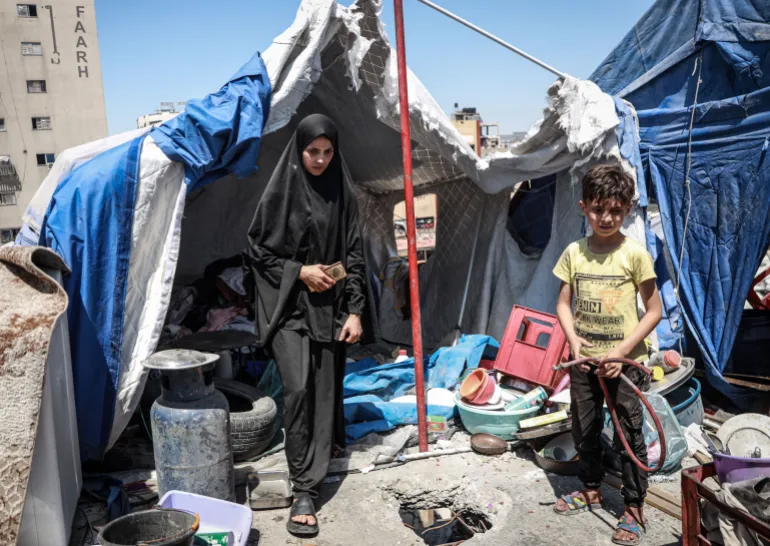
The family had already endured displacement once before. Widad and her relatives originally lived in the Zeitoun neighbourhood of eastern Gaza City until their home was destroyed in November 2023. With relatives’ homes already packed with other displaced families, they had taken refuge on a rooftop rented by her brother — the same rooftop that became the scene of the latest tragedy.
A parallel ordeal unfolded at the Shati refugee camp, where Imad Khroub, 55, and his family received a phone call from Israeli military intelligence giving them 15 minutes to evacuate their apartment building. His son, Saad, 31, took the call. The building was levelled precisely 15 minutes later. Saad had been preparing the apartment for his upcoming wedding at the time of its destruction.
The Palestinian Centre for Human Rights has stated unequivocally that short-notice evacuation warnings carry no legal weight under international humanitarian law and do not constitute justification for the destruction of civilian homes. The organisation’s position underscores a growing international debate over the legality of Israeli military tactics even as a formal ceasefire remains in place.
The strikes are part of a pattern that has intensified across central Gaza, an area that had previously suffered less destruction than other parts of the enclave but has recently become the focus of sustained Israeli air raids. Since the ceasefire between Israel and Hamas came into effect in October 2025, approximately 930 Palestinians have been killed and more than 2,800 injured — figures that challenge the conventional understanding of what a ceasefire is meant to achieve.
Gaza Ceasefire Strikes: Regional Implications
The human toll documented in these individual accounts reflects a broader catastrophe that has unfolded across Gaza over more than two years of conflict. Families who survived the initial destruction of their homes have been forced into makeshift shelters, rooftops, and the crowded residences of relatives, only to find that no location offers reliable safety. The cycle of displacement, loss, and injury repeats with each new strike.
For Widad Al-Husari, survival came down to the grip of metal rods and the speed of her family’s response. For the Azzam family, it came at the cost of a child’s life and another child’s limb. For Saad Khroub, a wedding apartment became rubble in the span of a quarter-hour. Across Gaza City, such stories have become the texture of daily existence under a ceasefire that, for many of its supposed beneficiaries, has yet to bring peace.