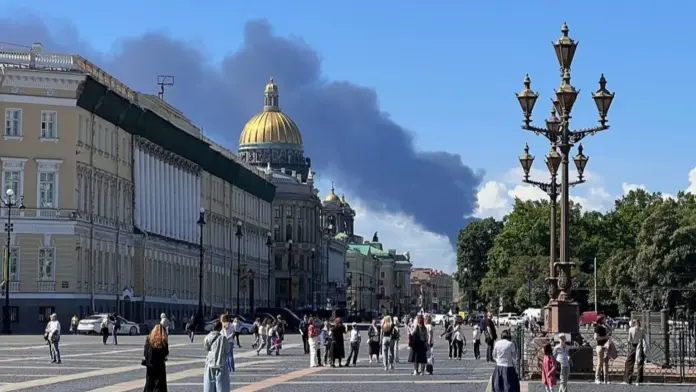
Drones Strike St Petersburg — Ukrainian drones struck infrastructure in the St Petersburg area on both the opening and closing days of the St Petersburg International Economic Forum (SPIEF) this week, punctuating Russia’s premier showcase for foreign investment with thick columns of black smoke visible across the city skyline. Local officials confirmed the damage, even as President Vladimir Putin stood before assembled delegates and declared that Russia’s economy remained stable and growing.
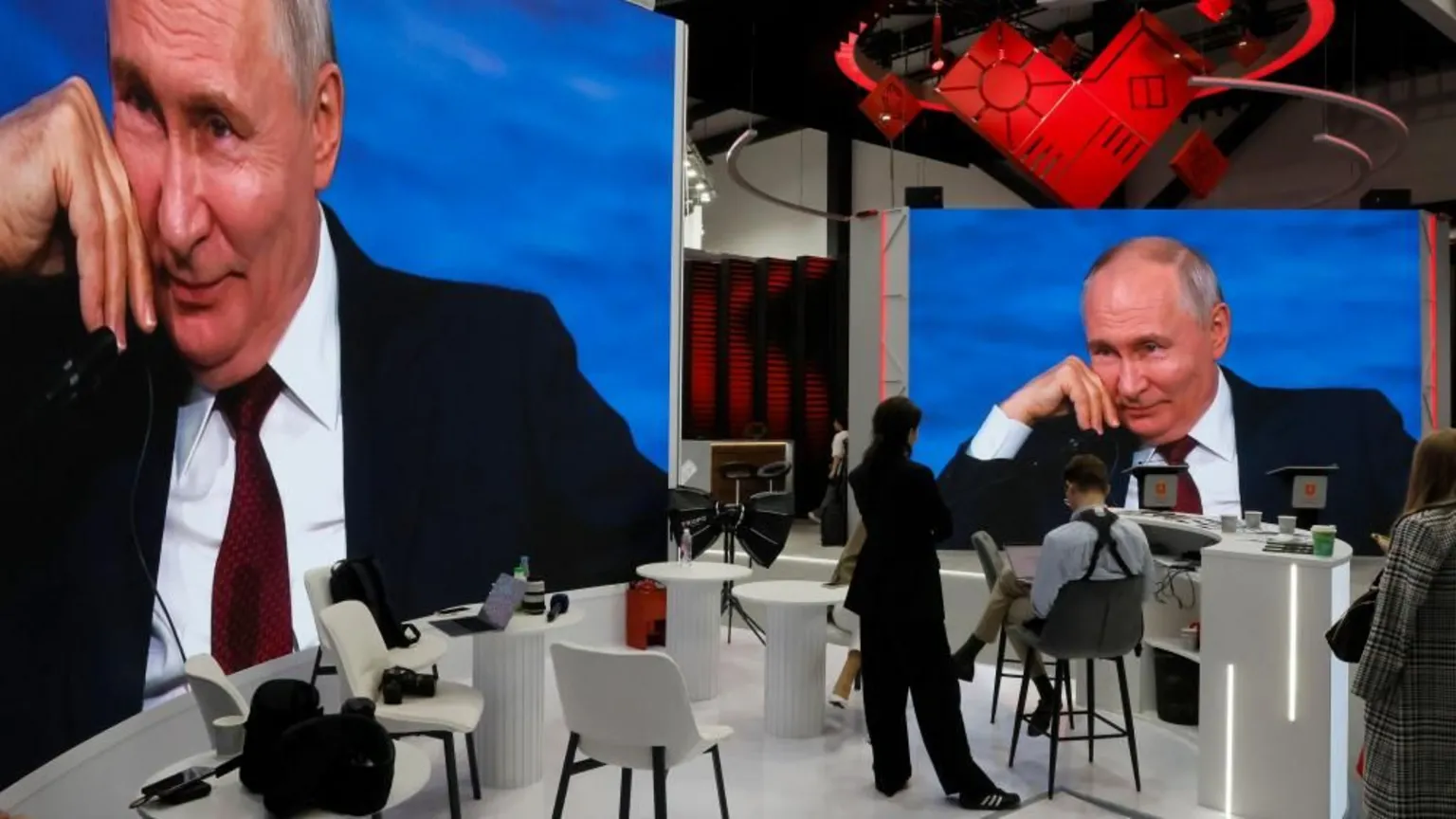
‘There are wars and sanctions,’ Putin told the forum. ‘But the economy is developing. Everything is stable.’ The remarks came as long-range Ukrainian drones — now routinely penetrating hundreds of kilometres into Russian territory — struck targets within sight of the very city hosting the event.
The forum’s dramatic backdrop was compounded by a direct diplomatic challenge from Ukrainian President Volodymyr Zelensky, who published an open letter to Putin during SPIEF proposing a face-to-face meeting in a neutral country to discuss a path to peace. Putin dismissed the proposal, criticising the tone of the letter and stating that his obligation was to respond to soldiers fighting on the frontline, not to correspondence from Kyiv. The war between Russia and Ukraine has now entered its fifth year, with Russia having sustained massive battlefield losses throughout the conflict.
Recommended Reading
Despite the forum’s carefully managed atmosphere of confidence, the economic picture presented by independent analysts and business owners told a more complicated story. Russian economists described the country’s economy as experiencing stagnation, with growth having stalled across most sectors and outright decline in some. Small business owners in the Lipetsk region said they were struggling to stay afloat, a sentiment at odds with the optimism projected from the SPIEF stage.
Kirill Dmitriev, President Putin’s special envoy on foreign investment, acknowledged that interest rates inside Russia were too high and needed to come down to attract meaningful investment — an implicit concession that the investment climate remains constrained. Dmitriev nonetheless argued that Russia’s economy had demonstrated resilience over the past five years. Businessman German Galperin noted a more personal dimension of the economic squeeze, observing that Russians who once travelled abroad freely now face significant restrictions as a result of Western sanctions.
One of the forum’s more unusual subplots involved Rodney Mims Cook Jr, chair of the US Commission of Fine Arts, who told Putin he was delivering greetings from President Donald Trump. Russian officials described Cook’s presence as the first official American delegation to attend SPIEF in a decade — a claim that drew an immediate and pointed rebuttal from US Secretary of State Marco Rubio, who stated he had no knowledge of any official US delegation at the forum. The episode highlighted the murky boundaries between informal outreach and sanctioned diplomacy that have characterised US-Russia contacts in recent months.
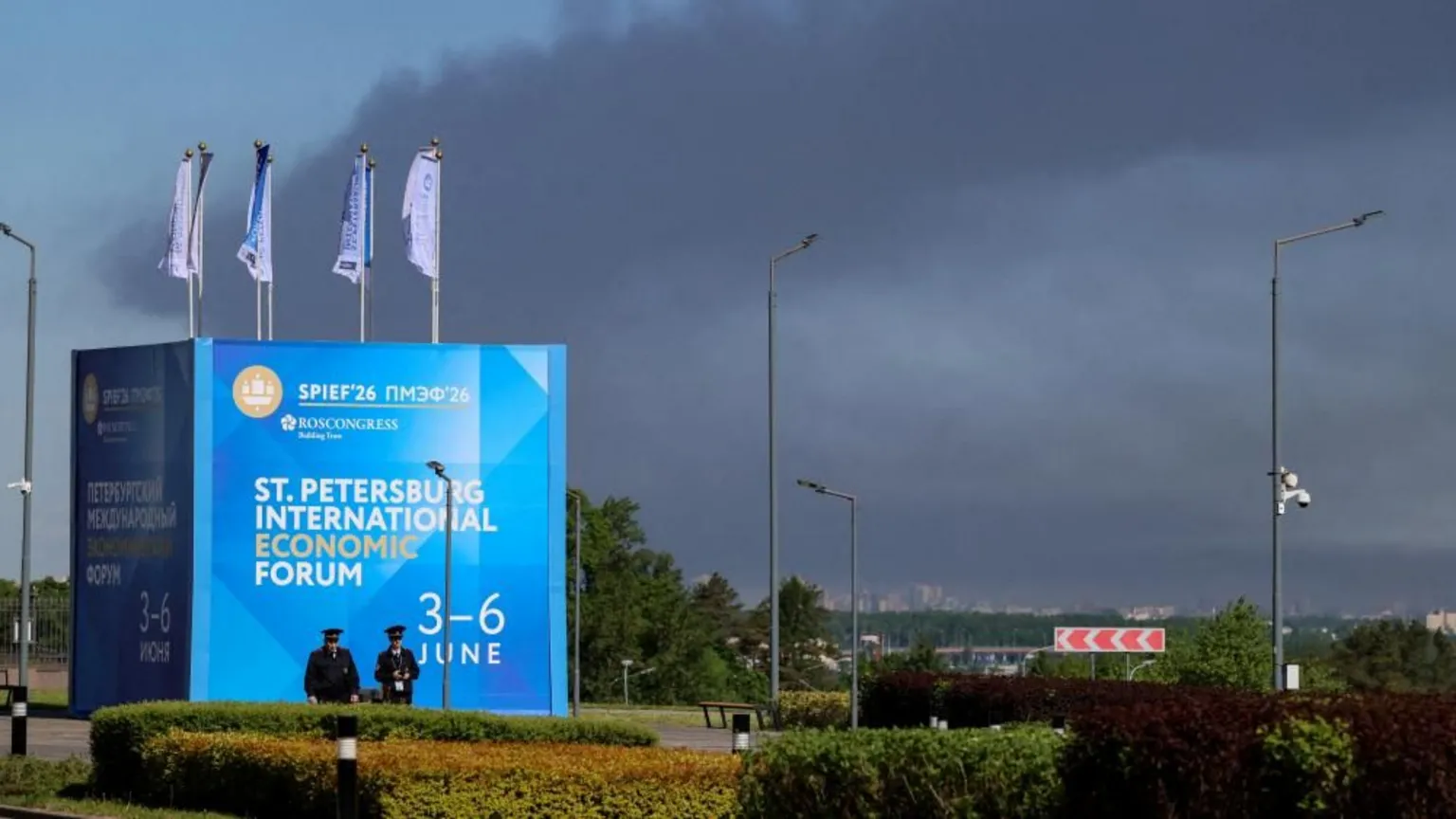
The drone strikes themselves carried a symbolism difficult to ignore. Wednesday’s attack sent a large plume of thick black smoke drifting over St Petersburg’s skyline at the height of the forum’s proceedings, a visceral reminder that the conflict Kremlin officials routinely describe as a contained ‘special military operation’ is now reaching into Russia’s second city. Ukrainian drone capabilities have expanded dramatically over the course of the war, with strikes now regularly recorded far beyond the front lines.
Drones Strike St Petersburg: The Wider European Impact
Among those present at the forum were Alexander Zhukov, deputy speaker of the State Duma, and Vasily Anokhin, governor of the Smolensk region — officials whose attendance underscored the event’s role as a domestic as well as international platform for the Kremlin’s economic messaging.
The juxtaposition of a government projecting economic confidence while its own economists speak of stagnation, and while drones strike the host city of its flagship investment forum, illustrated the profound contradictions shaping Russia in the fifth year of its war on Ukraine. For foreign delegates who made the journey to St Petersburg, the smoke on the horizon offered a reminder that no amount of forum optimism can fully obscure the costs of a conflict with no end yet in sight.