TAIPEI — China has mounted a second large-scale military patrol encircling Taiwan in less than a week, deploying dozens of warplanes and a fleet of warships in a show of force that has deepened alarm across the region and strained an already fragile diplomatic moment between Washington and Beijing.
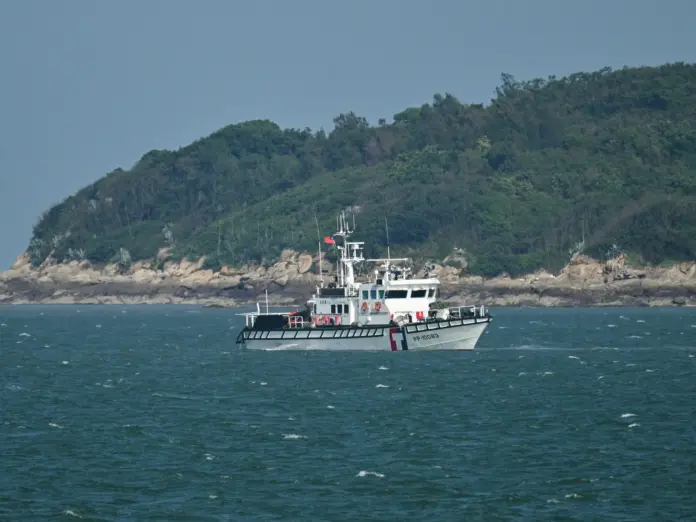
Taiwan Strait Tensions — Taiwan’s Ministry of National Defence disclosed the operation on Tuesday in a post on X, confirming that 29 Chinese aircraft — including fighter jets — and seven warships had been detected operating around the island. Of those aerial sorties, 24 crossed the median line of the Taiwan Strait, the unofficial buffer zone bisecting the waterway that Beijing formally refuses to recognise.
The patrol, designated a ‘joint combat readiness patrol’ by Chinese military planners, mirrors a near-identical operation conducted days earlier, signalling a deliberate pattern of pressure rather than an isolated incident. Taiwan’s government responded with a firm restatement of its position, declaring the island ‘sovereign and independent’ while pledging to maintain the existing status quo.
Recommended Reading
Joseph Wu, secretary-general of Taiwan’s National Security Council, offered a broader and more alarming picture of Chinese military activity in the region. Wu reported sighting the Liaoning carrier group operating in the West Pacific and revealed that, as of Saturday, China had deployed more than 100 ships along the length of the first island chain — the strategic arc of territory stretching from Japan through Taiwan and into the Philippines. Wu placed responsibility for the region’s deteriorating security environment squarely on Beijing, accusing China of being the sole source of instability in the Asia-Pacific.
The military escalation arrives at a particularly sensitive diplomatic juncture. Earlier this month, U.S. President Donald Trump met Chinese President Xi Jinping in Beijing, where Taiwan featured prominently in their discussions. Xi issued a direct warning to Trump that the two powers risked open conflict if the Taiwan issue were mishandled. Trump, for his part, cautioned Taiwan against formally declaring independence — a position that drew a swift response from Taipei, which reiterated its sovereign status while signalling no intention to alter the current arrangement.
Trump also indicated he intends to speak directly with Taiwan’s leadership, a move that would be historically significant. Washington and Taipei have not held direct leader-to-leader contact since 1979, the year the United States formally established diplomatic relations with the People’s Republic of China and severed official ties with Taipei.
Despite the diplomatic sensitivities, the United States remains Taiwan’s largest arms supplier, legally bound under domestic legislation to provide the island with the means to defend itself. In December, Trump approved the largest-ever U.S. weapons package for Taiwan. However, Washington subsequently paused a separate $14 billion arms sale to the island, citing the need to conserve munitions in connection with operations against Iran — a decision that has drawn scrutiny from security analysts monitoring the Taiwan Strait.
China’s position on Taiwan has remained unchanged for decades. Beijing regards the island as an integral part of its territory and has never renounced the use of force to achieve unification. Taiwan categorically rejects those sovereignty claims, and its government has governed independently since 1949.
Taiwan Strait Tensions: Cross-Strait Relations in Focus
The frequency and scale of Chinese military activity near Taiwan has intensified markedly in recent years, with Beijing using large-scale patrols and exercises as instruments of political coercion. The crossing of the median line — once a rare and provocative act — has become increasingly routine under Xi’s leadership, eroding a buffer that for decades helped prevent accidental escalation.
Regional governments are watching the developments closely. The first island chain, which China’s naval expansion directly challenges, encompasses the territory of close U.S. allies Japan and the Philippines, both of which host American military forces. Any miscalculation in the Taiwan Strait carries consequences that extend well beyond the island itself.
With Trump’s diplomatic engagement with Beijing ongoing and no resolution to the underlying sovereignty dispute in sight, analysts warn that the combination of intensified Chinese military patrols, paused arms transfers, and uncertain U.S. signalling creates a volatile environment in which the risk of miscalculation remains dangerously elevated.