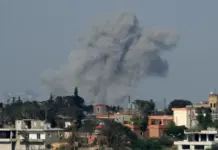
Gaza Ceasefire Collapse — A ceasefire nominally holding in Gaza is collapsing in slow motion. Since the truce took effect, 828 Palestinians have been killed by Israeli strikes, and Israeli forces have steadily expanded their territorial footprint to encompass 59 percent of the Gaza Strip — pushing the ceasefire-established boundary known as the Yellow Line progressively westward. Three more Palestinians died in Israeli strikes on Sunday afternoon alone.
The cumulative death toll since the war began has reached at least 72,608, according to medical data released Saturday, a figure that underscores the catastrophic scale of a conflict now entering a critical diplomatic phase.
Israeli Prime Minister Benjamin Netanyahu cancelled a scheduled security cabinet meeting on Sunday, a move that injected fresh uncertainty into already fraught negotiations. A senior officer within the Israeli military’s General Staff told a domestic broadcaster that an additional round of fighting was "almost inevitable," reflecting a hardening posture within the defence establishment even as mediators in Cairo press all parties toward a political resolution.
Recommended Reading
Israel has also repeatedly violated a core ceasefire provision requiring the daily entry of 600 aid trucks into Gaza, blocking humanitarian supplies that the territory’s civilian population depends on for survival. Additional Israeli troops have been redeployed from the Lebanese front into Gaza and the occupied West Bank, signalling a deliberate consolidation of military pressure.
At the centre of current diplomatic efforts is Nikolay Mladenov, the high representative for the US-backed Board of Peace, who has put forward a disarmament roadmap requiring the complete handover of Hamas weapons across five stages within 281 days. The framework builds on a 20-point vision articulated by US President Donald Trump and conditions humanitarian aid, reconstruction funding, and the reopening of Gaza’s crossings on phased compliance with disarmament benchmarks.
The proposal has been flatly rejected. Hamas, Palestinian Islamic Jihad, and the Popular Front for the Liberation of Palestine have all refused to accept disarmament as a prerequisite for any political process. Abdul Jabbar Said, a member of the Hamas political bureau, made clear that the movement is linking any security arrangements directly to the establishment of comprehensive political rights and a sovereign Palestinian state — a condition Israel has shown no willingness to entertain.
Political analyst Wissam Afifa, based in Gaza, described the current impasse as a fundamental clash between two incompatible frameworks: one that treats disarmament as the entry point to political progress, and another that insists political rights must precede any discussion of weapons.
A parallel governance structure, the National Committee for the Administration of Gaza (NGAC), has been established as a technocratic body intended to manage civilian affairs and oversee reconstruction. Its viability, however, remains contingent on a political settlement that appears increasingly distant.
Gaza Ceasefire Collapse: Regional Implications
Scepticism about Israeli intentions runs deep among analysts. Mamoun Abu Amer, an expert on Israeli affairs, characterised the drumbeat of war threats emanating from Tel Aviv as a deliberate "smoke screen" — a pressure tactic designed to extract concessions from mediators while shoring up Netanyahu’s domestic political standing ahead of elections scheduled for October.
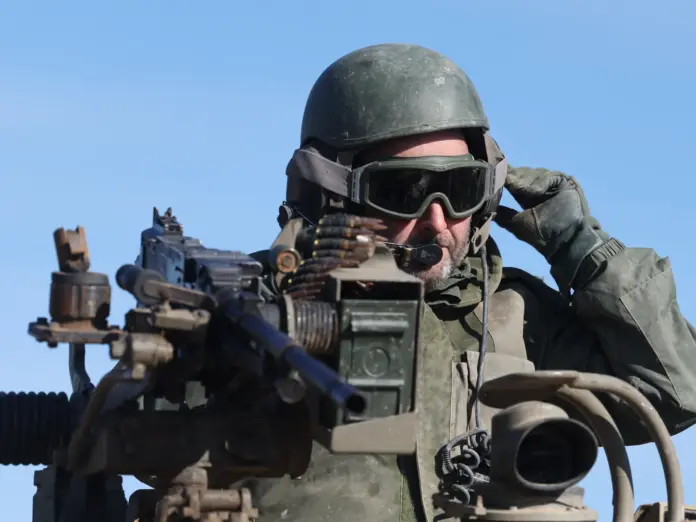
That assessment finds some support in the Israeli military’s own internal condition. Israel Ziv, a former chief of military operations, has stated publicly that the Israeli army is deeply exhausted. Reservists are currently serving an average of 80 days per year in 2026, a tempo that strains both personnel and institutional readiness. The situation along the Lebanese border, described by strategic analysts as an "open wound" for Israeli security planners, adds a further layer of complexity to any decision to resume large-scale operations in Gaza.
Cairo’s mediators are applying intense pressure on Palestinian factions to accept the Mladenov framework, but the structural gap between what Israel and the United States are demanding and what Palestinian groups are willing to concede remains vast. With Israeli forces entrenching deeper into Gaza’s territory, aid blocked at the crossings, and a senior military official openly forecasting renewed combat, the ceasefire’s survival grows more precarious by the day.