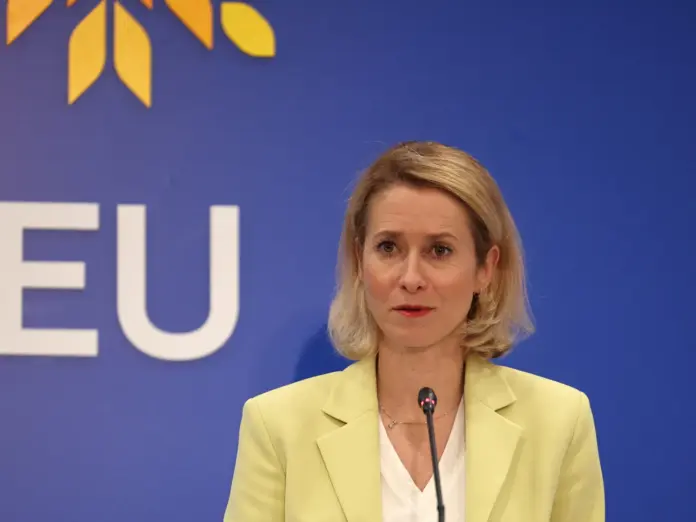
Eu Russia Sanctions — The European Union moved to tighten its economic grip on Russia Monday, proposing 80 new sanctions designations targeting Moscow’s military industrial complex, human rights violators, and state propagandists — a sweeping expansion of pressure that EU foreign policy chief Kaja Kallas announced in Cyprus following an informal gathering of the bloc’s defence ministers.
Kallas framed the proposal as part of a sustained campaign of economic attrition, noting that Western sanctions have already inflicted an estimated $1.2 to $1.5 trillion in losses on the Russian economy. The new designations build on a broader sanctions architecture that, as recently as March, covered approximately 2,600 individuals and entities.
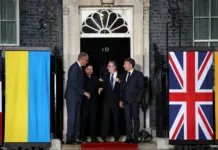
"The EU needs strategic patience to push Russia into a situation where they would genuinely negotiate," Kallas said, adding that the moment for direct diplomatic engagement with Moscow had not yet arrived. Her remarks came just days after Ukrainian President Volodymyr Zelenskyy proposed a face-to-face meeting with Russian President Vladimir Putin, a gesture Kallas declined to endorse as premature. Zelenskyy was travelling home from a separate round of meetings with European leaders in London at the time of the announcement.
Recommended Reading
The Cyprus meeting also produced a significant political breakthrough on arms financing. Hungary dropped its long-standing opposition to a 6.6-billion-euro ($7.6-billion) EU fund designed to reimburse member states for weapons supplied to Ukraine. The reversal follows the political transition in Budapest, where Peter Magyar replaced Viktor Orban as Hungary’s Prime Minister in April. Orban had been the bloc’s most persistent obstacle to unified military support for Kyiv.
Kallas went further, proposing that the reimbursement mechanism be expanded to finance joint weapons procurement and broader EU military assistance to Ukraine — a move that would deepen the bloc’s collective defence posture at a moment of sustained battlefield pressure.
That pressure was underscored Monday by a Russian strike on Ukraine’s southeastern Zaporizhia region, which killed five people and wounded 14 others. Governor Ivan Fedorov reported damage to infrastructure, residential buildings, and vehicles, and warned that the threat of further strikes remained active into Monday evening. The attack illustrated the continued human cost of a conflict now well into its third year.
On the energy front, the United States renewed a sanctions waiver permitting countries to continue purchasing Russian oil and petroleum products currently loaded aboard tankers at sea — a carve-out that reflects the practical complexities of unwinding global energy dependencies even as Western governments escalate financial pressure on Moscow.
Eu Russia Sanctions: The Wider European Impact
Together, the developments in Cyprus signal a European bloc increasingly willing to act in concert on both the economic and military dimensions of the war, while maintaining that any path to negotiation must come from a position of Ukrainian strength rather than exhaustion. The proposed 80 designations await formal approval from EU member states, a process that has historically moved swiftly when political consensus is in place.
For Kallas, the message was unambiguous: the cost of Russia’s war must continue to rise, and the alliance underwriting Ukraine’s defence remains intact — and, with Hungary’s reversal, more unified than it has been in months.